Chronicle Editor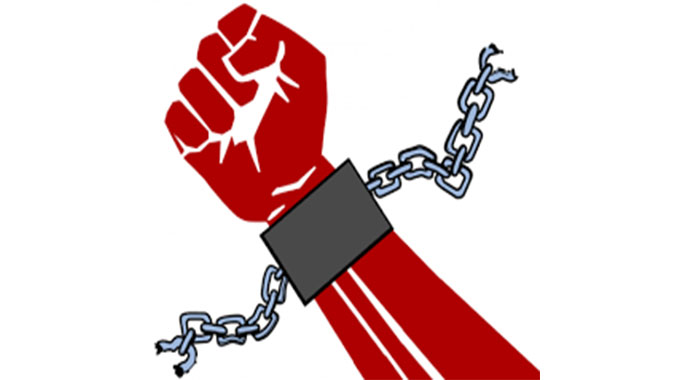
Cetshaywa Mabhena
As a matter of habit I am incorrigibly drawn to those philosophers that leave the comfort zones of thought and venture into troubling and troubled terrains.
Such philosophers frequently take risks and ask stubborn questions about how the world is arranged and how it works and so do they get into trouble with the powers, systems and the people that benefit from the oppressive status quo in the world. In 1755 Jean-Jacque Rousseau confronted human nature and the world system when, in a classical essay, he pondered the ‘Origins of Inequality among Man.’
It troubled him that “human beings are born free but they are everywhere in chains.” There were enough resources for the satisfaction and happiness of everyone in the world but multitudes lived in misery while a minority of people owned property and consumed resources on behalf of the many.
That condition of inequality and injustice troubled Rousseau’s mind and occupied his philosophical ruminations for the rest of his trouble life that ended in insanity and a painful death.
Rousseau was not the random malcontent that threw endless tantrums against the world and its condition but he mobilised much of his philosophical stamina to suggest ethics, laws and systems that should lead to a more equal and just world that was to be governed by a Social Contract.
Some centuries after Rousseau and other philosophers of the Social Contract, in many ways, the world is still a much unequal and unjust place that continues to be dangerous for those that do not enjoy power and privilege. My observation is that power, even within democratic systems of government, uses human differences to unequally and unjustly distribute resources and rewards. Human differences that should be a gift of nature and a decoration of the world are weaponised and criminalised to produce conquerors and the conquered, the free and unfree under the sun.
The sun itself is made not to shine the same for different people, for some it provides light while for others it is the burning furnace of Hell itself. The order of things in the societies of the world is not right, it is very wrong in many ways.
Power
When it comes to understanding conquest, power and domination of one by the other we must, perhaps, as Allan Boesak suggests, bid farewell to our innocence. Because of the violence of conquest and the domination that follows it at different levels power itself has become a dirty word and a metaphor of injustice and evil. Where power is and where it goes the misery of many follows.
Powerful social classes, races, genders, nationalities, ethnicities, ages, cultures and religious orientations trample upon the powerless others and use their power to conquer and dominate. Power has over the centuries lost its own virginity and innocence to violence, greed and evil.
Where power was supposed to liberate it has notoriously dominated, exploited and oppressed. Where it was supposed to think and reason it has assumed the posture of unreason and barbarism. Where it was supposed to deliver governance it has stuck to its temptation and habit to rule.
To justify itself and defend its ground and existence power has frequently resorted to the evil twosome of Force and Fraud. Characteristically, power has never sat well with freedom and happiness as it systematically and structurally tends to relish in dominance and oppression. Habitually, power does not call itself by its correct name of power, no.
It hides under a multiplicity of nicknames and other monikers.
Here it calls itself freedom, democracy and even revolution, and there it describes itself as democracy and development when in actuality it is evil that walks on two legs and wears a hat. Violence, greed and evil have become the symptom of power as a disease of politics and economics at a world scale.
Human Differences
There is naturally nothing wrong with human differences. Be they differences of race, gender, age, class or ability and inability of body, there is no crime there. Trouble begins when these categories of human difference are used by power to conquer, discriminate, exploit and ultimately oppress. Because of the desires and passions of power and its political energies men will look at women as inferior and dominable.
When white people wanted the lands and other resources that lay below the feet of black people they were forced by the desires of power to construct black people as inferior, barbaric and exploitable, and that gave birth to the crimes of slavery, colonialism and systemic imperialism.
Dominant social classes, the rich and the powerful, look at the poor and toiling as exploitable labour and raw materials to their class power not as other legitimate people. The capitalist social and political ethic that depends on people that have the bodies that are strong and can labour to produce goods and services forces the rich to look at the old and people that have disabilities as useless and dispensable.
Ableism is exactly that political ideology that has gotten disabled and aged people to live the lives of the discriminated, marginalised, hated and disposable people because they are not considered productive for the capitalist machinery and its economic and political appetites. Human differences, I argue, are not the problem or are they the trouble, the problem and the trouble is what and how these differences are understood and used by power for its own dirty and evil ends.
There is absolutely nothing wrong with people belonging to different nationalities, ethnicities, tribes, religions, cultures and traditions. What is wrong and also truly evil is when these categories of natural and normal difference are used by power for its dirty work. Different human beings, for instance, can be well and happy together at work.
But as soon as there is competition for scarce resources and opportunities like money and promotions the racial or the tribal discrimination passions may arise and contenders and disputants start resorting to racial and tribal identities as part of their entitlement and recommendation. Power, in that way, uses hate as its oxygen and lifeblood.
I can add to Rousseau’s meditation that the origins of inequality in the world arose from the appetites of power that uses hate and violence as its fuel that propels it to seek conquest, domination and monopoly. Diversity and human difference are gifts of nature that power has corrupted almost beyond repair. Power is otherwise the true fall of man from the proverbial paradise of Eden. If there was no power the world would be a paradise, I observe.
Cetshwayo Zindabazezwe Mabhena writes from KwaMabusabesala Village, Siyabuswa in Mpumalanga, South Africa. Contacts: [email protected]


 Online Reporter