Chronicle Editor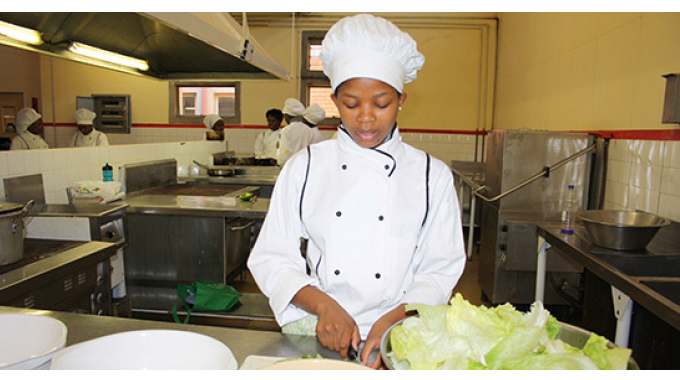
Simbarshe Murima
The Second Republic ushered a Heritage Education 5.0 model that is an outcome-based education system that fosters an emphasis on modernisation and industrialisation.
There have been major developments and improvements in the tourism industry post-Covid 19 outbreak.
Since then, the operations and service delivery in the tourism and hospitality sector have been changing in relation to technology, consumer tastes, and service provision.

Therefore, to meet the demands of this volatile and ephemeral environment, there is a need for educators to be abreast and advanced with contemporary knowledge and skills that impact student learning, teaching, and assessment.
Hospitality courses such as Hotel Front office operations, Housekeeping, Food and Beverage, Bakery studies, Cookery, require qualified, experienced, pragmatic, and erudite lecturers. However, this is not the case with most lecturers in polytechnic institutions in the country.
The findings from the study I conducted, reveal that hospitality lecturers have limited practical hands-on expertise on key performance areas of hospitality training due to inadequate teaching resources, assessing huge numbers of students, syllabus guide discrepancies, and lack of modern equipment and machinery.
Ostensibly, one college I visited is using old and obsolete cooking equipment and machinery to teach students, thus impacting on the validity and accuracy of assessment practices.
When students go for attachments/internships to various hospitality establishments, they face enormous challenges in adapting to the ambiance, restaurant, and room decorations, use of technologies such as electronic keys in guest rooms, modern cleaning, washing, ironing equipment and kitchen facilities at the establishments since there are not exposed to all this during their training.
Both the lecturers and students lack exposure to contemporary changes in tourism and hospitality. Henceforth, this will be detrimental to the industry’s manpower and training mandate. As a consequence, the industry is complaining about these trainees’ performances, this is because there are non-comparable facilities or amenities at their training centres.
Nevertheless, it is thought-provoking that after students complete their attachments and go back to school, they become more practically skilled than their lecturers.

Henceforth, lecturers need exposure in the industry to be able to teach and assess students on current and valid content.
I would suggest that lecturers do refresher courses and get attached to various hospitality establishments similar to their students to upgrade their practical skills and assessment competencies to enhance students’ effective learning.
It is essential that the current skills and knowledge lecturers acquire through this practice will fortify their expertise and enable students to imbibe proficiencies to manage issues of employer demands, changing consumer behaviours and increased competition in the industry.
As an expert in the education/tourism and hospitality industry, I have observed that the Higher Education Examination Council (HEXCO) syllabus content or training guide is weakening the learning of the trainees and lecturers delivery in the tourism and hospitality discipline.
The syllabus or unit standards are outdated and do not meet the demands of the industry and further compromise assessment principles.
I wonder if the curriculum developers at HEXCO involve all stakeholders including lecturers, tourism experts, and industry players and also benchmarking with other institutions abroad to meet the international standards of training.
However, it should be noted and appreciated that there are good lecturers in Zimbabwe.
Notwithstanding, polytechnics offering tourism and hospitality programmes are not alone in striving to produce quality graduates, they also compete with universities and therefore monitoring of continuous assessment in this regard cannot be overemphasised.
It will be commendable if HEXCO and other tourism stakeholders look into these issues and address them holistically and consultatively to improve the training standards and be able to produce competent and skilled personnel.
As a suggestion, hospitality establishments should capacitate and assist lecturers by allowing them to work on weekends or during semester breaks so that they upgrade their practical skills and expertise in the industry and be able to impart usable and current skills.
Consequently, if such systems are put into practice and adequately planned, they can serve the impartiality standards on assessment and training by ensuring that all students are supported in attaining essential learning and development goals in the tourism and hospitality industry.
Simbarshe Murima is writing in his own capacity as an Education, Tourism and Hospitality expert in Zimbabwe and Namibia. Feedback: [email protected]/0781480742


 Online Reporter