

 Online Reporter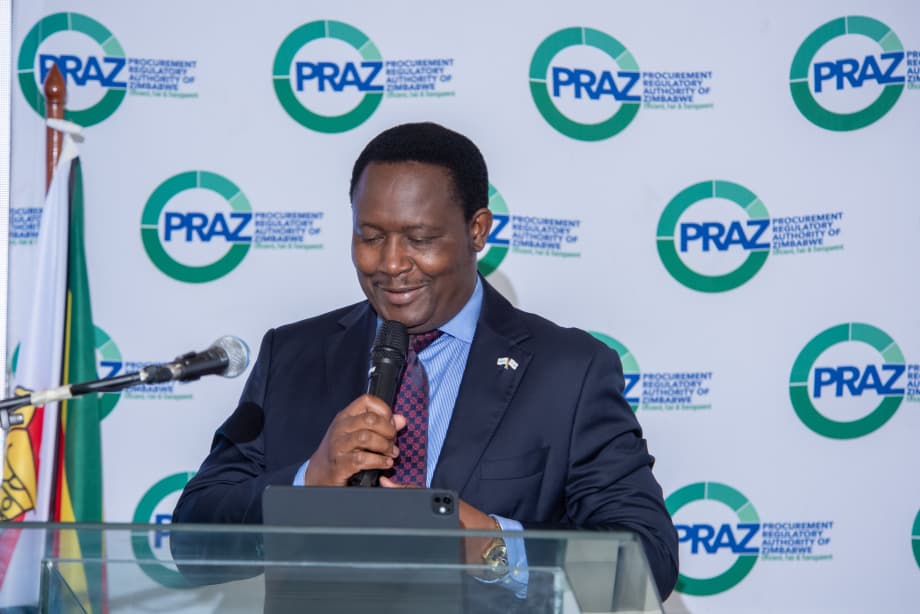
Judith Phiri in Nyanga
Zimpapers Business Hub
THE Procurement Regulatory Authority of Zimbabwe (PRAZ) has reaffirmed its commitment to accelerate gender inclusion, build capacity and strengthen integrity for women in procurement.
Giving Welcome Remarks at the PRAZ Women in Procurement Conference 2026 in Nyanga on Wednesday, PRAZ chief executive officer, Dr Clever Ruswa, said in procurement, knowledge saves money, protects public interest, levels the playing field and unlocks opportunity. “When knowledge is shared widely and equitably, we create a procurement system that is not only efficient and transparent, but also just and inclusive. For this conference, we meet under the banner “Driving Value and Impact.”
“This phrase is not a platitude for a stage; instead, it is a call to action. Our policies as the procurement regulator are aligned to the aspirations of the National Development Strategy 2 (NDS2) hence procurement is not merely a process of buying goods and services, but a strategic instrument of economic transformation,” he said.
He said that when structured intentionally, public procurement stimulates local industries, supports small and medium enterprises (SMEs) and expands opportunities for women entrepreneurs and professionals. Dr Ruswa said as the global conversation on gender equality reminds people that “When women thrive, communities thrive,” the procurement policies must reflect that truth.
“This is also reflected by the new supplier registration categories that came into effect on January 13, 2026, which encompass and facilitate ease of doing business by all groups in society.”
Reflecting on 2025 and what they committed to at the last Women in Procurement Conference, he said they collaborated with the Ministry of Women Affairs, Community, Small and Medium Enterprises Development
Dr Ruswa said this partnership will identify women-owned organisations registered with the Ministry for public procurement opportunities.
“The Affirmative Procurement Guidelines, developed through wide national consultations in 2024 and validated in 2025, are now a cornerstone of our approach. These guidelines create a clear framework to ensure that women-owned businesses and other special interest groups are visible and competitive in procurement opportunities.”
Dr Ruswa said this can best be done by a deliberate stance that procuring entities have to exercise in facilitating for such inclusion as they evaluate tenders. He said capacity building, a core resolution from 2025, has been advanced through the rollout of the Southern Africa Public Procurement Training Academy (SAPPTA) courses.
“From a concept to a functioning platform, SAPPTA now offers tailor‑made programmes for your procurement practitioners and entrepreneurs, addressing technical skills, bid preparation, contract management and compliance.
“On integrity, we have continued with our collaboration with the Zimbabwe Anti‑Corruption Commission (ZACC) and other bodies. Transparency and accountability are the bedrock of value for money,” he said.
“We are strengthening integrity committees across procuring entities to reduce leakages and create a procurement environment where merit and fairness prevail. Sustainable Procurement Guidelines were finalised and rolled out last week.”
Dr Ruswa said sustainability was not an add‑on, but an integral to value and long‑term impact.
He said they were embedding social and environmental criteria, including gender‑sensitive considerations, into procurement decisions.
“I thus implore the bidding community to be cognisant of ethical business standards in the supply of goods, which have to be of high quality and have spenders having value for money, which ultimately is of value to society,” he added.
“These steps mark real progress. But progress without measurable outcomes is incomplete. If we truly mean to drive value through procurement, we must pursue concrete, practical priorities.”
Dr Ruswa said PRAZ will continue to lead on policy, to enable SAPPTA to deliver practical skills, to publish data that creates accountability and to support the operationalisation of affirmative and sustainable procurement across all procuring entities.
PRAZ board chairperson, Mrs Ntombenhle Moyo, called on delegates to leave the conference with three clear commitments.
“These are to translate the policies and commitments we heard into measurable action plans within our entities, to mentor and sponsor emerging women in procurement so no talent is lost to systemic barriers.
As well as to uphold the highest standards of transparency and professionalism so procurement serves the public interest and advances our national aspirations,” she said.
The two-day event is running under the theme “Knowledge Sharing” with a number of lined-up speakers that will tackle challenges and possible interventions for women in procurement, strategic procurement trends (2026 and beyond), digital procurement and Al tools, among other topics.



