

 daniel chigunwe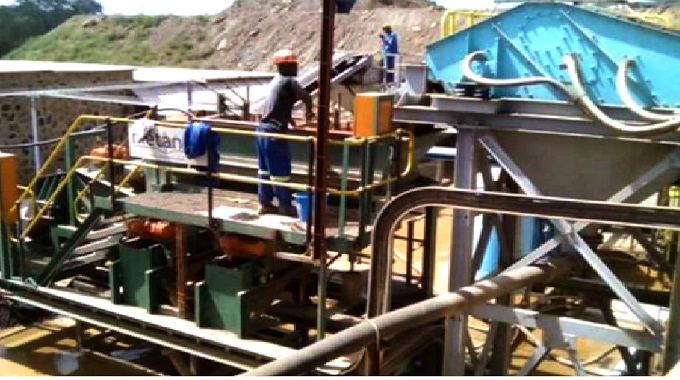
Business Writer
PREMIER African Minerals says while the installation of a new spodumene floatation plant at its Zulu lithium and tantalum project could be viable, low-cost adjustments to the existing plant should be prioritised for immediate implementation.
The London-listed mining group, which is developing the Zulu lithium and tantalum project in Insiza District, Matabeleland South Province, has in recent past experienced operational challenges to restart production.
In November last year, Premier announced that plant operations at Zulu had been partially suspended to allow for civil construction to commence in preparation for the installation of the 55 tonnes per hour ball mill and other associated structures.
Production was scheduled to commence in February this year and currently the mining group is working to address the challenges at Zulu.
“Recent test work reports from Enprotec (suppliers of the floatation plant at Zulu), along with independent assessments, indicate that the inconsistent grade and recovery in the spodumene flotation plant are primarily due to inadequate reagent dosing and excessive residence time in the cleaning circuit.
“To improve these issues, the company plans to implement adjustments that include — fabricated inserts, these will be added to the cleaning stages to reduce the volume of each cleaner, aligning residence times with optimal test results for spodumene grade and recovery,” said Premier in an update.
In addition to the immediate adjustments, the mining group has engaged a Chinese engineering, procurement and construction management (EPCM) contractor as a fall-back strategy.
The contractor has recommended supplying a complete flotation plant based on proven technology.
“While this option remains viable, the company believes that the low-cost adjustments to the existing plant should be prioritised for immediate implementation.”
Premier is also exploring alternative reagent suppliers to continuously assess and recommend better reagent regimes.
All of the above options for the future of the Zulu project are under consideration, and due diligence is being conducted by interested parties.
The group’s chief executive officer George Roach has expressed optimism about the progress made on the plant and the updated resource estimates, suggesting that both the company and its shareholders should look forward to the future with increased confidence.
Meanwhile, in 2022 China’s Canmax Technologies, a producer of lithium electric materials and other related products, provided Premier with US$35 million in pre-funding to enable the construction and commissioning of a large-scale pilot plant at Zulu.
On completion of the subscription, Canmax will be interested in 17,4 percent in the enlarged issued share capital of Premier.
And after missing production timelines in June last year, Premier issued a force majeure notice to Canmax citing unforeseen operational hurdles encountered at Zulu. This meant that it could not supply spodumene concentrate to Canmax as per set timelines stipulated in the offtake agreement.
Force majeure is a clause in contracts that essentially frees both parties from liability or obligation when an extraordinary event or circumstance is beyond the control of the parties.
The plant was said not to be able to produce sufficient spodumene to meet the quantities of the offtake agreement Canmax.
The Chinese contractor wanted to terminate the agreement, a development that could have negatively affected the Zulu lithium and tantalum project.
Following extensive talks, both parties mended relations.



 Online Reporter