


 tawandamusarurwa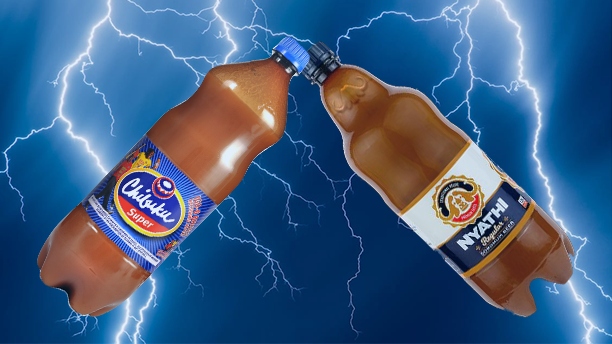
. . . seeks to grab cereals from Nestle
Tawanda Musarurwa
No other company has a pervasive impact and influence over households as Innscor – which supplies eggs, bread, sugar, toothpaste, stoves, beds, TV sets, meat (both beef and pork), candles, mealie meal, seasonings and even kapenta, among a litany of household items.
With assets of more than $143 billion, the conglomerate controls major brands such as National Foods, Profeeds, Irvines, Colcom, AMP Meats, Transerv, Simbisa, and TV Sales and Home.
Its Ruwa-headquartered Probrands unit distributes products like rice, salt and seasonings, maize meal, pasta, popcorn, canned products, milk powder, candles and detergents.
The list is endless.
Innscor has previously proved to be ruthless when dealing with competition.
The entrance of Chicken Slice, owned by businessman Tawanda Mutyebere, in the fast-food business in 2010 directly challenged Innscor’s Chicken Inn’s dominance.
However, in areas where its rival opened an outlet, the company used its wherewithal to open two outlets in the vicinity to smother the new business, and Chicken Slice’s nascent expansion was successfully checked as a result.
This year, Chicken – now a unit of Simbisa – is planning to establish 100 additional outlets.
This dwarfs the current 16 outlets under Chicken Slice.
However, it is its recent forays in the manufacturing of beer and cereals that have seemingly unsettled the monopoly previously held by major companies such as Delta Corporation and Nestle, respectively.
Delta, for example, has for long enjoyed a monopoly in the beer business. It first commercialised traditional sorghum beer – which was deeply entrenched in African traditional culture – in 1962.
Although it has always been brewed by communities since time immemorial, Delta’s low-cost Chibuku product has not had a direct competitor for ages.

In the 2022 financial year, for instance, sales volumes of its sorghum beer rose to 3,7 million hectolitres, representing a 43 percent growth from the previous year.
To be clear, 3,7 million hectolitres is 370 million litres, and that is a lot of beer.
Delta, however, still wants to expand.
The group recently indicated plans to reintroduce an older sorghum beer brand – Scud – to cover supply gaps.
“There are ongoing efforts to optimise the available PET production capacity across the regional countries and to revive the Scud pack to cover supply gaps,” said Delta company secretary Faith Musinga in a trading update for the third quarter to December 31, 2022.
Gunning for the big boys
Well, it seems the demand for traditional sorghum beer is outstripping supply, and this is an opportunity that has readily been realised by Innscor Africa Limited.
In November last year, the conglomerate announced that it would be entering the beer market through its subsidiary – Buffalo Brewing Company.
“Nyathi regular sorghum beer is the first in our range and is a traditional alcoholic beer that is brewed from maize meal, sorghum malt, water and yeast,” said Innscor.

But Delta will not be a pushover.
Established in 1946, but with roots dating back to 1898 as the country’s first brewery, the blue-chip company has over the decades entrenched its foothold on the local beverages market.
It naturally has a competitive advantage in the sector through its established significant production capacity and extensive distribution network.
This allows the group to leverage on economies of scale.
Smaller brewers such as Ingwebu, Pungwe and Ngoda have previously failed to break Delta’s dominance in the opaque beer market.
But Innscor, which has sunk an initial investment of US$70 million in Buffalo Brewing Company, is a different proposition.
The emerging battle between Innscor and Delta has all the makings of an epic beer brawl.
Founded in 1987, the Innscor group has in the past three decades grown to become Zimbabwe’s biggest conglomerate.
Its tentacles spread all over – from flour milling, meat packaging, bottling and packaging to light manufacturing.
And like Delta, it has an extensive distribution network that it can use for its fledgling traditional beer business. In essence, Innscor is arguably the most formidable competitor Delta has ever faced in recent years.
However, it is not just Innscor that is going for Delta’s traditional niche. In March last year, Indian distiller of grain alcohol – the NV Group –announced a partnership with the Agricultural and Rural Development Authority (ARDA) to establish a US$250 million brewery in Masvingo.
The planned business, which is expected to be operational around 2024, is also expected to eat into Delta’s opaque beer market.
It is not yet clear what range of beer products the factory, which is being established at ARDA’s Magudu Estate, will produce.
All these circling sharks could soon turn Delta’s blue ocean into a bloodied ocean.
In the wake of growing competition, Delta is largely expected to tap into its nuanced understanding of the business. They can sniff out a storm, even before the clouds start to gather.
According to the Food and Agriculture Organisation Corporate Statistical Database (Faostat), Zimbabwe’s beer consumption levels are far from their peak, partly because of low disposable incomes.
Beer consumption per capita in Zimbabwe reached 14,9 litres in 2020, which is 5,3 percent less than in 2019.
Historically, beer consumption per capita in Zimbabwe reached an all-time high of 19,4 litres in 2009 and an all-time low of 1,97 litres in 1990.
The weakening beer consumption rates could be one of the reasons Delta completed the acquisition of South African brewer United National Breweries (UNB) in 2020.
“The key benefit of the acquisition is Delta’s production capability in a relatively stable country from a macro-economic standpoint,” said Tafara Mtutu, a research analyst at Morgan & Co.
“Currently, Delta operates in Zimbabwe and Zambia, which have been facing significant economic challenges . . . The UNB acquisition, therefore, serves Delta as an additional base of operations that the business can rely on.”
Are the incoming players truly ready to enter a market whose effective demand might not peak in the near future?
Aggressive
From its inception in 1987, Innscor has grown to become Zimbabwe’s biggest conglomerate by aggressively pursuing strategic well-though-out moves.
Its secret appears to lie in its ability to reinvest in the business, secure strategic franchises and shareholding in key companies, and snapping up smaller (sometimes struggling) companies and boosting their operations.
Some of the acquisitions over the years are Astra Crocodile Ranching, Shearwater Adventures, Spar Eastern Region, Capri Corporation Limited, Colcom, Transerv and Probottlers.
By 2015, Innscor unbundled its quick service restaurant business Simbisa Brands, which listed on the Zimbabwe Stock Exchange.
In 2016, it also unbundled its retail and distribution business – Axia Corporation.
It, however, remains a controlling shareholder in National Foods Limited (Natfoods).
According to the group’s 2022 annual report, its net assets totalled $143 billion.
However, it remains on an unrelenting investment and growth path, with Innscor CEO Julian Schonken saying their investments for 2022 and 2023 will amount to US$127 million.
“Our group closed a US$71 million investment programme for the 12 months ending June 30, 2022, and is now focused on executing a further investment pipeline of US$56 million in the current period ending June 30, 2023,” said Schonken during the group’s listing on the Victoria Falls Stock Exchange (VFEX) in February.

“This will bring our total investment to around US$127 million for the 2022 and 2023 financial periods.”
Innscor’s move to the United States-dollar-denominated VFEX is itself predicated on the group’s need to have better access to US dollar capital to fund capital expenditures, working capital and further expansion programmes.
According to Schonken, the group’s headline expansion projects during the current period include the construction of a new state-of-the-art bakery in Bulawayo to the tune of US$22 million, automation of production lines at the Harare bakery (US$3 million), recapitalisation of the Baker’s Inn delivery fleet (US$12 million) and a US$32 million investment at National Foods, as well as a US$6 million flour mill for Bulawayo, a US$13 million investment into shortcut pasta and biscuit production for Harare, and US$6 million into rice storage and packing facilities.
The National Foods investment pipeline also included a recently completed US$4 million investment in the Nutri-Active breakfast cereal range.
From beer to cereals
Sometime in December 2022, Zimbabweans woke up to a new range of breakfast cereals on supermarket shelves.

The development marked another strategic move by Innscor. It heralded its entry into a market that was previously dominated by Nestle Zimbabwe Limited.
The five new breakfast cereals under NatFoods’ Nutri-Active brand include cornflakes, bran flakes, sugar-free whole-grain flakes, instant cereal (crunchy and smooth).
Again, the industrial behemoth seeks to capitalise on its distribution network and strong agricultural linkages through associate company PHI Commodities – which specialises in the supply and delivery of grain, oilseeds and agricultural inputs and services.
So, naturally, the move to beneficiate grains into cereals gives it competitive advantages, for instance, in terms of pricing power.
The new Nutri-Active cereals hit the market with significantly lower prices than their local competitors and other imported products, which is a strong selling point.
Farmers and consumers ultimate winners
Farmers and consumers would emerge as the ultimate winners from current developments in the market.
The companies involved have strong forward and backward linkages in both agriculture and manufacturing. For example, Delta’s long-standing sorghum contract benefits at least 9 000 small- and large-scale farmers.

On the other hand, Buffalo Brewing Company said it will engage around 3 000 sorghum farmers under contract, who will supply half of the firm’s key raw material requirements, while the balance will be sourced from the free market.
“We will get half of our requirements from 750 hectares under contract at market price, with the rest being sourced from the free market at harvest time,” said Buffalo Brewing managing director Richard Mann in November.
Similarly, the NV Group’s local brewery will draw its sorghum, barley and sugarcane from contract farmers, who will cultivate around 5 000 hectares of the Magudu Estate, with the growers receiving technical support from ARDA.
Furthermore, competition in the local cereals space will also boost markets for grain farmers across the country.
Green shoots of a growing economy
There is always an inextricable relationship between agriculture and manufacturing.

According to the Zimbabwe National Statistics Agency, for 2021, agriculture and manufacturing were the third- and fourth-biggest contributors to the country’s gross domestic product (GDP), at 12 percent and 11,7 percent, respectively. They trailed mining and quarrying at 12,8 percent and wholesale and retail at 19,2 percent.
Manufacturing is vital to any economy, to the extent that it allows increasing diversification of production. And, as the economy continues to grow, greater competition will likely spur both agriculture and manufacturing.



 Bongani Ndlovu
 Online Reporter