tawandamusarurwa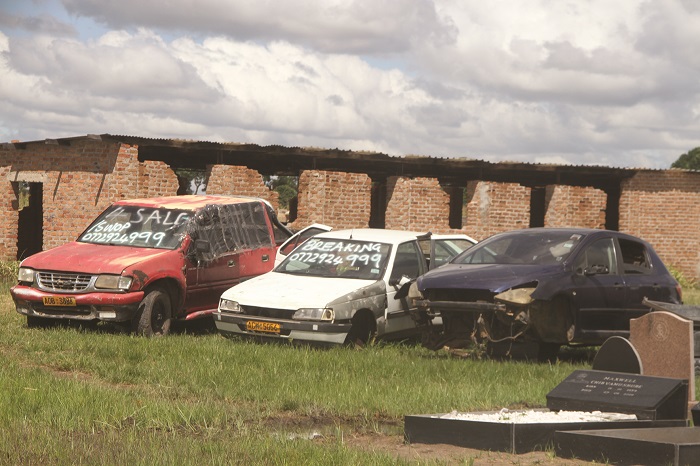
Tendai Chara
MOST people consider cars, even pre-owned ones, prized possessions.
It is, therefore, not surprising that in Zimbabwe, since 2009, when the country adopted the multi-currency system, which resulted in improved disposable incomes, there has been an influx of second-hand vehicles.
Close to 325 000 cars were imported in the 18-year period between January 2009 and March 2017, according to the Zimbabwe Revenue Authority (ZIMRA).
Most notably, imports accelerated to 50 000 between 2019 and 2020.
The trend continues to this day.
But, while owning a car is considered progressive and convenient, the continued shipments of second-hand vehicles to Zimbabwe, some of which have a short lifespan, is increasingly stoking an emerging threat in communities – the accumulation of pollutants from metal waste.
“It all depends on the state in which the vehicle was when it was imported. We have had instances in which imported vehicles break down before even reaching the country’s borders. On average, the lifespan of a second-hand vehicle is between five and 10 years,” said Mike Madanha, who sells second-hand cars.
Hazard
The sight of junked second-hand cars, most of which would have been cannibalised by metal recyclers, is now common in most communities.
It is particularly worse near or around Gazaland in Highfield, Harare.
Car wrecks lying idle on roadsides, in backyards and in scrapyards, however, come at a cost to the environment.
After being exposed to harsh weather conditions for long periods, car components deteriorate. As a result, oil and battery acid leak, polluting the environment in the process.
The leaks pose a risk to people’s health and safety.
Apart from illegally taking up swathes of land, the abandoned vehicles also become a breeding ground for pests such as rats that spread diseases.
Monica Zibagwe – a safety, health, environment and quality officer with a local company – said there are proper ways of disposing of metal waste, especially from car wrecks.
“The best option is to take the car shells to scrapyards, where they will be burned, baled and then taken to steel mills. The steel industry can help tackle this growing scourge,” she said.
Driving along Harare’s Willowvale Road during the rush hour can be an unpleasant experience.
The road – which links the capital’s central business district with suburbs such as Highfield, Glen Norah and Budiriro, among others – is often heavily congested.
Not only are the old, damaged and neglected vehicles occupying the roadside a blemish to aesthetics, they also affect how motorists navigate the road.
Trainos Mombeyarara, a mechanic who operates in an open space near Gazaland Shopping Centre, explained how some of the vehicles end up becoming unsightly shells.
“Some of the cars are brought to us for maintenance services, but the owners may take long to come and collect them. Such vehicles may reach a point where maintenance and storage costs would far outweigh the real value of the cars,” he said.
In most cases, such vehicles are generally stripped for parts or are abandoned altogether.
At Gazaland and other shopping centres in towns and cities, car wrecks, especially those that are near beerhalls, are often used as hideouts by criminals, or for stashing drugs.
Commercial sex workers have also been known to use abandoned vehicles and car shells as love nests.
Illegal junkyards have surfaced along the Harare-Chitungwiza road and near Zindoga Shopping Centre in Waterfalls.
The Harare-Bulawayo Highway has also not been spared.
Car shells and old neglected vehicles usually stick out like a sore thumb in open spaces and at illegal car parks.
Harvesting car parts
The majority of car parts that are stripped and harvested from old, neglected and damaged vehicles mostly end up being sold at Gazaland and Mbare’s Siyaso markets.
A visit to both markets revealed that the trade in second-hand car parts is lucrative business. Car components that range from doors, exhaust pipes to lights and tyres are hot sellers.
Tom Tembo, a scrap metal dealer who also sells used car parts at Siyaso, said there has always been a ready market for used car parts that are stripped from shells and abandoned vehicles.
“We have certain clients who prefer second-hand car parts they get from car-breakers, as they are considered to be original and much stronger. I have been in this business for a long time and I know for certain that this can be a lucrative enterprise,” he said.
Importing spare parts often proves costly for most vehicle owners.
“The surge in the number of imported second-hand cars has boosted demand for spare parts. Vehicle owners prefer buying from us because we are open to negotiations and offer original parts, though old,” said Naison Mawoyo.
However, Tafara Magora, who is a seasoned professional mechanic, disagrees.
“It is not wise to buy second-hand car parts. We are witnessing accidents due to mechanical faults because of this. Often, when you buy an old car part, it will have long passed its lifespan, thereby placing your life at risk,” he warned.
Cannibals
A car-breaker who operates on Willowvale Road, Ben Shoniwa, said he specialises in buying non-running cars.
However, some car owners even bring them for breaking. “After cannibalising for parts, we dump the shells in the nearest open space. I personally do not know where such scrap can be properly disposed of,” he said.
According to the country’s regulations, it is a crime to occupy State or council land without authority.
“Council is currently working on cleansing the capital city of abandoned vehicles and illegal car parks. As we speak, our officers are undertaking an operation in which we are targeting car-breakers who illegally occupy spaces and illegal car parks,” Harare City Council spokesperson Innocent Ruwende said. Abandoned vehicles are ordinarily towed to council offices.
Adverts notifying the vehicle owners of council’s intention to dispose of the abandoned vehicle or car shell are later flighted in the media, after which the unclaimed property is auctioned off. Car shells that cannot be auctioned are then taken to council-owned scrapyards.
Chitungwiza Town Council spokesperson Lovemore Meya said the local authority intends to bring sanity to the dormitory town.
“We are following up on those who illegally set up car parks and car-breaking businesses. Ideally, if one intends to operate a car park, that person should apply to council and our planning team assesses whether the site will be suitable or not,” he said.
“We recently carried out an exercise that saw abandoned cars and shells being towed away. The owners of the cars paid fines for flouting the town’s by-laws.”
Elsewhere, in the United States, a vehicle that has been left unattended on public property for more than 24 hours is towed to the scrapyard.
And the US has lucrative incentives for businesses that invest in recycling scrap metal.
It is largely believed that Statutory Instrument 89 of 2021, which now outlaws the importation of second-hand vehicles that are more than 10 years old, except commercial vehicles and those for agriculture purposes, will help lessen challenges caused by the continued influx of used cars.



 Online Reporter