Gibson Mhaka, Zimpapers Politics Hub
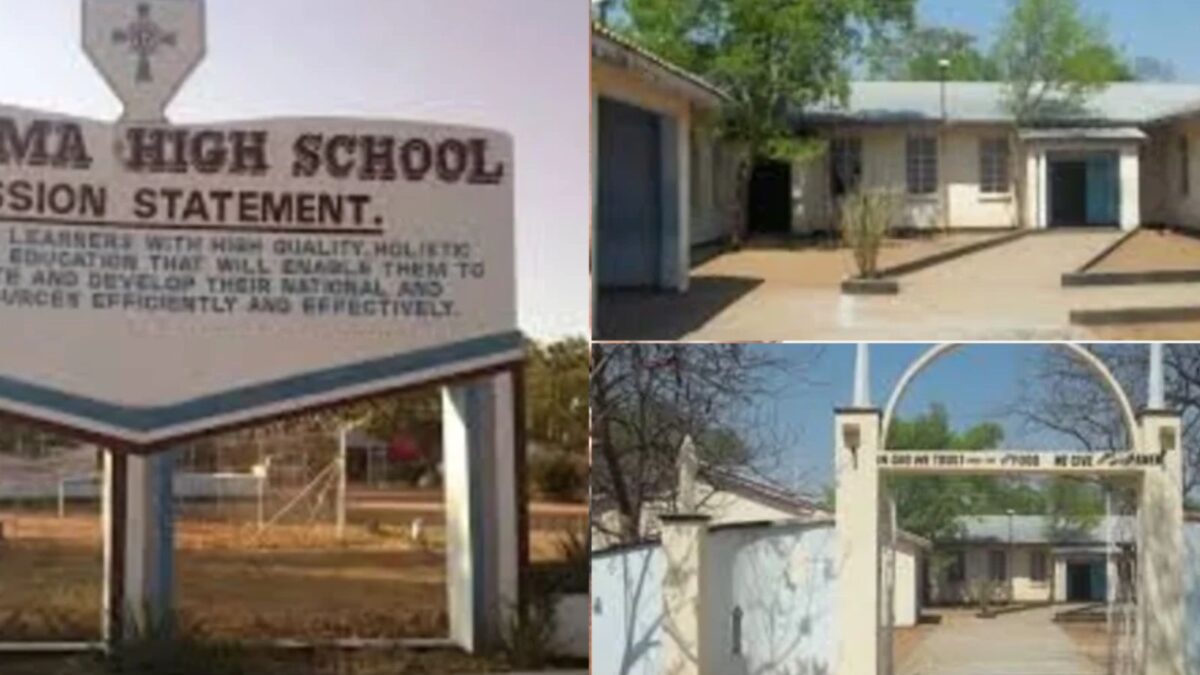
THE morning sun stretches across the open Matabeleland landscape, casting long shadows over the grounds of Manama Mission in Gwanda South.
To the casual observer, it is a quiet school, its classrooms and pathways bearing the familiar signs of everyday learning.
Yet beneath that calm lies a story of courage, sacrifice and a generation whose childhood was interrupted by the demands of a liberation struggle.
More than four decades ago, in January 1977, hundreds of pupils left these grounds and embarked on a journey that would take them from the classroom into the history of Zimbabwe’s fight for independence. Some were barely teenagers.
Their departure, alongside teachers and other school staff, transformed Manama into one of the most poignant landmarks of the liberation war.
Today, plans to erect a monument and a roll of honour at the mission are about more than commemorating an event.
They represent an important effort to give names, faces and lasting recognition to young people whose contribution deserves a permanent place in the national story.
The initiative also speaks to a wider responsibility — preserving the physical places that bear witness to the struggle, ensuring that the sacrifices made there are not reduced to fading memories or fragments in history books.
The Manama episode remains one of the most striking accounts of the liberation war.
On January 5, 1977, ZIPRA guerrillas were seen around the mission school before taking about 400 pupils — 230 boys and 170 girls — as well as teachers and nurses. The group walked more than
40 kilometres before crossing the Shashe River into Botswana and proceeding to Zambia for military training.
The scale of the exodus demands careful documentation, not selective recollection. It is a story of young people caught between the innocence of childhood and the realities of a war being fought for the country’s future.
Manama’s history has also been shaped by the politics of memory, with nationalist fervour and competing accounts influencing how events are recalled.
Preservation must, therefore, be anchored in reliable records and balanced historical interpretation, rather than a convenient version of the past.
The proposed roll of honour is particularly significant because it can restore individual identities to what is often remembered as a collective story.
National Museums and Monuments of Zimbabwe curator-archaeologist Dr Senzeni Khumalo said work had been completed at Ratanyana Battle Site Museum and a monument erected at
Thekwane High School. The team would now move to Manama to complete the monument and roll of honour, alongside work at the Zezane Assembly Point.
“We are combining Manama with the Zezane Assembly Point monument. Our teams will now be moving to Manama, where the designer is already working on the plaque with the roll of honour of the 400 that left the school to join the liberation struggle,” she said.
At Thekwane High School, where the entire school reportedly joined the liberation struggle, panels and a monument have been installed.
Dr Khumalo said the roll of honour was still outstanding because the school had been asked to locate its records. Once those were available, the team would return to mount a plaque bearing the names.
Evangelical Catholic Church in Zimbabwe Western Diocese education secretary and former Primary and Secondary Education permanent secretary Mrs Tumisang Thabela said the church welcomed the Government’s recognition of the pupils’ contribution.
She said the National Museums and Monuments of Zimbabwe had approached the school and church ahead of the 2026 Independence celebrations, explaining that a field museum would be erected in memory of the “children of valour”.
“We are glad, as a responsible authority, as a church, that the Government has finally recognised the role that this school and the children from this school played in the fight for the liberation of Zimbabwe,” she said.
Mrs Thabela said completing the monument and roll of honour would ensure that the contribution of the school, church and region was formally recorded.
That recognition is important because the liberation struggle was not fought only by those whose names dominate national histories. Schools, churches, rural communities, families and young people were also drawn into the wider experience of the war.
Their stories, too, form part of the country’s collective memory. The work at Manama, Ratanyana and Thekwane must, therefore, be understood as part of a national responsibility, rather than a collection of isolated construction projects. Zimbabwe’s liberation heritage is spread across a broad landscape of training and transit camps, battlefields, pungwe meeting places, restriction camps, detention centres and protected villages.
Together, these sites tell the story of mobilisation, military preparation, political education, displacement, resistance and the human cost of the struggle.
Among the sites that deserve equal attention are the former detention centres established by the colonial regime to isolate nationalist leaders and suppress growing resistance to white-minority rule. Gonakudzingwa in Chiredzi District, Masvingo Province, was established in April 1964, while Sikombela in Gokwe South District, Midlands Province, followed in June 1965. Wha Wha in
Gweru, established in February 1964, is another important part of this history.
These places should not be left to deteriorate or survive only in the recollections of former detainees. They were sites of confinement and hardship, but also places where nationalist leaders endured detention, maintained political resolve and continued to shape the course of the struggle.
Their preservation would help future generations understand not only the courage of those who fought in the bush, but also the resilience of those who resisted colonial rule behind detention walls and barbed wire.
Government’s programme extends beyond Zimbabwe’s borders, recognising that the liberation struggle was regional and that neighbouring countries played a significant role in supporting the quest for independence.
Ahead of the 2026 National Heroes’ Day and Zimbabwe Defence Forces Day commemorations, the Ministry of Home Affairs and Cultural Heritage embarked on the second phase of rehabilitating liberation war heritage sites in Mozambique and Zambia, while preparations were being made to begin work at a historic site in Angola.
The programme targets four sites in Mozambique — Tembue, Nyangao, Doroi and Chicualacuala — and six in Zambia: Freedom Camp, Nampundwe, Mkushi, Mlungushi, Kavalamanja and St Mary’s in Kabwe.
These sites reflect the regional character of the struggle and honour the countries and communities that hosted and assisted the liberation movement.
At home, the Battle of Chinhoyi site, Chibondo Memorial in Mount Darwin and Altena Farm in Centenary have also featured in heritage preservation efforts.
Mass grave sites, including Matumba Six in Mutasa and the Butcher site in Rusape, carry an especially solemn responsibility. They recall the killing of freedom fighters and civilians and the brutality of the war. Such places require dignified protection, accurate records and sensitive interpretation that respects the victims, their families and descendants.
The National Museums and Monuments of Zimbabwe, the country’s principal heritage custodian, has a central role in identifying, documenting and protecting these sites.
However, preservation cannot be left to one institution alone. Schools, churches, local authorities, veterans, historians and communities must also contribute by gathering testimonies, safeguarding documents, verifying names and protecting heritage sites against neglect.
Where records are incomplete, careful research and consultation with surviving witnesses and affected communities are indispensable.
Properly maintained sites can serve as living classrooms for pupils, researchers and visitors, connecting younger generations with the country’s history beyond the pages of textbooks.
They can also support heritage tourism and stimulate local economic activity, although such benefits must remain secondary to the primary purpose of remembrance, education and historical preservation.
Immortalising liberation heritage sites is not about freezing history or discouraging debate.
It is about safeguarding evidence, acknowledging sacrifice and deepening public understanding of the difficult journey through which independence was achieved.
It also means ensuring that the experiences of ordinary people — pupils, teachers, detainees, villagers and families — are not lost beneath the weight of grand political narratives.
Manama’s monument and roll of honour, alongside the work at Ratanyana and Thekwane, are welcome developments.
But the task must be pursued with the same commitment at detention centres such as Gonakudzingwa and Sikombela, as well as at battlefields, mass graves and former training camps.
At its core, a nation’s history is preserved not merely through the monuments it erects, but through the care it takes to protect the truth, recognise those who shaped it and pass their stories on.
Zimbabwe must ensure that the places where its freedom was fought for, endured and won remain visible reminders to generations yet to come.