Moffat Mungazi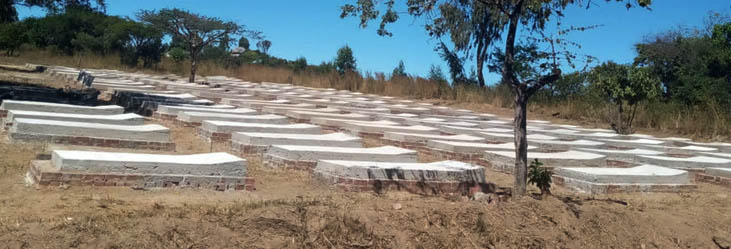
Lloyd Makonya
Correspondent
AS Zimbabwe approaches its 45th Independence Anniversary, the nation must take a moment to reflect on the significance of its liberation struggle and the sacred sites that embody the sacrifices made.
Liberation war shrines, both within Zimbabwe and beyond its borders, hold immense historical, cultural, social and spiritual significance.
They are not just places of remembrance; they are the very fabric of Zimbabwe’s identity, narrating the story of courage, resilience, and self-determination.
However, without deliberate and structured preservation efforts, these sites risk being forgotten, undermining the legacy of those who laid down their lives for freedom.
Liberation war heritage sites serve multiple functions in Zimbabwe’s historical and social landscape.
First and foremost, they provide a tangible link to the country’s past, ensuring that future generations remain connected to the sacrifices made in the quest for sovereignty.
The importance of these sites extends beyond historical documentation; they act as symbols of unity, reminding Zimbabweans of the collective struggle that transcended ethnic and regional divides. Moreover, these sites are crucial for educational purposes.
Students, historians, and researchers benefit from direct exposure to these historical places, gaining deeper insights into the country’s liberation struggle. Preserving these sites ensures that accurate narratives are maintained, countering revisionist history and external influences that may seek to distort Zimbabwe’s past.
From a cultural standpoint, these shrines are places of reverence, where families of fallen heroes can pay homage to their loved ones.
They serve as pilgrimage destinations for war veterans and survivors, fostering a sense of pride and continuity.
Additionally, these heritage sites hold significant tourism potential, attracting visitors interested in Zimbabwe’s history, thus contributing to economic development through heritage tourism.
Zimbabwe’s eastern border with Mozambique witnessed some of the fiercest battles during the liberation struggle due to the several sectors of guerilla fighters which were operating from Mozambique into the then Southern Rhodesia, leaving behind several important liberation war heritage sites.
Operational sectors such as Monomotapa, Musikavanhu, Tangwena, Chitepo, and Takawira were some of the sectors waging guerrilla warfare along the eastern border to weaken colonial forces.
They were operating from Tete, Manica and Gaza provinces of Mozambique to bring about Zimbabwe’s freedom.
Across the province, stories are told from the heights of Chipinge to the plains of Buhera about intense battles, key acts of sabotage by the liberation war forces against the white regime, and sad stories of massacres of innocent masses by the Ian Smith regime as they sought to hang on to power.
Mass grave sites like the Matumba Six in Mutasa and Butcher site in Rusape stand as a chilling reminder of the brutality of the war, where hundreds of freedom fighters and innocent civilians were buried en masse after being massacred and such acts of martyrdom and contributions to the war should never be forgotten.
Beyond Zimbabwe’s borders, Mozambique and Zambia provided refuge, training, and operational bases for liberation fighters.
Chimoio in Mozambique was one of the largest liberation war camp that was bombed by the Rhodesian forces, resulting in massive casualties.
Nyadzonia, also in Mozambique, was the site of a horrific massacre where thousands of refugees and freedom fighters were killed.
Other important sites include Doroi and Tembwe in Mozambique, which served as training camps for liberation fighters, and Freedom Camp in Zambia, a strategic military base that played a critical role in the struggle.
These sites are sacred, and their preservation should be prioritized to ensure they remain a part of the nation’s living memory.
Recognising the importance of these sites, Government has implemented several initiatives aimed at their preservation.
Key institutions involved in this effort include the National Museums and Monuments of Zimbabwe (NMMZ), which serves as the primary custodian of the country’s heritage.
In Manicaland last year, NMMZ, managed to rehabilitate a total of 162 graves to concrete slabbing at three prominent liberation war heritage sites, namely ‘Butcher Site” in Rusape, Manicaland Provincial Heroes’ Acre and at Nyanga District Heroe’s Acre.
With improved resources, the Second Republic, is on a drive to improve the preservation of many other liberation war sites across the country and immortalise the true Zimbabwean story of liberation.
Key stakeholders like the Zimbabwe National Army and war veterans play an essential role by providing crucial historical context and assisting in the maintenance of war graves and memorials.
Local authorities and communities also play a significant role, as traditional leaders and local governments contribute to site protection.
Community engagement ensures that these sites are respected and protected against vandalism. Despite these efforts, there is still need for more structured and well-funded programmes that prioritise site rehabilitation, historical documentation, and accessibility improvements.
Zimbabwe can draw lessons from other nations that have successfully preserved their liberation war heritage.
South Africa has turned Robben Island, where former President, Nelson Mandela was imprisoned, into a world-class heritage site maintained by the Robben Island Museum, ensuring continuous research, education, and public engagement.
Vietnam has preserved the Cu Chi Tunnels, an extensive underground network used by the Viet Cong during the Vietnam war (1955–1975), demonstrating how war heritage can contribute to national identity and economic growth.
They served as an extensive underground network for the Viet Cong, providing shelter, supply routes, and operational bases in their fight against American and South Vietnamese forces.
The tunnels are now a preserved historical site in Vietnam, showcasing the resilience and strategy of the Viet Cong during the war. Rwanda’s Kigali Genocide Memorial, while not a liberation war site, serves as an important example of how a nation can honour its past while educating future generations.
This site includes a museum, archive, and reflection spaces, ensuring that historical memory remains intact.
To ensure that Zimbabwe’s liberation war shrines remain protected and accessible, there needs to be increased funding for preservation efforts.
Government, in partnership with private sector stakeholders, should allocate more resources towards the refurbishment and maintenance of these sites.
Incorporating these sites into the education system through the Heritage studies curriculum will help deepen appreciation among young Zimbabweans, while community involvement in preservation efforts could provide employment opportunities in site maintenance, tourism services, and cultural programming.
More importantly, technological documentation, such as digital archiving, virtual reality reconstructions, and interactive exhibits, should be developed to bring these historical sites to life for a wider audience for example for sites like ‘Butcher Site’, Dzapasi and Chimoio.
The preservation of Zimbabwe’s liberation war shrines is, not just about honouring the past, it is about safeguarding the nation’s identity, educating future generations, and fostering national pride.
As the country celebrates its 45th Independence Anniversary, there must be a renewed commitment to rehabilitating and protecting these sites.
By learning from global best practices and implementing structured preservation strategies, Zimbabwe can ensure that its liberation war heritage remains an enduring source of inspiration for generations to come.
The blood of the fallen heroes nourished the tree of independence, and their memory must never be left to fade.
The responsibility to protect their legacy lies with every Zimbabwean, ensuring that the story of the liberation struggle continues to be told, honoured, and celebrated.


 Online Reporter