

 admin
admin
Welcome Phineus Lugube
I have been persuaded to write this article because of my belief and personal observations of the astute leadership of President Mugabe as an archetypical leader who has the attributes of authentic leadership.A myriad of catch phrases in leadership styles have been propounded by researchers, scholars and management practitioners. But these buzzwords remain academic constructs unless they are applied practically from an organisational context and as seen by followers and others.
Authentic leadership is a theory of leadership. Authenticity is a great word with great meanings. An authentic person is someone who is true to himself or herself, someone who is honest and open and believes in his or her abilities. An authentic person does not hide anything from others and lives with integrity.
Leadership therefore is supposed to be buttressed by authenticity. Leading is being in front of others exploring new avenues and setting direction. Authentic leadership is perceived as the art of fighting for others and being an example and taking responsibility.
Karin Klenke, an expert in the discipline of leadership and other scholars state that authentic leadership is not only limited to political leaders who would take risks and fight for their people. A key factor contributing to the effectiveness and development of authentic leadership is the self-awareness of the leader which includes the leader’s values, emotions, and identity and set goals.
Self-awareness is a measure of the individual’s ability to understand the self and to observe it accurately and objectively. Self-awareness occurs when individuals recognise their own existence and what constitutes this existence within the context which they operate over time.
Authenticity is related to leader reputation. The question that may be asked is what is reputation? It is a perceptual identity reflective of the complex combination of salient personal characteristics and accomplishments, demonstrated behaviours and intended images, presented over some period of time as observed directly or reported from secondary sources.
Further to the leader reputation, it can be argued that there is a symbiotic relationship between leader reputation and leader prototypicality. Prototypicality entails the degree to which an item is an exemplar of the category of which it is a member. It is argued that those in a position to direct a group are individuals who are seen to be most prototypical of the group in a given context, for example the democratically elected leader President Mugabe.
There is considerable evidence suggesting that leadership is contingent upon leaders being perceived as prototypical of a social identity that they share with their followers.
Authenticity goes beyond being true to oneself, to others and the world. Authentic leaders are known by their ability to reveal their inner self to others, which is self-disclosure. Self-disclosure aids in reinforcing self acceptance because revealing more of oneself allows more opportunities for others to accept an individual and also others foible mistakes.
Self-disclosure means opening to a higher power admitting spiritual needs and struggles as well as exposing the individual’s vulnerability by opening themselves to pain and suffering. It is argued that experiencing vulnerability becomes an important leadership component when it comes to connecting with others at basic level of humanness (unhu, ubuntu, botho).
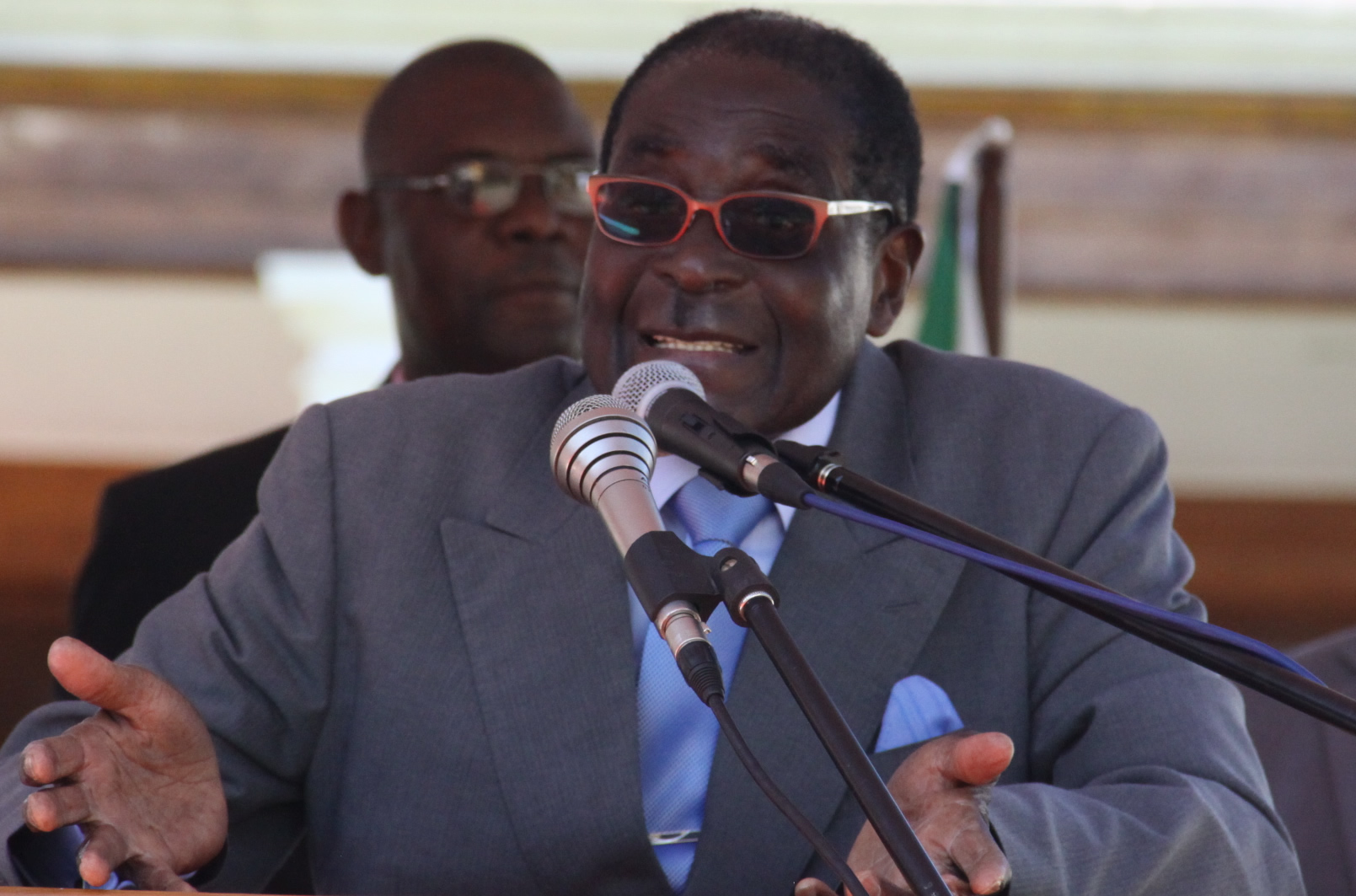
President Mugabe possesses the authentic attributes of his leadership. He combines his authentic leadership with spiritual leadership identity in many instances. Examples abound. His castigation of homo-sexualism as an abomination against the moral laws of the Almighty God aligns Cde Mugabe with spiritual leadership and leadership prototypicality.
Leader prototypicality is derived from the leader’s self identity and human capital (knowledge) he or she brings to the leadership role. For that reason, authentic leaders have a highly developed sense of how their own roles as leaders carry responsibility to act morally and in the best interest of others.
One very important attribute of authentic leadership is self-sacrifice. Historically President Mugabe and the late Vice-President Joshua Nkomo by languishing in jail for over 10 years, demonstrated self-sacrificial leadership. Others like Mahatma Gandhi, Mother Teresa and Martin Luther King similarly demonstrated self-sacrificial leadership.
Contemporaneously, Suu Kyi a Burmese pro-democracy leader and Nobel Prize winner spent six years under house arrest fighting for the freedom of her country. Other business leaders as well as political grassroots and religious leaders especially during crises and economic downturns made selfless contributions that have fuelled the interest in the role of sacrifice in leadership.
Leadership often entails suffering since the tasks involved require physical, mental, psychological and emotional labour which takes a toll on even the most resilient leader as no one is immune to pain, internal conflicts, stressors and suffering. Self-sacrificial leadership goes beyond an individual’s motivation to help others or selflessness.
The total or partial abandonment or permanent/temporary postponement of personal interests, privileges and welfare in the division of labour by volunteering for more risky and arduous tasks, the distribution of rewards involving giving up one’s fair and legitimate share of organisational rewards and or voluntarily refraining from using position power and privileges, are a few of authentic leadership traits demonstrated by Cde Mugabe.
We see from the above description of an authentic leader that moral ethics and personal integrity are critical components of authenticity. These values and attributes are broadly classified as altruistic (unselfish, human) love and hope. People should choose leaders for character not charisma.
Transformational/charismatic leaders may win the hearts and minds of their followers by taking interest in their well being and inspiring vision of the future, but the lack of authenticity simply make them more of stage performers than leaders. In authentic leadership, a person’s characteristics like personality and mental abilities as well as intellectual capital that is, skills and general knowledge, are important attributes.
It can be asserted that social capital that is, networking and professional contacts are part of authentic leadership as well.
Furthermore, authentic leadership is a hybrid of all other leadership styles like transformational, charismatic and more importantly servant leadership. Robert Greenleaf, the founder of the modern day servant leadership movement said:
“The servant leader is the servant first. It begins with the feeling that one wants to serve and the conscious choice brings one to aspire to lead. The best test is; do those served grow as persons; do they while being served, become healthier, wiser, freer, more autonomous and more likely themselves to become servants?”
The Biblical perspectives of servant leadership are based on an individual being a servant to both God and others as seen in Isaiah 41 verse 8 and in Isaiah 42 verse 1. Jesus stated in reference to himself: “the son of man did not come to be served but to serve and to give his life as ransom for many” (Matthew 20; 28).
Other authorities state that “individuals do not become servant leaders by choice or desire, nor can servanthood be conjured up by disciplines or special acts.”
This therefore illustrates that servanthood is the result of an individual’s personal relationship with Christ as the character and purpose of Christ become pre- eminent in an individual’s life. Servant leaders have a high regard for their followers. This high regard is termed agape love, which forms the motivation of the Beatitudes in Matthew 5.
As the leader practises the seven Beatitudes, his levels of humility and altruism towards his followers increase. The unprecedented waves of hostility from some parts of the Western world on President Mugabe stem from, among other nationalistic policies, his gospel of indigenisation and empowerment for all indigenous Zimbabweans.
An indigenous Zimbabwean is entitled to unfettered access to all Zimbabwean resources, minerals, agricultural products and more. By ownership of these key resources, the people can create their own employment which rewards them financially thus empowering them.
Financially empowered communities develop themselves and further create more employment and the cycle continues for posterity. The detractors of indigenisation vehemently and ferociously fight against the birthright of Zimbabweans and in so doing torment, denigrate, and taunt the authentic leadership of Cde Mugabe, who in spite of all the odds against him and the nation, prevails because of the will of God and the people of Zimbabwe.
The same powerful forces claim to be the champions of democracy which they apply selectively. These people must be labelled pseudo or inauthentic leaders who have fallen prey to self aggrandisement. Such leaders purport to be authentic but instead use their positions to feed their narcissism, authoritarianism, and Machiavellianism.
Authentic leadership is about authenticity of leaders and their leadership. In recent times, the upheavals in society worldwide and in Zimbabwe in particular, have energised a tremendous demand for authentic leadership. However such leaders are rare.
President Mugabe has more than demonstrated his authenticity by steadfastly remaining honest and true to his nation and keeping Zimbabweans united despite a barrage of illegal sanctions imposed by our enemies.
Zimbabwean people unequivocally spoke loudly on 31 July 2013 by re-electing President Mugabe, thus confirming overwhelmingly that he is an authentic leader of all time.
*Welcome Phineas Lugube is a PhD candidate in African Leadership Development, Graduate School of Business, National University of Science and Technology, Bulawayo. He can be contacted on [email protected], [email protected], [email protected] or his mobile phone 0774 673 954.


 Online Reporter
 derick.khumalo