Chronicle Editor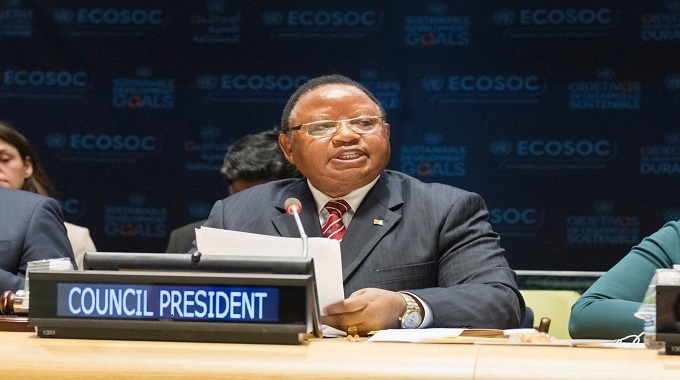
Victoria Ruzvidzo in NEW YORK, USA
PRESIDENT Mnangagwa has called for collective action in building an inclusive, just and sustainable world anchored on peace, solidarity and mutual respect.
Addressing the United Nations General Assembly here early yesterday morning, President Mnangagwa said world peace could be attained by fostering sustainable development, strengthening multilateralism and upholding humanity.
In a speech read on his behalf by Foreign and International Affairs Minister Dr Frederick Shava, the President said the world was not in a good place and urgent action needed to be taken.
“In this spirit of unity, we must prioritise the most vulnerable and marginalised populations, ensuring that no one and no place is left behind in our pursuit of progress.
“Sustainable development cannot be achieved without peace, and peace cannot be sustained without addressing the root causes of conflict, chief among them poverty, inequality, intolerance, resource scarcity exacerbated by climate change, and unwarranted external interference in the internal affairs of some States,” he said.
“By investing in education, healthcare, and sustainable economic opportunities, we can create resilient societies that empower individuals and communities to thrive. To attain this, we should commit to a renewed sense of global partnership, where every nation, large and small, contributes to, and benefits from, our collective efforts.”
With only six years to go before the 2030 deadline for the attainment of Sustainable Development Goals (SDGs), President Mnangagwa said the world was at a crossroads and needed to expeditiously adopt strategies to accelerate action, boost funding and promote innovative solutions.
In this regard, Zimbabwe strongly supported the proposed SDG stimulus to reinvigorate implementation of these goals. Some of the targets include no poverty, zero hunger, good health and well-being, quality education, gender equality and clean water and sanitation.
The SDG target dovetails with the country’s Vision 2030 of an upper-middle income economy.
“I wish to reiterate our steadfast commitment to the 2030 Agenda for Sustainable Development, spearheaded by our transformative Vision 2030.
“This national blueprint sets forth our aspirations to propel Zimbabwe to upper middle-income status by 2030, focusing on robust economic growth, sustainable development, and holistic societal transformation,” said President Mnangagwa.
He reiterated the call for the removal of illegal sanctions which he said affected Zimbabwe’s efforts to achieve the SDGs. The adverse effects of the illegal punitive measures presented real barriers to the country’s developmental trajectory, a situation compounded by the effects of climate change.
President Mnangagwa said Zimbabwe stood in solidarity with the people of Cuba in their struggle against the blockades while supporting the self-determination of the people of Palestine and Western Sahara.
“The international community cannot continue to turn a blind eye or be numb to the systematic injustices and suffering of the Palestinian people.
“We call upon the Security Council to fulfil its mandate by implementing robust measures that ensure the protection of civilians, the upholding of international law, and the facilitation of a just and lasting peace.”
President Mnangagwa also lamented the skewed international financial system which he said had become irrelevant to the current dictates.
This demanded urgent redress.
“Our economies, which are the lifeblood of the global market, are disproportionately affected by the rigid and often inequitable policies imposed by dominant financial institutions.
“The current system, steeped in historical power imbalances, has failed to provide the necessary flexibility and support required for sustainable development.
“It is imperative that we reform these structures to ensure that they are more inclusive, equitable, and reflective of the diverse realities that are faced by all Member States, particularly, the Global South,” he said.
President Mnangagwa, who is the current SADC Chairman, said the effects of climate change had grossly affected the region as the El Nino phenomenon had caused a drought. Resultantly, the group’s Heads of State and Government launched an international humanitarian appeal of US$5,8 billion in May, a figure that was likely to rise as more national assessments were completed.
“The overarching objective is to meet the immediate needs occasioned by the El-Nino induced drought, while at the same time building resilience for future shocks, including through the establishment of early warning systems,” said the President.
He told the General Assembly that Zimbabwe was actively pursuing robust economic growth, sustainable development, and holistic societal transformation towards achieving an Upper Middle Income Economy by 2030.
This includes substantial investments in infrastructure development, education, a modern, Heritage-based Education 5.0 Model, healthcare and modernised agriculture, among others to ensure inclusive prosperity across all strata of society.
“In earnest pursuit of the SDGs, Zimbabwe has recorded commendable strides across various domains. We have implemented rigorous policies such as our Agriculture 6.0 Model, aimed at bolstering food security, enhancing access to potable water and sanitation facilities and investment in renewable energy,” said President Mnangagwa.
“Our comprehensive social protection frameworks and healthcare systems have yielded tangible reductions in poverty levels and disease burdens. Further, we remain unwavering in our commitment to empowering women and youth, recognising their pivotal role as architects of sustainable transformation and development”.
The Government was also advancing a devolution policy driven by the philosophy, “Leaving no one and no place behind”. The focus of the programme was designed to promote grassroots development through empowering provincial and district authorities to lead their development aspirations.
“Our goal is to ensure that no community, village, town centre or province is left behind in our developmental efforts. As a result of this policy thrust, we have witnessed a life changing and transformative impact driven by this bottom-up approach,” President Mnangagwa said.
Overall, he said, Zimbabwe stood ready to play its part in the community of nations.
“I wish to reaffirm Zimbabwe’s commitment to the purpose and principles of the UN Charter. The challenges we face are immense but not insurmountable. By acting together, we can advance peace, promote sustainable development and uphold human dignity for present and future generations,” said President Mnangagwa.
The UN General Assembly is being attended by at least 150 global leaders.
The General Debate session ends on Monday next week.


 Online Reporter