Chronicle Editor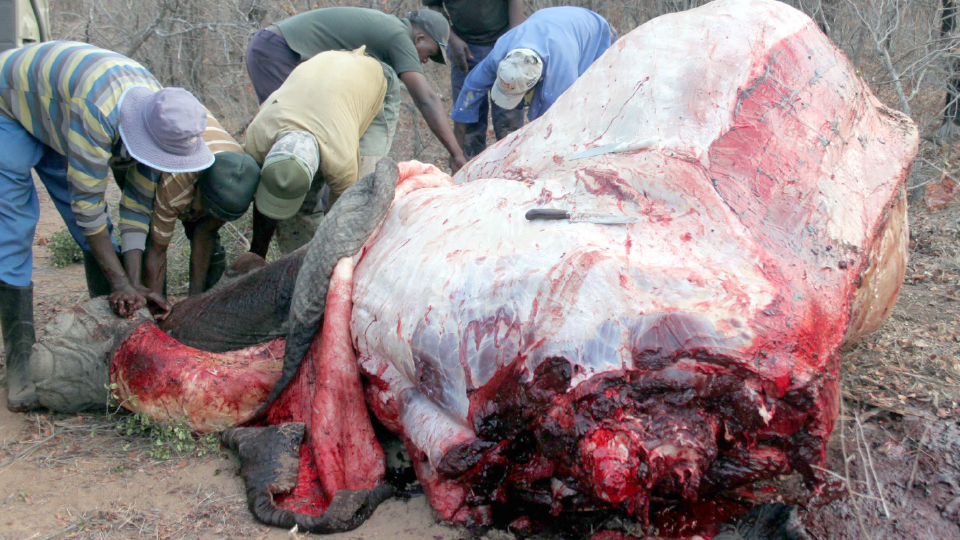
Mkhululi Ncube in Bulilima
A “night curfew” has been enforced in certain villages within Bulilima District, Matabeleland South, due to wandering elephant herds that have entered communities in search of food and water, causing significant damage.
Due to the fear of elephant attacks, some parents are keeping their children home from school, worried that the long distances might lead to encounters with the elephants.
The affected communities are mainly Dombodema and Thekwane, a few kilometres from Plumtree Town. The elephants have torn down paddock fences on private farms, uprooted trees, damaged water sources, and intruded into homesteads.
As summer temperatures soar with most water sources drying up and pastures depleting, the incidents heighten concerns over the spate of human-wildlife conflict occasioned by the El Nino-induced drought, and the reality of climate change.
Our news crew noted that the road from Plumtree Town to Dombodema was scattered with fresh elephant dung and fallen trees of various sizes, clear signs of the “unwelcome visitors” in the area. Along the road, six men were also seen skinning a bull elephant, which council hunters had shot in one of the private farms.
“Once the sun sets, walking around at night may be a risky challenge in the community. The elephants hide during the day and at night they emerge from the private farms and start moving all over,” said one of the Thekwane villagers, Mr Ephraim Dlodlo.
Mrs Clarah Gonde from Thekwane Village, some eight kilometres from Plumtree Town said they were living in fear of the elephants.
“The elephants have destroyed trees in the bush and near our homesteads. They are destroying trees mostly big trees while hunting for wild fruits,” she said.
“We are now collecting the damaged big mopane trees for firewood. In our village, we are not allowed to harvest firewood but the elephants are destroying the trees and we just go collect.”

Mrs Gonde showed the news crew piles of firewood she had prepared from mopane trees felled by elephants before proceeding to a homestead owned by a Zimbabwean in the diaspora where the elephants uprooted a tree that fell on a house and damaged it.
“We plead with the wildlife authorities to try and chase the elephants away. I fear that if they shoot them, they will become even more dangerous and soon we may hear they have killed someone,” she said.
“We now accompany our children to school fearing the elephants may emerge from the bush and attack them.”
Mr Christmas Mpala from Dombodema, who works at one of the farms along Plumtree-Dombodema Road, said the elephants had taken over the area and often move in big numbers at night.
He said their family has lost the entire fence for the farm as the elephants destroy everything in their path.
“It has been months since the elephants arrived and they have destroyed all our fencing. We no longer bother repairing the fence because the next morning it will be down again,” said Mr Mpala.
“The elephants passed through our farm last night as you can see their fresh dung. You cannot go out and chase them but just let them do whatever they want. You heave a sigh of relief when they pass your place because you never know what they can do while you are inside the house.”
Mr Mpala said they now cage their dogs once the elephants start moving to avoid irritating them. He said the first herd of elephants to arrive in the area had about 40 heads, but the numbers continued increasing.
Mr Douglas Takawira, who works at a private farm, said the elephants have done untold damage to the environment as what used to be bushes on the farm has been reduced to open spaces.
“The elephants are moving without any restrictions even in homesteads as they search for food and water,” he said.
“We urge the council to suspend fines charged for impounding stray cattle because this is not our doing. The elephants have destroyed our fences, and we cannot control the movement of our cattle.”
Besides the gloom and doom, Mr Takawira said he has been collecting elephants’ dung as it is believed to have healing properties.
“I am doing some research with this elephant’s dung. I know it heals those with nose bleeding. I have been using WhatsApp Artificial Intelligence to know what else the dung can be used for. I also collect it for my manure for my vegetable garden,” he said.
Mr Gidon Ncube, who was driving along the Dombodema Road, said he met the large herd on Wednesday night just after sunset.
“The elephants drink at Village 28 Dam not far from here. I came across a herd on Wednesday night coming from Plumtree. As you can see these broken trees, it’s the herd I saw, which did this damage,” he said.
“Our greatest challenge now is that they have depleted our livestock drinking water sources and we are losing our cattle to that as our area has few boreholes.
“They have also destroyed the fencing for our gardens as they enter looking for food from trees inside.”
Natural Resources Officer for the council, Mr Lizwelethu Tshuma said the local authority was facing resistance entering some private farms when they want to control the jumbos.
“We appeal to private farm owners to allow council to enter their farms to drive away the elephants .During the day they hide at private farms and when we cannot enter it is impossible for us to do anything .We are glad the owner of this farm gave us permission to hunt the elephants inside and we shot one to scare them away,” he said.
Mr Tshuma said the elephants are suspected to have come from Botswana in search of food and water due to this year El Niño induced drought.



 Online Reporter