Online Reporter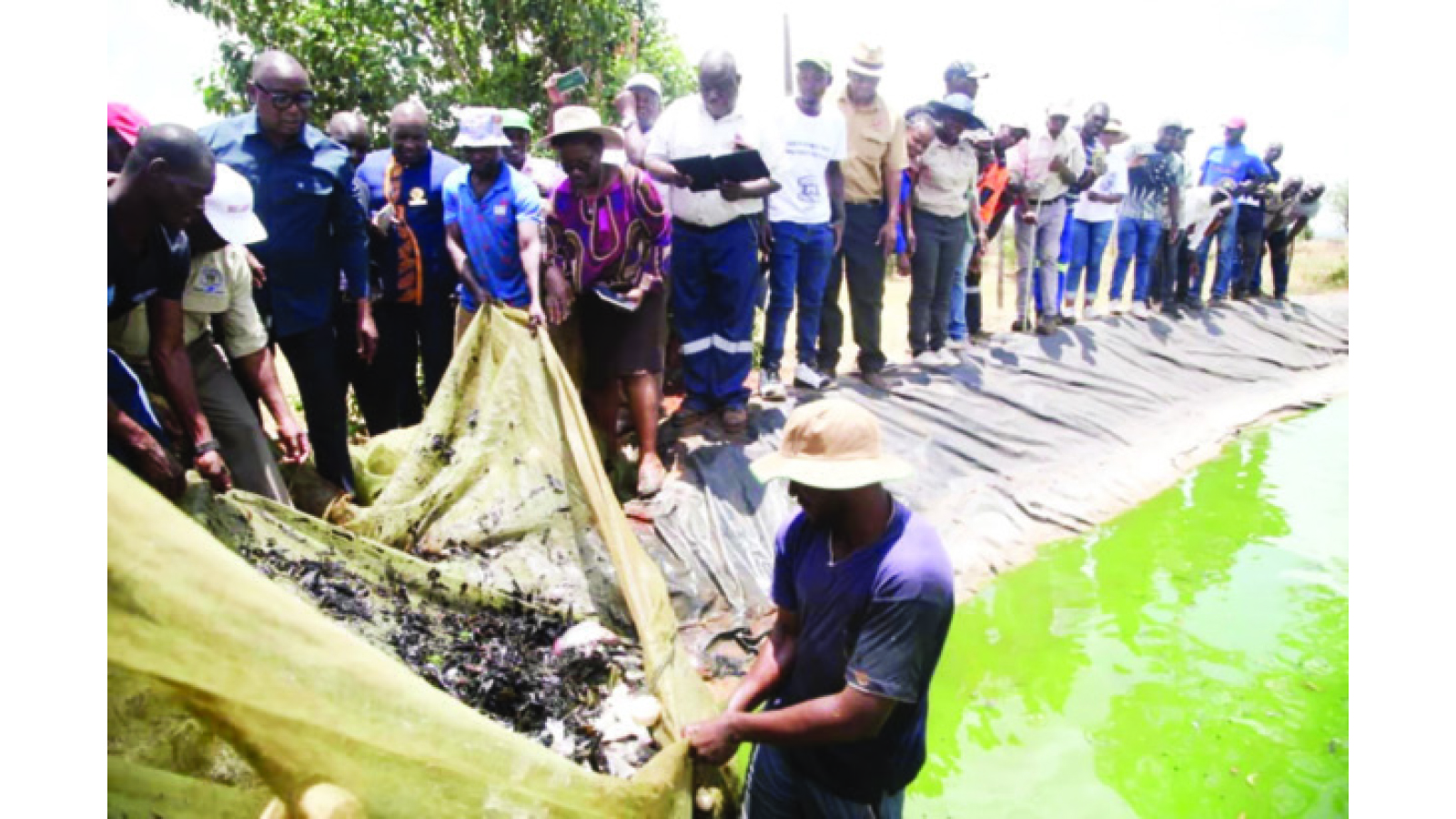
Conrad Mupesa-Mashonaland West Bureau
A VISIT to President Mnangagwa’s Pricabe Farm in Kwekwe has inspired Zimbabwe’s Ambassador to Belarus, Ignatius Mudzimba, to transform his TaSaFa Farm in Mhangura into an agro-industrial hub.
The farm, which has over 200 cattle and annual summer grain production, has become an example of successful fish farming. With over 65 000 fish ready for harvesting, Ambassador Mudzimba aims to expand the project further, as his team receives training and expertise from Agritex officers.
Yesterday, his farm hosted the Makonde District Fingerling Stocking and Fish Harvesting Field Day, where Ambassador Mudzimba shared how he was inspired by President Mnangagwa. Lands, Agriculture, Fisheries, Water, and Rural Development Deputy Minister Davis Marapira officiated at the event.
“I visited President Mnangagwa’s Pricabe Farm some time ago and was inspired by his diverse farming practices,” said Ambassador Mudzimba.
“Apart from crops and animal husbandry, His Excellency has also invested in fish farming. The fish project piqued my interest.”
Although he started his project modestly with only 1 000 fingerlings, Ambassador Mudzimba has expanded it to 65 000 fingerlings and plans to sell the fish at an average price of US$2,50 per kg.
With the Government’s assistance, he has dedicated an additional piece of his farm to this project, expanding it with six new ponds.
Ambassador Mudzimba envisages adding value to his business by venturing into biltong and mesh-wire production at the farm.
The Government, through the Fisheries and Aquaculture Resources Production Department, provided Ambassador Mudzimba with 12 000 fingerlings. In his address, Deputy Minister Marapira encouraged farmers to support the Government’s call to contribute to enhancing the country’s US$1 billion fisheries and aquaculture industry.
“We are currently only a fraction of what we require as a nation. This is why we have taken a deliberate stance to convert all water bodies into fish farming projects for the benefit of the country. Additionally, we aim to produce more fish for export to increase foreign currency earnings,” he stated.
The deputy minister urged farmers to expand their understanding of farming beyond just crop production and to invest in other areas that contribute to the overall health of the industry.
“Makonde is well-known for crop production, but farmers should also explore fish production, as it can yield returns comparable to other agricultural practices,” he noted.
Further, he encouraged Zimbabweans in the diaspora to invest back home, highlighting the importance of building income-generating projects for their eventual return.
“We have many Zimbabweans abroad who struggle to invest in projects back home where they will eventually retire. As the saying goes, ‘make hay while the sun shines’, let’s invest in projects like these,” he said.
Ambassador Mudzimba’s fish farming project has inspired other farmers and locals in the district. Ms Spiwe Sithole, a local farm worker, expressed her newfound enthusiasm after learning about the project. “I have always wanted a large piece of land, but now I realise how much I can earn from a small area. Fish farming is a lucrative business I was previously unaware of,” she said. Another young farmer, Mr Shingirai Kapfeka, encouraged his peers to consider fish farming due to its high returns and relatively low labour intensity.
The Government has also introduced the Presidential Community Fisheries Scheme to promote food security and improve livelihoods through community-based fish farms, aiming to increase local fish production and reduce dependence on imported fish while generating income for rural communities.