admin
admin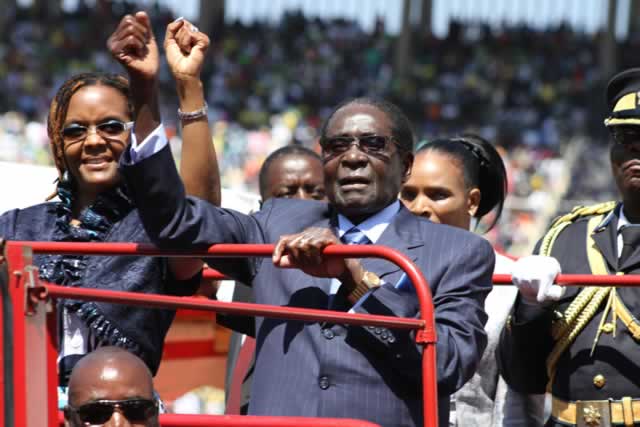

Kurai Prosper Masenyama
AUGUST 22 2013, was a historic day for Zimbabwe in much or less a similar way to April 18 1980, in that it was a celebration of the people’s decisive victory over the imperialist forces. While the 1980 triumph was a direct victory over the imperialist white forces led by the unrepentant Ian Douglas Smith, the 2013 event celebrated the defeat of the same white forces represented by their proxies and unquestioning puppets in the form of the MDC-T.
At the centre of these two victories is a common underlying denominator — Cde Robert Mugabe. While Cde Mugabe lit the independence torch in 1980, the Zimbabwean masses have given him another mandate to carry the same torch of progress for another five years.
Another similarity of the historic events is that on the two historic occasions, President Mugabe delivered great speeches that set the tone for the operations of the new Government. While the 1980 speech set the tone for the birth of the new nation anchored on the idea of reconciliation and nation-building, the 2013 speech lays out a clear agenda on the need to finalise the complete freedom of Zimbabweans through the delivery of economic emancipation.
This is going to be done through the implementation of the path-breaking indigenisation and economic empowerment programme.
“It is a set policy, our chosen path to full sovereignty’’
The President makes it clear that the policy is a clear party and Government initiative that will never be reversed. This is a direct message to critics, local and foreign, who were still hoping that the policy might one day be scrapped. Those who thought the indigenisation crusade was an election gimmick are lost. President Mugabe has assures the nation that the policy will be implemented to its final conclusion. It is also important that investors, both existing and new, are clear on the requirements they need to meet for doing business in this country.
President Mugabe highlights the importance of total economic emancipation as a complement to the political freedom that the Zimbabwe enjoys. It should be clear to all and sundry that the value of political freedom will be greatly depreciated if the nation’s citizens are not benefiting from the exploitation of their natural resources.
Underlying the importance of sovereignty, the President points out that this policy is a result of a conscious decision by Zimbabweans to make it a chosen path to full sovereignty’ Zanu-PF made this choice and the citizens endorsed it by overwhelmingly voting for the Party in the just ended harmonised elections. This is in direct contrast with other political formations whose policies are forced down their throats by outsiders who have more to benefit than the indigenous people.
“People of ill-will have cast aspersions on our hallowed policy of indigenisation and economic empowerment’’
It is critical for Zimbabweans to understand that the indigenisation and economic empowerment programme is being implemented against a background of hostility buttressed by the imposition of economic sanctions and illegal regime-change manoeuvres of the Western world.
Thus, these forces with the aid of misguided local organisations have indeed ‘cast aspersions’ on the policy spreading falsehoods throughout the world about the nature, rationale and form of the policy.
The remnant of the Rhodesian racist regime like Eddie Cross, Roy Bennett and others of their ilk aided by the Tsvangirais, Bitis and Mangomas of this world have tried to build careers out of tearing apart the indigenisation programme on behalf of those foreigners currently benefiting from the country’s resources. Furthermore, those directly benefiting have been fiercely resisting surrendering part of the cake.
Thus, in some instances the implementation of this life-changing programme can be confrontational as it is a fight over resources and survival.
Thus, Zanu-PF has christened the programme the ‘Fourth Chimurenga’ to highlight its contested nature. Thus, Zimbabweans should understand it is a battle and should play a critical part to ensure that the battle is won for their benefit.
“Unemployed youth, the businessperson, the farmer — small, medium, big, , the self employed all have great expectations”
President Mugabe made it abundantly clear that he is aware of the expectations of the multitude of Zimbabwean.
Zanu-PF’s resounding victory in the elections is massive endorsement of the indigenisation and economic empowerment message and there is no need to delay the people’s empowerment.
By identifying the categories of people and their expectations, President Mugabe lays the foundation of the direction and focus our empowerment programme is likely to take.
Furthermore, the Zanu-PF winning Peoples’ Manifesto has big plans clearly laid out for each of the identified categories.
The Manifesto lays clear strategy of beneficiation for unemployed and self employed youth through the ‘focused application of the programme of Indigenisation and Economic Empowerment.
In addition to the provision of youth empowerment funds and business skills training Zanu-PF is championing a new youth policy which seeks to create more and vibrant opportunities for the youth by establishing a 25 percent per cent quota as a threshold for their participation across all sectors of the State and economy.
Funds will also be made available for self employment projects through financial institutions like Sedco which the Peoples Manifesto directs that US$300 million be allocated for empowerment projects especially those run by women and youths.
The Sedco investment programme will draw US$300 million from indigenisation of assets to support 30 000 projects over the next five years. Businesspersons will also be financed and assisted to re-capitalise their businesses ravaged by the negative impact of the illegal economic sanctions and regime change machinations.
Zanu-PF has big plans for farmers and the agriculture sector as hinted by President Mugabe in his inauguration speech. The party will facilitate a policy intervention whereby indigenisation assets will be unlocked to capacitate Agribank with a US$2 billion endowment to enable it to mobilise resources amounting to US$8 billion for the agriculture sector.
Adequate financing of agriculture will benefit millions of people through higher incomes, food security and the generation of employment. Agriculture financing will also stimulate economic growth through the sector’s strong backward and forward linkages.
Thus, President Mugabe is fully aware of the ‘great expectations’ of various groups of people and Zanu-PF has a clear plan for the beneficiation of these categories.
‘(Zimbabweans) could not be bystanders in the exploitation of their resources . . .’
Cde Mugabe crucially highlighted that all Zimbabweans has a critical role to play in the success of the indigenisation programme.
Thus, all citizens across board,- women, youth, war veterans, war collaborators, ex-detainees, restrictees and political prisoners, the disabled, farmers and other key stakeholders should familiarise themselves with the indigenisation policy and play an active role in its execution and beneficiation. President Mugabe was even magnanimous enough to acknowledge the contribution of outgoing leaders of the Government of National Unity.
In conclusion . . .
In the final analysis, the people of Zimbabwean have spoken through the ballot and President Mugabe has responded through a ‘blistering, all-encompassing and empowering’ inaugural speech laying out the empowerment delivery agenda. While the ‘War Cabinet’ delivered land to the people in the 2000s we now await the inception of the ‘Empowerment Cabinet’ to take charge of delivering economic empowerment to the people.
Kurai Prosper Masenyama is the Zanu-PF Director of the Indigenisation and Economic Empowerment Department.


 Online Reporter