Online Reporter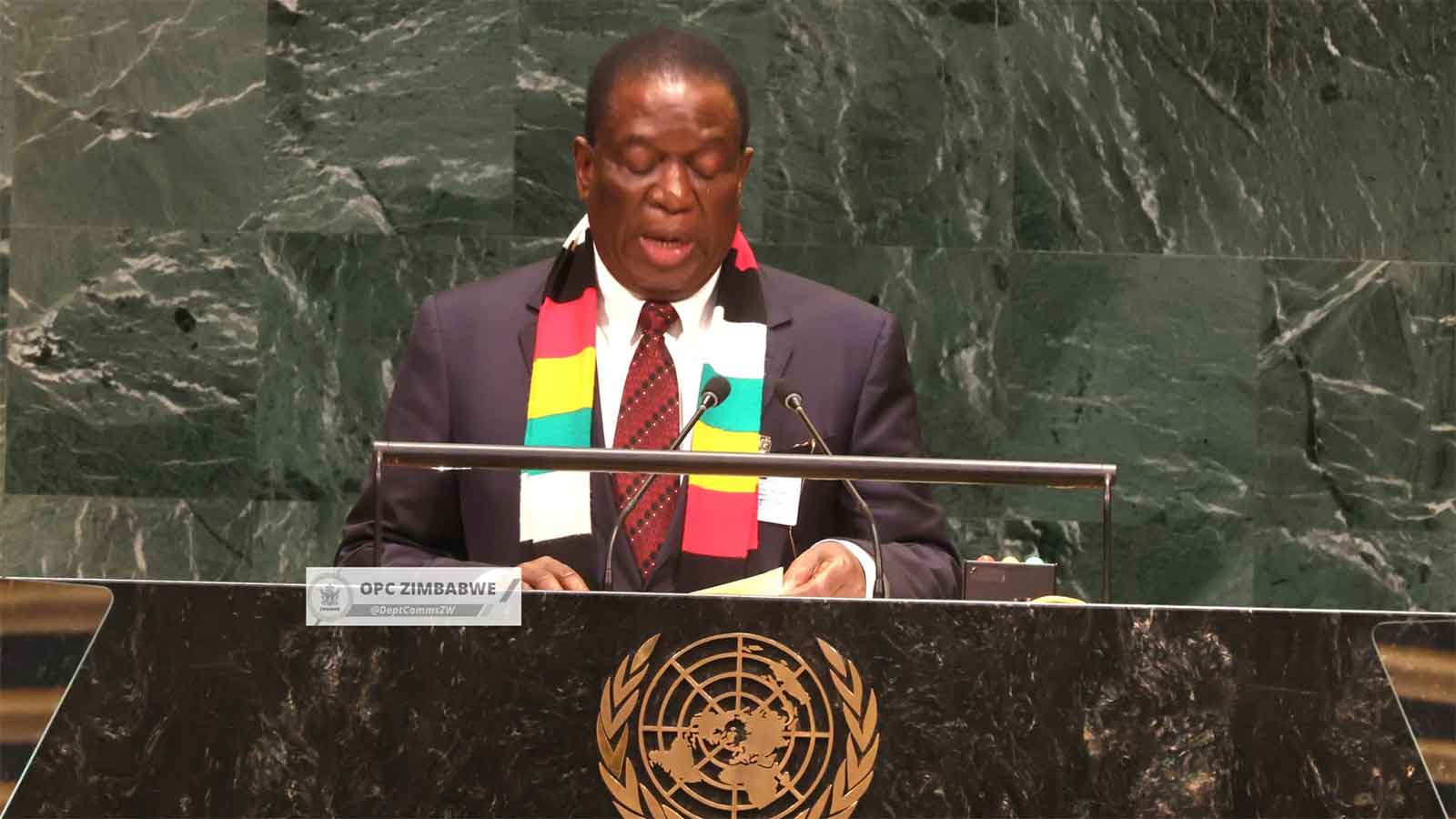
Wallace Ruzvidzo in New York, USA
President Mnangagwa has called for a just and equitable international order anchored on peace and dialogue rather than conflict and confrontation.
Addressing the 81st Session of the United Nations General Assembly (UNGA81) in New York today, President Mnangagwa said the world needs a United Nations that promotes peace, development and equality among nations.
“As the current crop of leaders, it should concern us that today, somewhere, a child is born into war, a family is displaced by conflict, a farmer loses another harvest to drought, and a young person wonders whether technological progress will expand opportunity or deepen inequality,” said President Mnangagwa.
He also expressed Zimbabwe’s gratitude to the international community for the confidence placed on the country through its election to the United Nations Security Council (UNSC) for the 2027-2028 term.
The country, said the President, had assumed greater responsibility in addressing global peace and security challenges.
President Mnangagwa said Zimbabwe will shoulder its responsibilities on the Council by advancing peace and development while amplifying the concerns of developing countries.
“Zimbabwe is grateful for the confidence placed on us through our election to the Security Council for the 2027-2028 term.
“My country will assume this responsibility in January 2027 with humility, independence, and a readiness to serve, guided by our foreign policy of being a friend to all and an enemy to none,” said the President.
He said Zimbabwe will use its tenure on the Security Council to advance the African Agenda, including the continent’s long-standing call for permanent representation on the Council in line with the Ezulwini Consensus.
He said lasting peace could not be achieved without development, calling for equitable access to concessional financing to enable developing countries to pursue their development priorities.
President Mnangagwa said the voice of developing countries must be strengthened in global decision-making processes to ensure that international institutions reflect the interests of all nations.