peter
peter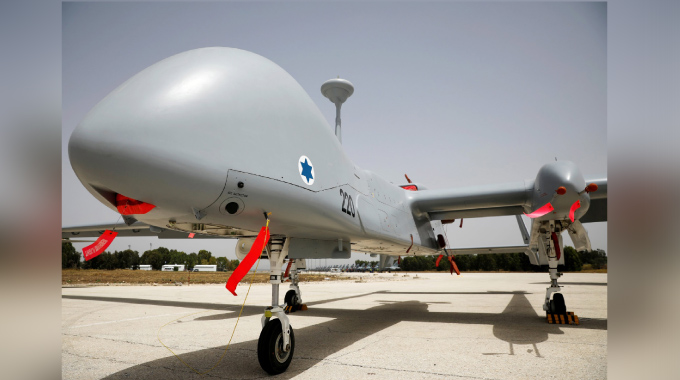
Jacqueline Ntaka
TODAY military dominance hinges more and more on technological prowess. It was pleasing to hear President Mnangagwa calling for the Zimbabwe National Army (ZNA) to wholeheartedly embrace technology and innovation. This is a strategic move that echoes current global trends.
Cutting-edge technologies are rapidly reshaping military capabilities, offering unprecedented advantages in both defence and offensive operations. President Mnangagwa’s vision positions the ZNA, not just to keep pace, but to leapfrog into a future where it can confidently hold its own against any adversary.
Modernising the ZNA requires the crucial integration of Information, Communication, and Technology (ICT). As the President stressed, ICT training equips officers with the skills to operate computerised military equipment and navigate the complexities of artificial intelligence in warfare. This goes beyond simply keeping up with global standards; it’s about preparing the ZNA for a future where these skills are central to battlefield success.
Several countries have set the bar high when it comes to leveraging technology to enhance their military capabilities. The US military, for instance, has poured resources into robotics and artificial intelligence, leading to the development of autonomous systems like the MQ-25 Stingray drone. This unmanned aerial vehicle performs aerial refuelling without human intervention, showcasing the transformative potential of technology in combat operations.
Israel, renowned for its technological innovation, exemplifies the power of advanced defence systems. Their Iron Dome, a marvel of radar and missile technology, boasts remarkable accuracy in intercepting incoming threats. Similarly, South Korea’s focus on cyber warfare and electronic systems has significantly bolstered its defensive and offensive capabilities in the digital domain.
Embracing technology offers the ZNA a multitude of benefits. Enhanced situational awareness is a key advantage. Through satellite and drone reconnaissance, the ZNA can gain real-time intelligence on the ground, allowing for more informed strategic decisions. Automation and AI can streamline logistics and maintenance, ensuring resources are optimally utilised and maximising operational efficiency. Advanced simulation and training systems prepare soldiers for a wider range of scenarios, translating into improved combat readiness when faced with real-world challenges.
The digital world is becoming an increasingly critical battleground. By establishing a robust cyber unit within the ZNA, Zimbabwe can safeguard its national interests and counter potential cyber threats. President Mnangagwa’s vision is not merely an option, but a necessity in a world where global security dynamics are constantly evolving.
Investing in technology and innovation is the key to transforming the ZNA into a modern, agile and formidable force. This modernised force will be well-equipped to defend Zimbabwe’s sovereignty and contribute to regional stability.
The examples of the US, Israel and South Korea serve as a roadmap for what the ZNA can achieve with the right focus and investment. The future of warfare is digital and the ZNA must be prepared to rise to the challenge.
Jacqueline Ntaka is the CEO of Mviyo Technologies, a local tech company that provides custom software development, mobile applications and data analytics solutions. She can be contacted on [email protected].



 Online Reporter