peter
peter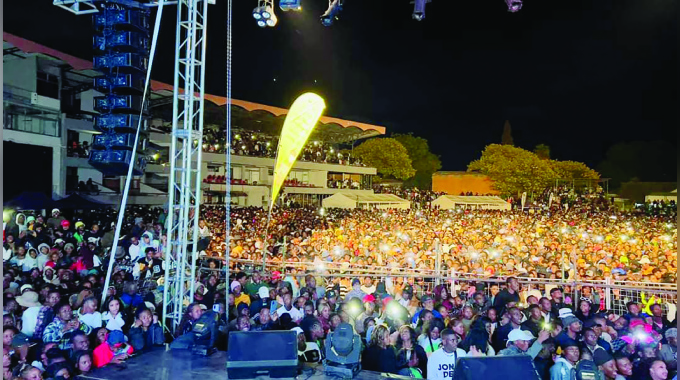
Sipepisiwe Moyo, [email protected]
The Bulawayo Shutdown show, which attracted thousands of attendees, has been widely praised for its consistent delivery of quality entertainment. Many have lauded the event for its vibrant atmosphere and its ability to draw large crowds, further cementing its reputation as a premier entertainment showcase in the region.
Coinciding with the final day of the Zimbabwe International Trade Fair, the event’s seventh edition held last weekend, featured top performers from Bulawayo, Harare and South Africa, and attracted not only locals, but also international visitors, who took part in the festivities before returning to their respective countries.
Organising an event of this magnitude involves numerous challenges, from securing sponsors and convincing top-tier performers to participate, to navigating a myriad of obstacles that arise during the planning process.
Chronicle Showbiz recently sat down with the Harris Entertainment team, to delve into the detailed planning behind the successful Bulawayo Shutdown event. Harris Lodges general manager Jordan Dube enthusiastically shared insights into both the challenges and triumphs encountered while orchestrating such a significant gathering, shedding light on the complexity and dedication involved in bringing the event to life.
Q. Can you give us a brief overview of what went into planning of the Bulawayo Shutdown gig this year?
A. I’m thrilled to have the chance to share the journey my team and I embarked on while planning the Bulawayo Shutdown show. This was a collaborative effort where we engaged with nearly everyone involved to ensure its success. This was done through advertising the event on various social media platforms, informing people across the country about the big day and engaging various sponsors from the beginning.
Q. What were some of the biggest challenges you faced in organising this event?
A. We encountered financial challenges due to insufficient sponsorship for the event. Managing finances is particularly crucial when dealing with artistes from South Africa, as they require full payment before signing any agreements. This added an extra layer of complexity to our planning and execution.
Q. How did you go about selecting artistes for this year’s line-up?
A. To tackle the challenge of artiste selection and ensure maximum audience satisfaction, we devised a strategy that involved the audience directly in choosing the performers. We posted a poll on the Harris Entertainment page, inviting fans to suggest their preferred artistes. The artistes who received the most suggestions were then selected to perform at the show, guaranteeing that our line-up reflected the audience’s favourites and enhancing the overall appeal of the event. Despite our initial plans, there were a few changes along the way. Nash brought another artiste along (Saintfloew), and during our roadshow campaign for the event, we discovered and included an up-and-coming artiste named Mhungu. Also, Aymos from South Africa failed to catch the private jet we had booked for him on time and he also had to attend awards in SA so he did not show up. We had also cancelled Emtee as he had double bookings but there were also changes in his Kenya performance so we then decided to bring him as a surprise act.
Q. What marketing and promotional strategies did you find most effective in attracting attendees?
A. Our team was deeply involved in marketing and raising awareness for the event. We organised a roadshow and distributed posters throughout the city and surrounding areas. Additionally, we handed out flyers across Bulawayo, ensuring that as many people as possible knew about the show and were excited to attend. This comprehensive approach helped generate a significant buzz and anticipation leading up to the event.
Q. How many people attended the event?
A. As of now, I haven’t had the opportunity to confirm the exact number of attendees through ticket sales. However, we are pleased to report that the event was a success. While we did not make a profit, importantly, we did not incur any losses either.
Our primary goal was not financial gain, but to demonstrate our capability and desire to host events of this nature. We aimed to showcase the potential for such events to bring people together and celebrate culture and talent, which we successfully achieved.
Q. How was this year’s turnout compared to previous events?
A. In my view, we managed to attract the same number of attendees as previous events. Some might think there was an increase, but that’s not the case. The perception of larger crowds is often influenced by how the event is captured on camera, which can make the audience appear more densely packed than it actually is.
Q. How did you manage crowd control and safety during the event?
A. I am quite satisfied with the security measures we implemented. We had over a hundred security personnel on site, ensuring everyone’s safety. I’m pleased to report that the event was highly secure, with no incidents of stolen property or breakages recorded. This level of security contributed significantly to the overall success and smooth running of the show.
Q. What impact do you think the event has on local artistes?
A. Artistes benefited significantly from the collaborations that occurred during the show, experiencing a rich cultural exchange.

They had the opportunity to learn from each other, sharing diverse artistic techniques and perspectives. The show featured an exciting collaboration between Enzo Ishall and Ma9ine, which highlighted how beneficial the event was for the artistes involved.
Q. What impact do you think the Bulawayo Shutdown has on the local community and economy?
A. The event had a positive impact on the local economy, benefiting multiple sectors. By drawing attendees from various regions, it acted as a promotional tool for domestic tourism, encouraging visitors to explore the area and spend locally. This influx of visitors supported hotels, restaurants and other local businesses, showcasing the broader economic benefits of hosting such large-scale events. I would like to extend my gratitude to Minister Barbara Rwodzi, who provided crucial suggestions that contributed significantly to the success of this event. Her insights and ideas were invaluable and we greatly appreciate her support and input.
Q. What are your future plans?
A. For our next event, we aim to enhance the experience by partnering with radio stations for broader outreach and securing more sponsorships to enrich the event’s offerings. Additionally, we plan to invest in a state-of-the-art stage to elevate the performance environment, ensuring an even more impressive and engaging experience for all attendees.


 Online Reporter