Online Reporter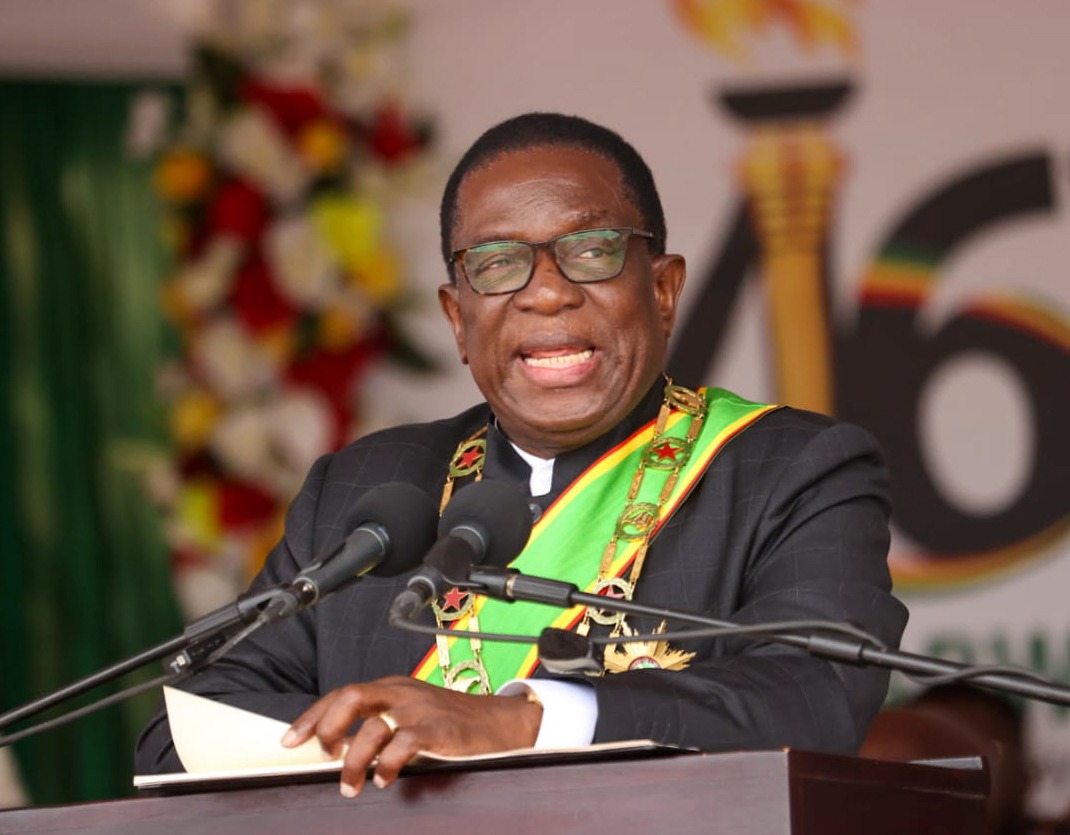
By Dr Masimba Mavaza
When President Dr Emmerson Dambudzo Mnangagwa rose to address the 81st Session of the United Nations General Assembly on 24 September 2026, he did not merely deliver a national statement. He delivered a doctrine – a Zimbabwean doctrine for a troubled world.
President Mnangagwa spoke with calmness, measured and profound authority of a liberation war veteran, a pan-Africanist and a statesman who understands both the wounds of history and the demands of the future.
As Zimbabweans, we must begin with gratitude.
A President Who Carries Zimbabwe to the World
We are grateful, Your Excellency, that you went to New York not to complain, but to lead. Not to beg, but to propose. You carried the flag of Zimbabwe not as a burden, but as a beacon. In a world suffering from a deep trust deficit, you restored confidence in Zimbabwe’s voice – clear, consistent, principled and brave.
From Sanctions Victim to Security Council Member
The most powerful moment of the address, pregnant with historical justice, was this line: “Zimbabwe is grateful for the confidence placed in us through our election to the Security Council for the 2027-2028 term.”
Let the world pause and ponder this. The very Zimbabwe that has endured more than two decades of illegal unilateral coercive measures – sanctions designed to isolate us – has now been elected by the world to sit on the United Nations Security Council, the highest table of global peace and security, assuming duty in January 2027.
This is no accident. It is the fruit of President Mnangagwa’s policy of engagement and re-engagement, his doctrine of “a friend to all and an enemy to none”, and his tireless work to make Zimbabwe a responsible and respected member of the comity of nations.
The President has moved Zimbabwe from the periphery to the core – from being spoken about, to speaking for the world. What greater vindication of Vision 2030 could there be?
Four Pillars That Place Zimbabwe on the World Map
President Mnangagwa did not go to New York to occupy a seat. He went to shape the agenda. He outlined four priorities for Zimbabwe on the Security Council, each placing Zimbabwe squarely on the world map as a thought leader.
1. Preventive Diplomacy Over War: In a world where military action alters battlefields but never builds peace, the President reminded the world of African wisdom: “the meeting place is not where courage is abandoned; it is where wisdom is summoned.” This heritage-based approach to peacebuilding is uniquely Zimbabwean and African, and it is the antidote to endless wars consuming the globe.
2. Africa Must Lead African Peace: By calling for the full implementation of Resolution 2719 and predictable financing for African Union-led peace support operations, President Mnangagwa cemented Zimbabwe as the champion of African solutions to African problems. This is the Ezulwini Consensus in action.
3. Resources for Development, Not Conflict: As a mineral-rich nation, Zimbabwe’s declaration that its rich heritage and natural endowments must advance industrialisation and the green agenda, not finance conflict, is a powerful global statement against illicit resource trafficking and looting. It speaks directly to Zimbabwe’s own policy of value addition and beneficiation.
4. Women and Youth at the Centre of Peace: This is the President who has empowered youth and women at home, now extending that philosophy to the global peace architecture.
A Bold Defence of Multilateralism
Perhaps the most courageous and most Zimbabwean part of the address was the President’s unwavering defence of the UN Charter.
“International law cannot be a shield for some and a sword against others… Unilateral coercive measures, as a manipulative foreign policy tool, are outdated…”
In that single sentence, President Mnangagwa did what many fear to do. He told the powerful that the world can no longer tolerate double standards. He reminded the General Assembly that sovereign equality, territorial integrity and non-interference must be applied universally, not selectively.
This resonates deeply with every Zimbabwean. Our struggle against sanctions is not a bilateral quarrel; it is a defence of international law itself. By articulating this at the UN, the President elevated Zimbabwe’s national grievance into a universal principle for all developing nations.
And when he declared, “Africa is united, sovereign and independent. Africa is rising; the horse and rider mentality has no place in contemporary international discourse,” he earned a standing ovation in the hearts of all Africans. That is not mere rhetoric. That is the voice of a liberated Africa, spoken by a liberator.
Peace Anchored in Development
Finally, President Mnangagwa brilliantly linked global peace to domestic development. He reminded the world that with only 36 percent of Sustainable Development Goals on track and a US$4 trillion financing gap facing developing countries, peace cannot endure without development.
He then presented Zimbabwe as a model: three-fold GDP growth since 2017, bold reforms, food and nutrition security, climate-smart agriculture, rural industrialisation and the “Invest Rural” policy – leaving no one and no place behind.
His closing declaration – “Zimbabwe is indeed Open for Business” – was not a slogan in New York. It was an invitation backed by performance, delivered from the world’s highest podium.
President Mnangagwa’s address was balanced, dignified, pan-African and deeply patriotic. He paid tribute to Secretary-General Antonio Guterres, congratulated the new General Assembly President Dr Khalilur Rahman, and thanked former President Annalena Baerbock – showing the courtesy that defines Zimbabwean diplomacy.
He did not shout. He did not plead. He led.
He has put Zimbabwe on the world map not as a country seeking sympathy, but as a country offering solutions. A country that will soon guard world peace from inside the Security Council. A country that speaks for Africa, for the Global South, and for justice.
For this, we say: Thank you, Your Excellency. You have represented us with honour. Zimbabwe stands taller today because you stood for us in New York.