admin
admin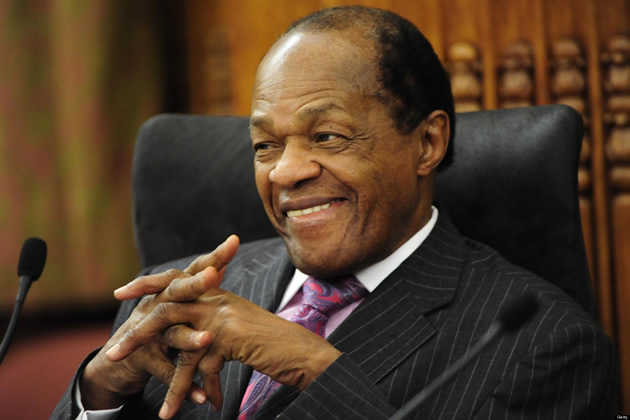
Obi Egbuna Jnr Correspondent
WHEN the former Mayor of Washington, DC, Marion Barry, who was affectionately referred to as “the Mayor for Life”, made his transition to the ancestors on November 23, 2014, the African world lost one of the most unique trailblazers our struggle for liberation and human dignity has ever produced.
Our dear brother will not only be remembered for his tireless work on behalf of everyday Africans from his days as the first chairman of SNCC (Student Non-Violent Co-ordinating Committee), but also his unforgettable journey as the mayor of the place commonly referred to by our people as either Chocolate City or Banneker City, as a symbolic tribute to the mathematician, astronomer, and freedom fighter Benjamin Banneker, who memorised the architectural plans to lay out Washington, DC.
When Mayor Barry met the former Zimbabwe ambassador to the US, Dr Simbi Mubako, in 2003 he fondly reflected on his visit to Zimbabwe in 1997 for the 4th African-African-American Summit, convened in Harare by the deceased human rights leader Reverend Leon Sullivan, Mayor Barry went on to discuss how President Mugabe is the type of leader who will better be appreciated long after he is no longer with us, and what impressed him the most is that the President, due to his political sophistication, appreciated the privilege of witnessing Zimbabwe attain its freedom from British colonial rule.
President Mugabe and Mayor Barry have a lot in common. Both were raised primarily by their mothers, the President’s mother, Bona, was a schoolteacher and Mayor Barry’s mother was a sharecropper and eventually worked in a slaughterhouse when she moved the family from Mississippi to Tennessee in the city of Memphis.
One more area of compatibility in the intellectual maturation of both President Mugabe and Mayor Barry was the role militant student activism played, in their political development at very young ages. In the case of President Mugabe he attended Fort Hare University in South Africa, with Julius Nyerere, Kenneth Kaunda, Herbert Chitepo and Mangaliso Robert Sobukwe, which provided the President an opportunity to rub shoulders and engage future comrades-in-arms who all left an indelible mark on the history of the anti-colonial movement in Southern Africa.
In Mayor Barry’s case after graduating from Lemoyne College, he entered Fisk University in Nashville, Tennessee, to pursue a Master’s degree in Chemistry, and became heavily involved in the Nashville Student Movement and the sit-ins that not only took the US government by storm, but led to the formation of SNCC at Shaw University in North Carolina during a meeting organised Easter weekend in 1960 by the Civil Rights pioneer and matriarch Ella Baker.
When future generations of Africans discover that both President Mugabe and Mayor Barry chose the path of struggle and sacrifice instead of upward mobility and comfort, they will speak their names with the utmost dignity and respect.
The decision Mayor Barry made to forgo an opportunity to earn a doctorate in Chemistry at the University of Kansas, to become the first chairman of SNCC is equally as admirable as the decision by Dr King to leave Dexter Avenue Baptist Church and work full-time for SCLC. The same can be said for President Mugabe who as much as he loved teaching at St Mary’s College in Takoradi, Ghana, which meant he opened and closed his eyes every single day on independent African soil, decided he belonged in colonial Rhodesia to be part of the Second Chimurenga with Amai Sally Mugabe right by his side.
The people of Zimbabwe and Africa are not only grateful President Mugabe chose the SEcond Chimurenga instead of a classroom in Ghana. They are pleased he return home empty-handed.
When Mayor Barry worked in McComb, Mississippi, on a voter registration project, SNCC immediately recognised the importance of living with and engaging the local people, during the Second Chimurenga, Zanu guerillas utilised this identical tactic after General Tongogara returned from training in China, and told his troops blending with the people was the most important weapon at their disposal.
After Mayor Barry was assigned by SNCC to come to Washington, DC, to organise a home rule project which became the Free DC movement he stated “most negroes came here from North or South Carolina and psychologically think they’re in freedom land they’re making two or three times as much money as they did back there”.
The other point Mayor Barry raised is they weren’t use to participating in political activity. He talked about the unwillingness to have all out political confrontation in Washington and that’s what built movements.
The way SNCC took a more militant approach to confronting the enemy is almost identical to the manner that President Mugabe and the other leaders of Zanu recognised the guerilla war had to be escalated in order to liberate Zimbabwe from the clutches of Britain and Rhodesia.
What Mayor Barry realised was in Washington, DC, the institutional racism trickled down from the Federal government itself, this went back to the days of President Woodrow Wilson who for the purpose of advancing the cause of Southern Democrats, decided to segregate federal offices and workplaces. This is what led to Harlem’s Congressman Adam Clayton Powell, who Mayor Barry is consistently compared to, stormed the dining hall of the US Congress in 1945, which was segregated and put his racist colleagues on notice by informing excluding Africans from eating there was a thing of the past.
The policy of President Wilson was not reversed until the 1950s, another historical moment that stands out is when the world acclaimed vocalist Marian Anderson was denied permission, to perform before an integrated audience before Constitution Hall in 1939.
This blatant act of racism and disrespect was carried out by the Daughters of the American Revolution, under the nose of First Lady Eleanor Roosevelt, who along with her husband FDR constructed a blueprint of masquerading as sympathisers of our struggle that all white liberals after them in the Democratic Party have emulated with great success.
The track records of President Mugabe and Mayor Barry reveal their commitment to unity, in 1968 Mayor Barry was very influential in organising the Black United Front, which was a mechanism that made it possible for our organised formations, to assemble for the purpose of developing and pursuing a common programme. The Patriotic Front between Zanu and Zapu will serve as a model for African unity for many centuries to come.
When Mayor Barry learned about the Land Reformn Programme in Zimbabwe he stated how he wished his mother and her generation, who were subjected to dehumanisation and ruthless exploitation on plantations in the South as sharecroppers, could have seen 350 000 Zimbabweans families reclaim what belonged to our ancestors.
During his final tenure Mayor Barry’s authority was usurped by racist Republicans in the US Congress when they established a control board, that controlled the District of Columbia’s purse strings, this was similar to when the US-EU alliance attempted to force Zimbabwe to accept LDC (Least Developed Country) status which meant surrendering political and economic power to President Mugabe’s most bitter detractors.
We as Africans are thankful to both President Mugabe and Mayor Barry for understanding women’s empowerment was necessary, Our people rejoiced when Mayor Barry made Barbara Sizemore the first woman superintendent of DC Public Schools. This was the exact response when President Mugabe made the current Vice President the Minister of Sports, Education and Culture when she was only 24.
Obi Egbuna Jnr is the US correspondent to The Herald and a US-based member of the Zimbabwe-Cuba Friendship Association. His email is [email protected]
Before his passing Mayor Barry said he was ready to engage in global work and he wanted to figure out some creative measures to lift US-EU sanctions on Zimbabwe. He felt President Mugabe and Zimbabwe’s HIV-AIDS work was nothing short of spectacular, he also raved about Zimbabwe’s literacy rate.
As we mourn and celebrate Mayor Barry we should honuor him by intensifying the fight to lift US-EU sanctions on Zimbabwe.
- Obi Egbuna Jnr is the US correspondent to The Herald and a US-based member of the Zimbabwe-Cuba Friendship Association. His email is [email protected]


 Online Reporter