Online Reporter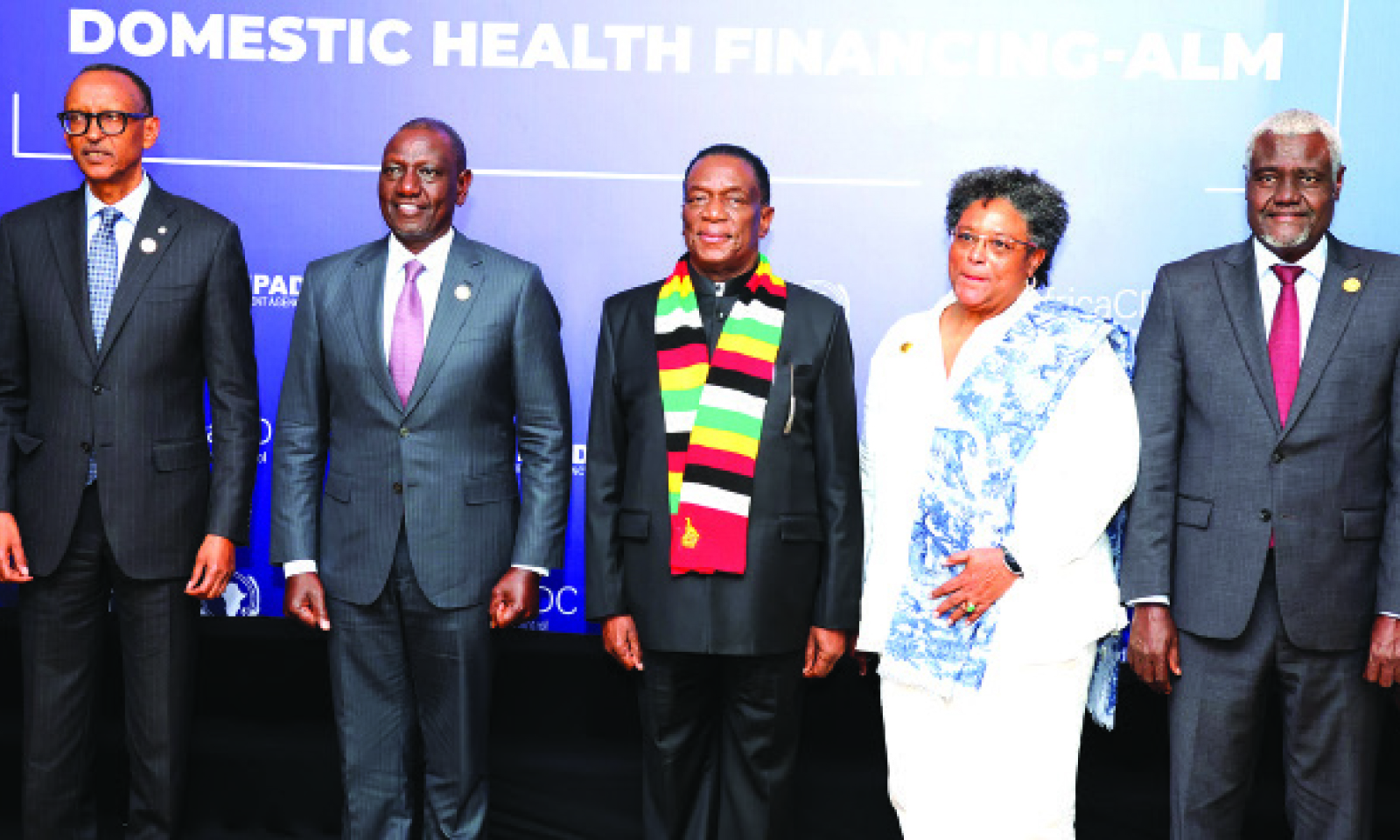
Garikai Fadzi in ADDIS ABABA, Ethiopia
THE African continent should direct more local resources towards fighting outbreaks of diseases such as cholera, mpox and marburg, President Mnangagwa has said.
Addressing the High-Level Meeting on Domestic Health Financing here yesterday, the President highlighted that on its part, Zimbabwe was working on ensuring at least 13 percent of its annual budget is directed towards the health sector in line with the Abuja Declaration.
The High-Level Meeting on Domestic Health Financing encourages domestic investment in the sector appropriately so that each country can pursue its path to achieving and sustaining universal health coverage.
“I am pleased my Government’s allocation towards health has increased significantly, from 9,8 percent of the national budget in 2024 to 13,01 percent in 2025, as we move towards the 15 percent Abuja target,” he said.
The President unpacked some of the innovative ways Zimbabwe has adopted in raising revenue for the health sector.
He said Zimbabwe has successfully introduced innovation tax regimes towards the health sector, including the Health Levy, which is a mobile airtime tax, and the sugar tax for beverages, to combat the increasing burden of non-communicable diseases.
“Most recently, we have introduced a fast-food tax to further support our health initiatives and act as a negative incentive for the consumption of fast foods,” said President Mnangagwa.
Rwanda President Paul Kagame is the African Union Domestic Health Financing champion.
The meeting came at a time when most African countries say their health sectors are at risk of challenges following an Executive Order signed by United States President Donald Trump, withdrawing from the World Health Organisation (WHO) and immediately stopping foreign assistance for 90 days.
Health budgets on the continent were cushioned by aid, especially from US agencies, and its suspension is expected to bring challenges to many countries, hence the call for nations to focus on domestic resource mobilisation.
On its part, Zimbabwe has indicated that it will use taxes on alcohol, cigarettes, fast food, and sugary beverages, commonly known as sin taxes, to cover health sector needs.
Health and Child Care Deputy Minister, Sleiman Kwidini, recently told legislators in Parliament that the situation of health funding following the suspension of donations from the US was under control.
Earlier in the day, President Mnangagwa’s hectic schedule had seen him receiving Sheik Shakhboot Al Nahyan, Minister of State of the United Arab Emirates.
The Emirati visited President Mnangagwa at his hotel.
UAE is presently Zimbabwe’s second largest trading partner behind South Africa.
Speaking after the meeting, Foreign Affairs and International Trade Minister, Professor Amon Murwira, described relations between Zimbabwe and the UAE as solid, ever since the two countries opened embassies in each other’s capitals in 2018 and 2019.
“Our number one trading partner is South Africa and now our number two trading partner is UAE,” he said.
Zimbabwe exports precious minerals and agricultural products while importing manufactured goods and essential commodities from the UAE.