Online Reporter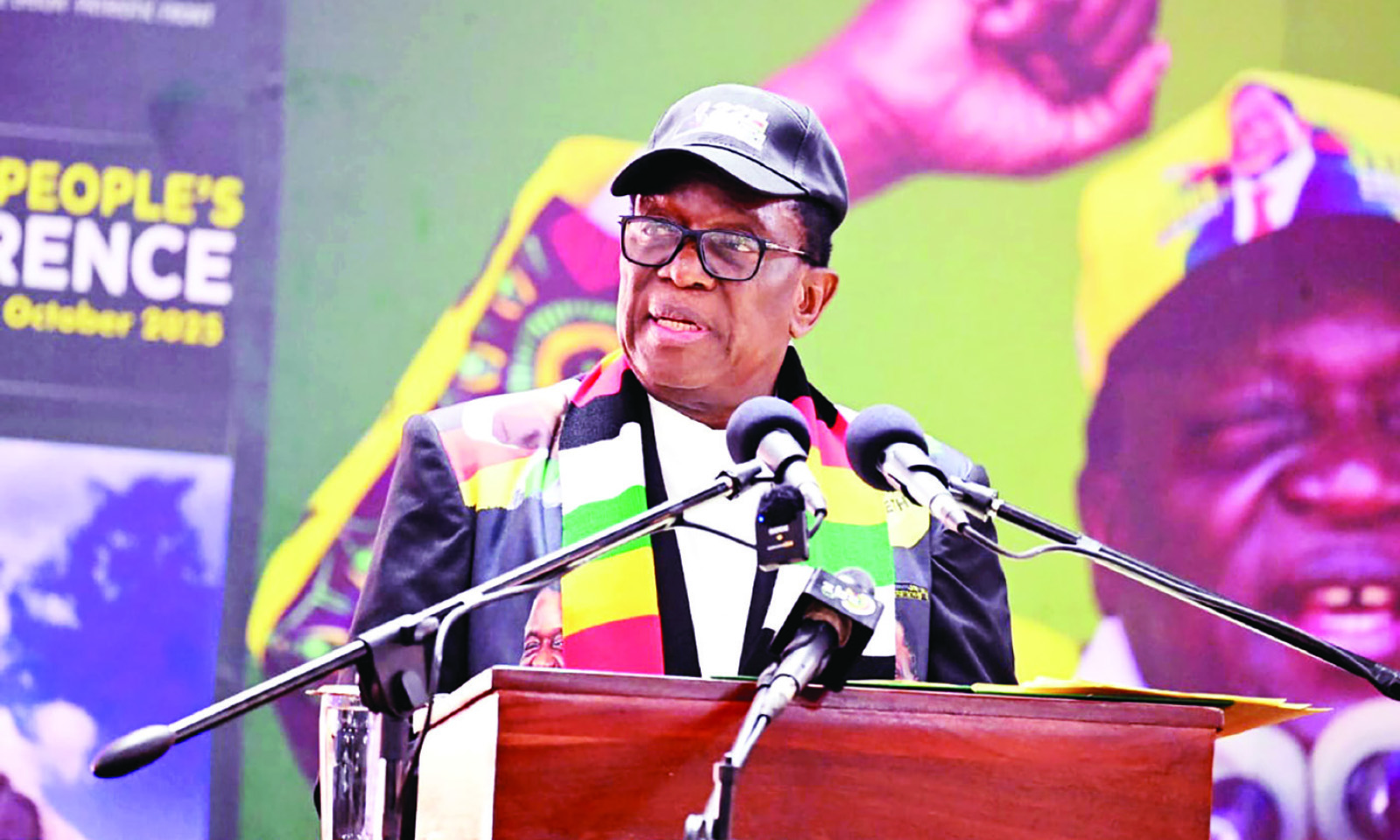
Zvamaida Murwira, Senior Reporter
PRESIDENT Mnangagwa is expected to officially open the Third Session of the 10th Parliament next Tuesday and set Government’s legislative agenda as well as deliver the State of the Nation Address.
The event, which marks the end of the Second Session of the 10th Parliament, will be held at New Parliament building in Mount Hampden.
This was announced by Deputy Speaker of the National Assembly, Cde Tsitsi Geza, in a Government Gazette published yesterday.

“It is hereby notified, for public information, that His Excellency, the President of the Republic of Zimbabwe, Honourable Emerson Dambudzo Mnangagwa will (a) in terms of Section 140 (1) of the Constitution of Zimbabwe address a joint sitting of the Senate and the National Assembly on Tuesday, the 28th of October 2025 at 1200 hours during which he will set out the Government’s legislative agenda for the Third Session of the 10th Parliament and (b) in terms of Section 140 (4) of the Constitution of Zimbabwe deliver a State of the Nation Address (SONA),” reads the notice.
Major highlights of the coming Session will be the presentation of the 2026 National Budget by Finance, Economic Development and Investment Promotion Minister Professor Mthuli Ncube.
The Budget will provide Government estimates of expenditure for next year as well as fiscal policy measures meant to stimulate economic growth.
Consultations for the Budget are underway, with different Parliamentary Portfolio Committees engaging ministries, departments and agencies, which they shadow to understand their priorities.
The current Session considered several Bills, some of which sailed through while others are still under consideration.
The Bills that are still outstanding following the prorogation of the current Session are expected to be reinstated at the stage they were as Standing Orders allow that.
Some of the Bills include the Mines and Minerals Amendment Bill, Zimbabwe Schools Examination Council Amendment Bill, Public Procurement and Disposal of Public Assets Amendment Bill, Medical Services Amendment Bill, Pipelines Amendment Bill and Climate Change Management Amendment Bill, among others.
Public hearings in respect of some of the Bills meant to gather people’s views had already been conducted.
There were several motions affecting ordinary persons that came up for debate both in the National Assembly and Senate.
Question time in both Houses also remained a major source of interest, but legislators continue to raise concern over the attendance of a few ministers to respond to questions in some instances.