

 admin
admin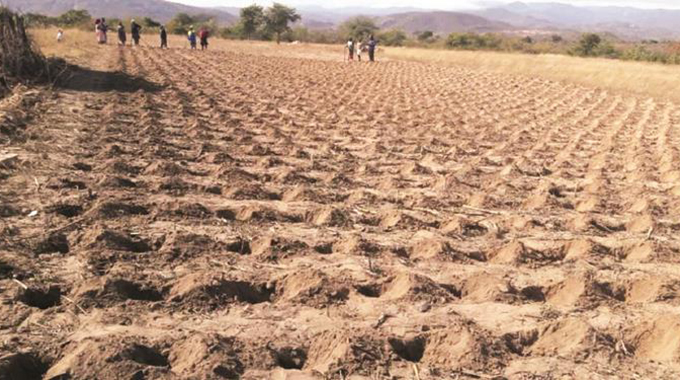
Ashton Mutyavaviri
AS the summer season draws close, Government has stressed the need to prioritise women when distributing inputs under all Presidential programmes such as Pfumvudza/Intwasa.
Lands, Agriculture, Fisheries, Water and Rural Development chief programmes coordinator with the agriculture desk, Mr Nickros Kajengo said the move was intended to empower and incentivise women to participate in the country’s economic development.
“This summer will be great for women. We want 40 percent of goods/services distributed under all Presidential schemes, be in poultry, goats, fisheries, irrigation and Pfumvudza/Intwasa to be directed to women. This should be done before anything is distributed among the rest of the people in the community. Communities will share the other 60 percent,” said Mr Kajengo.
The move will fully capacitate women with resources that can motivate them to participate in developing the economy towards Vision 2030.
Across diverse realms, ranging from the stewardship of natural resources to fervent advocacy for environmental conservation, women have undisputedly emerged as vital agents shaping the trajectory of nations toward a more sustainable future.
In recent years, a noticeable paradigm swing has taken place in the global discourse on sustainable development, duly acknowledging the indispensable contributions of women across multifarious sectors such as agriculture, education, healthcare, and entrepreneurship.
Zimbabwean women shoulder pivotal roles in the agricultural sector, rendering substantial contributions to food production and household sustenance.
They are increasingly embracing sustainable agricultural practices and spearheading eco-conscious business ventures.
Unleashing the latent potential of women in agriculture holds the key to amplifying productivity, ensuring food security and promoting sustainable farming practices in the country.
Women’s empowerment emerges as a necessity for achieving the Sustainable Development Goals (SDGs) in Zimbabwe and beyond, further observed Mr Kajengo.
Agriculture has transformed from just being a vehicle to achieving food security to becoming a serious business that deserves an equally fervent investment in labour as well as technical knowledge.
Summative data shows that women constitute mprise about 43 percent of the agricultural labour force.
They play a crucial role in promoting food and nutrition security at both household and national levels, thanks to their vast knowledge of traditional farming practices and innovative approaches that help foster resilience and adaptation to environmental and climatic challenges.
According to the Food and Agriculture Organisation (FAO), if women had the same access to productive resources as men, they could increase yields on their farms by 20-30 percent while the scarcity of a critical resource like water that women need for domestic purposes and irrigation, disproportionately affects them, as the responsibility to collect water naturally falls on the them.
“Women’s economic empowerment boosts productivity, increases economic diversification and income equality in addition to other positive development outcomes,” indicated a publication of the United Nations Women that also pointed out that conversely, it is estimated that gender gaps cost economies some 15 percent of their gross domestic products (GDP).



 Peter Tanyanyiwa
 Online Reporter