dyton mupawaenda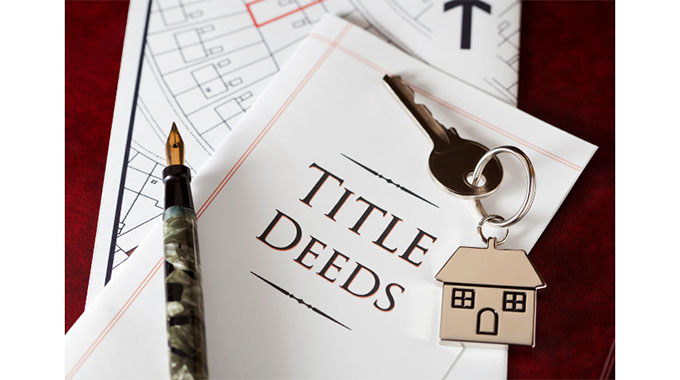
Peter Matika-Bulawayo Bureau
THE Presidential Title Deeds and Settlement Regularisation Programme has ignited excitement among Bulawayo residents as it will increase the value of their properties including opening the doors for the new stand owners to secure loans using their properties as collateral.
Over 1,5 million homeowners are expected to benefit from the exercise, which has since been rolled out countrywide following the opening of a regional office in Bulawayo last year.
Provincial offices in other parts of the country are set to be opened this year.
In Bulawayo, suburbs that are benefiting from the programme include Nkulumane, Cowdray Park, Entumbane, Iminyela, Parklands and Kumalo.
Our Bulawayo Bureau yesterday visited some of the neighbourhoods and spoke to selected beneficiaries, who said the programme invoked a sense of belonging.
“I have been paying rent for the greater part of my life and this gives me a sense of belonging and the feeling of being a homeowner is exciting. Lami sengingu mastanda (I am now also a landlord),” said a woman from Iminyela suburb.
Another resident from Parklands Mews, said the initiative would leave a legacy for his children.
“My main worry was not leaving anything tangible for my children. Times are tough and the greatest gift besides that of life which I can leave for my children is a home,” he said.
“I have done all I can for them by providing decent accommodation, education and love. Now, this is the final step in ensuring that they will not be homeless when I die.”
He said he had been paying rent for the past 30 years.
Cowdray Park will become the second suburb to benefit from the Presidential Title Deeds and Settlement Regularisation Programme following its successful launch in Epworth on April 22 last year, where 265 title deeds of the 11 200 that had been processed were personally handed over to beneficiaries by President Mnangagwa.
A local real estate agent, Mr Courage Nekati applauded the Second Republic for the initiative, saying beneficiaries will now be able to access loans and various schemes.
“First of all, a title deed is the most important document as far as property ownership is concerned. It is a legal document which confirms or proves that one is the owner of a property after having been transferred into one’s name,” he said.
“Now that they own the properties they will be able to feel like real citizens, not that they were any less. When buying land for the construction of a new home, the seller must present original documents to confirm their ownership rights over the property.”
Mr Nekati said title deeds assert a complete chain of ownership in ancestral property claims.
“To access financial loans from monetary institutions collateral is required and title deeds for many banks are the main requirement. Title deeds also allow for the smooth exchange of property among individuals through sales without any hassle,” he said.
“Title deeds also allow for transfer from one person to another and even in inheritance cases. Having title deeds also helps with property description, land size, boundaries and restrictions.”
Mr Nekati said civil law requires accurate descriptions of each stand on a title deed, to avoid any disputes in the future.
Before the issuance of title deeds, settlements undergo geospatial mapping by the Zimbabwe National Geospatial and Space Agency.
Launching the programme, President Mnangagwa, who personally handed over the documents, said title deeds were an empowerment tool that would provide security of tenure for beneficiaries and protect them from land barons.
National Housing and Social Amenities Minister Daniel Garwe said the programme will be done in two phases, with the first looking at well-planned areas but with no title deeds. The second phase of the programme focuses on regularising informal settlements.
Beneficiaries will benefit by accessing credit finance, essential services and increased investment in infrastructure.
Beneficiaries of the scheme will include residents of previously informal or unregulated settlements, those living in Government and municipal houses, as well as urban and rural dwellers who did not have title deeds for various reasons.
The ultimate goal of the programme is to empower the masses by providing legal recognition and ownership rights to individuals living in informal settlements, ultimately promoting social equity and enhancing the overall well-being of these communities.


 Online Reporter