admin
admin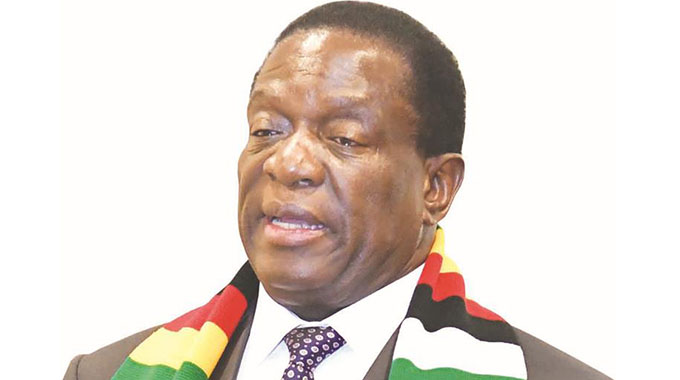
Kumbula Vodloza Sibanda
President Emmerson Mnangagwa and over 50 non-governmental organisations (NGOs), civil society organisations (CSOs), churches community-based organisations and social movements among others from the Matabeleland region recently broke new ground when they met at State House in Bulawayo to discuss the concerns and anxieties of the people of the region.
The most gratifying thing about the meeting is that, unlike some groups and political parties which seek to leverage on the plight of the people of Bulawayo, Matabeleland North and South Provinces for personal and political gain, the initiative came from the people of the region who organised themselves into the Matabeleland Collective.
Instead of seeking to prolong the concerns of the people of the region, they felt it incumbent upon themselves to approach the President to discuss their challenges and how they wish them resolved.
And what a sight it was to see Jenni Williams of Women of Zimbabwe Arise (Woza) participating and speaking on behalf of the Collective and the people of the region in the same room with the President.
This was in stark contrast with the previous dispensation where Government and Woza related like a cat and mouse. Who would forget how members of Woza used guerrilla protest tactics to protest at places such as the Parliament of Zimbabwe in Harare to avoid arrests.
The engagement was very important in that it broke the tension between the people of the region and Government over key issues such as development and the Gukurahundi disturbances of the 1980s which some power-hungry people were using to drive a wedge between the region and the rest of the country with the ultimate and ulterior aim of “seceding” from Zimbabwe.
Former President Robert Mugabe’s Government for many years took an ostrich approach to issues troubling the people of the region.
The previous administration believed in using an ivory tower approach to responding to the Matabeleland region’s concerns. It used one way communication which denied people the chance to express their concerns.
President Mnangagwa broke from that officiousness of the past which was characterised by prepared speeches which were delivered to people who could not freely question and contribute to the issues at hand.
The President brought nothing except an open mind to establish the issues that caused sleepless nights for the people of the region and to openly discuss them.
President Mnangagwa in his wisdom knows that there is no way that the devolution policy, which is enshrined in the national charter, can succeed in the region without addressing the long-standing concerns of the people first.
This is the reason why he decriminalised the discussion of the subject at the meeting. That is the reason why he charged the National Peace and Reconciliation Commission (NPRC) to handle the issue and come up with recommendations which he is going to use to address the people’s concerns.
Besides the devolution issue, a country cannot move forward and progress when a section of its society has concerns which have not been addressed for long.
As is to be expected some detractors stood ready to rubbish the noble initiative. Some from the opposition were already on the social media derisively asking who else constituted the Matabeleland Collective apart from the Dr Thokozani Khupe-led MDC-T.
This is to be expected. The Matabeleland region concerns have been a source of income for some “enterprising” activists who have been regurgitating portions of the Catholic Commission for Justice and Peace (CCJP)’s 1997 report entitled, Breaking the Silence, Building true Peace: A Report on the Disturbances in Matabeleland and the Midlands, 1980 – 1988 to come up with nothing new except some documentaries and theatre productions for which they are paid by their Western handlers.
Even some political parties such as the MDC-Alliance have also attempted to milk the region’s challenges for cheap political capital through statements of sympathy with dismal results.
Who would forget how that party’s leader, Nelson Chamisa tried to be one of the people of the region by visiting the home of the late National Hero, Father Zimbabwe, Dr Joshua Nkomo during the last campaign season which backfired? The people of the Matabeleland region are not looking for sympathisers.
They are looking for someone with a listening ear and the requisite power, mandate and commitment to engage them on what they want done and address their concerns. This is a tall order for puny politicians and money-seeking activists who having been making the region their hunting ground.
Some people, who feel that their money-mongering and political capital-seeking activities around the Matabeleland region concerns are doomed, are bound to mount campaigns to oppose the Matabeleland Collective’s great initiative.
This should not faze all progressive Zimbabweans who desire to see this wonderful country moving forward in unity.
If anything, this should mark the onset of a national concerted effort to unite and develop communities through engaging them and addressing their concerns so that the nation can move forward in unison towards the country’s Vision 2030.
If the initiative is to succeed it should be collectively owned by all progressive Zimbabweans.
It should not only be viewed as a President Mnangagwa and Matabeleland Collective but a national project in which all stakeholders play a part. Government ministries and departments could also assess their portfolios and establish what they can do to ensure that the concerns of the Matabeleland region are addressed.
The same could go for some development partners.
Since his appointment as the Deputy Minister of Transport and Infrastructural Development, Advocate Fortune Chasi has been tweeting on the progress which his ministry is making in repairing and building roads around the country.
Some people of the Matabeleland region have been complaining that the ministry’s initiative had skipped their area despite the Deputy Minister’s explanation that this was a national initiative.
Last week he tweeted that his ministry’s team had started a road project in Maphisa, Matobo District, Matabeleland Province.
That single tweet opened engagement between the Minister and, by extension, Government on one side and the people of the province on the other as they spelt out other areas they wish the Ministry to address.
This exemplifies the people-driven kind of development which President Mnangagwa initiated by meeting the people of the Matabeleland region.
It is now up to various development stakeholders to borrow a leaf from the initiative and roll the same in the areas which they operate in.


 Temba Dube