admin
admin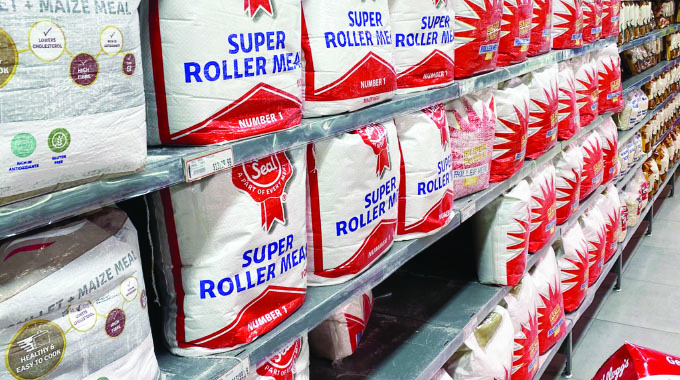
Innocent Mujeri
Correspondent
Of late, retailers have exhibited greediness and irrationality by wantonly raising the prices of basic commodities.
It is clear that the behaviour of the retailers is to provoke a situation where Government would call for price controls, but they are not getting that.
Recently, President Mnangagwa said the spirit of profiteering should stop to ensure economic development.
While the President and his Government are pushing for the revival of the economy for the benefit of all Zimbabweans by taking an honest path, it seems some sections of the business community suffering from economic dementia are bent on causing suffering to the masses through their exorbitant pricing system which is unwarranted, excessive and illogical.
In recent weeks, customers have been experiencing a price madness in shops that is not only inconvenient, but also seems unfair.
This trend of overpricing goods needs to come to an end if we are to restore trust in the retail industry, foster strong customer relationships, and achieve economic stability.
Local citizens have long noted that there is no uniform pricing policy for goods and services sold in shops.
Inconsistencies occur within and between various stores, with the prices of goods varying wildly from one outlet to another. This inconsistency breeds mistrust among customers, who feel exploited by retailers that inflate prices.
Consequently, retailers must adopt a standard pricing policy that establishes a unified pricing index for each product and service sold across all shop outlets.
Moreover, price madness in shops is getting out of hand, and it is affecting customer loyalty and trust in retailers.
Retailers who adopt price exploitation strategies end up losing their customers who switch to competitors who offer better prices.
This loss of loyalty is particularly pronounced in situations where high prices remain while the quality of goods and services offered diminish.
Thus, to maintain customer loyalty, retailers must offer standardised pricing policies that ensure their customers get quality goods and services at fair prices.
Another reason why price madness in shops should end is that it has a detrimental effect on the global economy.
High prices discourage spending by consumers, leading to a decline in demand for goods and services, which, in turn, affects supply chains.
When supply chains suffer, manufacturers and distributors reduce production levels and may, in some instances, even shut down factories.
The end result is a weakened economy that slows down growth and leads to job losses.
Therefore, retailers should consider that their pricing policies will impact the economy and are encouraged to offer fair pricing policies that promote increased consumer confidence in their products and services.
Furthermore, high prices pose significant challenges to low-income earners who may not afford basic goods.
High prices worsen the financial burden of low-income earners, which they carry daily.
This challenge is particularly pronounced in situations where basic commodities such as food, clothing, and housing are overpriced. Retailers should consider the impact of their pricing policies on low-income earners and offer fair prices to all customers.
Another factor that can explain why price madness in shops should end is the impact of inflation.
High prices significantly affect the purchasing power of consumers, leading to reduced buying power.
Inflation happens when prices increase across the economy, leading to a decline in the value of money for consumers. Therefore, it is essential for retailers to adopt fair pricing policies to prevent further inflation and to maintain high purchasing power for their customers.
Additionally, the proliferation of online shopping platforms has made price comparisons easier.
Consumers can access different prices of similar products from multiple outlets easily.
This ease of comparison necessitates that retailers offer fair prices because customers are more likely to switch to a competitor who offers similar goods and services at lower prices.
Moreover, retailers need to consider the ethical implications of pricing policies. Fair pricing is an ethical issue since it enables all customers to access goods and services without exploitation. The ethical considerations of business apply to how retailers price their goods and services. Fair pricing policies are ethical as they promote social justice and human welfare.
Furthermore, retailers with fair pricing policies are more likely to benefit from positive reviews. Satisfied customers are more likely to leave positive feedback, which will improve the reputation of retailers that have fair pricing policies.
Retailers who overprice their products may receive negative reviews, leading to a decline in customer confidence towards their products and services.
Another implication of fair pricing is that it supports innovation.
When retailers offer fair pricing policies, they are more likely to attract innovators who develop quality products for their customers.
This innovation not only stimulates growth in the economy, but also results in the availability of better goods and services to customers.
The competitiveness of the market is contingent on the fair pricing policies of retailers. When prices are set fairly, competition becomes healthy, making it easier for new businesses and entrepreneurs to enter the market.
Thus, retailers should adopt fair pricing policies that promote competition, encourage innovation, and boost the economies of various markets.
Once again, we call upon the local business community to be sensible, sensitive and forward looking in going about their trade.
Their behaviour is just annoying. We are looking for a better 2023 in which every Zimbabwean should play a positive role in rebuilding our country.



 Online Reporter