Chronicle Editor
Debra Matabvu, Harare Bureau
THE upward movement of prices in formal retail shops has begun to moderate significantly in response to the recent monetary policy measures by the Reserve Bank of Zimbabwe (RBZ) aimed at halting depreciation of the local currency.
Speaking to our Harare Bureau yesterday, RBZ Governor, Dr John Mushayavanhu said the foreign exchange market had also largely stabilised over the past two weeks, with the parallel market exchange rate showing signs of stability after the bank’s intervention.
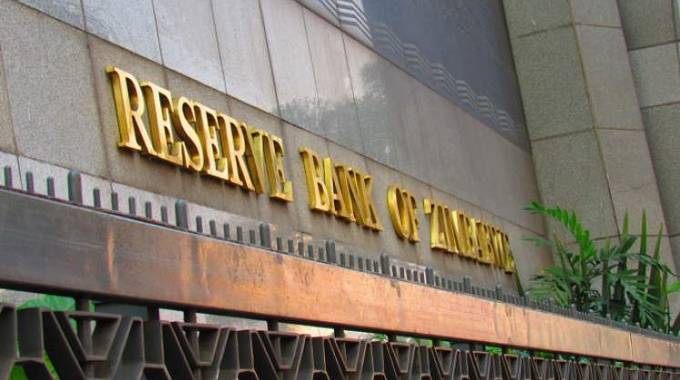
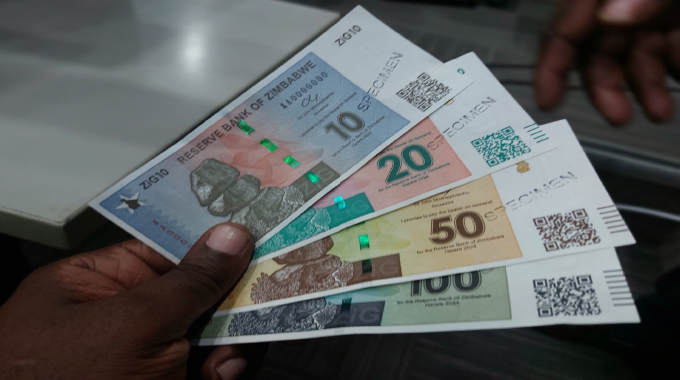
The RBZ recently set the official exchange rate at ZiG24,3902 to US$1, up from about ZiG14:$1, to address mounting pressure on Zimbabwe Gold (ZiG), attributed to speculation.
Additionally, the central bank injected US$110 million into the market between July and September to clear foreign currency backlogs that were exerting pressures on the local unit.

Dr Mushayavanhu said prices were expected to start declining in the coming weeks.
“In line with stability observed in the exchange rate, the increase in the prices of goods has significantly moderated,” he said.
“It seems most retailers had priced using higher exchange rates, expecting the currency to continue depreciating on the parallel market.
“As such, the Reserve Bank expects prices of most goods to also decline in the forthcoming weeks as the exchange rate remains stable.”
He said prices of regulated goods and services such as Zimbabwe Electricity Supply Authority (Zesa) tariffs and municipal rates have increased in line with the formal market exchange rate adjustments.
“I am glad to report that the foreign exchange market has been very calm and the parallel market exchange rate has since stabilised, though still at a high level, which the Reserve Bank is still convinced that it is not consistent with the domestic currency liquidity and the available foreign currency in the economy,” he said.
“The Reserve Bank expects the stability to continue in the near, short and medium term as the recent monetary policy measures take full effect.
“In fact, given the tight liquidity in the economy, the Reserve Bank expects the parallel market exchange rate to appreciate in the near term.”
Dr Mushayavanhu highlighted Zimbabwe’s strong foreign currency inflows, which increased by 13,4 percent in the first eight months of 2024 compared to the same period in 2023.
He said the RBZ’s strategic market interventions were clearing pipeline demand for foreign currency, with improvements in forex supply expected soon.
“In addition to the previous interventions announced before, the Reserve Bank injected an additional US$50 million soon after the recent monetary policy measures.
“In terms of supply of foreign currency from other generators of foreign currency, the Reserve Bank expects improvements in the near term.
“It should be noted that unlike prices, supply of goods and services, including foreign currency, respond with a lag,” he said.
Dr Mushayavanhu said the Financial Intelligence Unit (FIU) was actively monitoring and penalising businesses that refuse to transact in ZiG or those that use parallel market exchange rates.
He said the public was helping FIU flush out rogue businesses that were transacting exclusively in foreign currencies, leading to freezing of their bank accounts and other penalties.
“
The FIU assessments indicated that compliance levels have significantly improved in the formal sector, but efforts are underway to improve compliance in the informal sector,” added Dr Mushayavanhu.
As of yesterday, a standard loaf of bread was retailing at around ZiG28,50 (about US$1,15), while the cost of a 20kg bag of mealie-meal was averaging ZiG250 (around US$10).
A two kilogram pack of rice was selling for around ZiG80, while a two kilogram bag of washing powder was retailing for ZiG235.
The retail price of a two kilogram packet of sugar was around ZiG80.
Dialogue
Consumer Protection Commission chairperson, Dr Mthokozisi Nkosi called for dialogue between Government and business for a sustainable solution to price instability.
“There was a surge of price increases in retail shops across the country due to the movement of the exchange rate,” said Dr Nkosi.
“However, we also noticed a surge in US dollar prices, which retailers said was caused by the lack of foreign currency in the market. So, these were issues that left the consumer vulnerable.
“We believe prices should only increase when there is justifiable reason for an adjustment to ensure that retail shops do not go out of business.
“So, this is where we expect the Government to come in and give subsidies in the short-term to cushion consumers, while looking for a lasting solution.
“We urge all the concerned parties to come up with a sustainable solution. Raising wages and salaries to catch up with rising prices is not really a sustainable solution.”



 Online Reporter