Chronicle Editor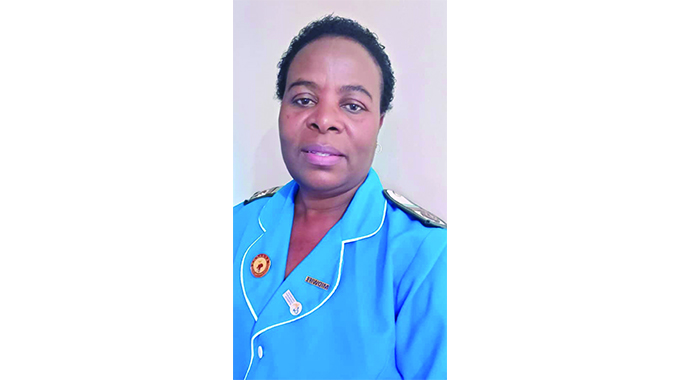
Thandeka Moyo-Ndlovu , Health Reporter
WHILE many healthcare workers are quick to jump at every opportunity for greener pastures due to challenges in the country, Mrs Kushupika Dube has remained convinced that her success will only be measured by the care she will render to Zimbabweans before she retires.
She has spent 32 years helping women deliver in Zimbabwe, a passion she always had from her teenage years.
The country has a shortage of midwives.
Now aged 55, Mrs Dube has taken her passion to another level and is leading a study crafted to help mothers to deal with stillbirth in a study spanning six African countries: Malawi, Zambia, Tanzania, Kenya, Uganda and Zimbabwe. She is the principal nursing tutor at Mpilo Central Hpspital, a position she has held since 2012.
As the Zimbabwean leader for Midwives from the Lugina Africa Midwives Research Network (LAMRN), she believes a lot can be done to save babies before they are born.
Mrs Dube works on the project in Zimbabwe with partners that include Dr Christine Mudokwenyu Rawdon, Dr Grace Danda, Dr Cynthia Nombulelo Chaibva and Mrs Sikhululekile Mremi.
UK partners are Professor Dame Tina Lavender, Prof Alex Heazell and Dr Rebecca Smyth.
The National Institute of Health Research sponsored stillbirth research was the first ever to engage women who suffered stillbirth in the planning process and throughout the study in Zimbabwe.
Almost two million babies are stillborn every year or 1 every 16 seconds according to the first ever joint stillbirth estimates released by UNICEF and the World Health Organisation (WHO).
A stillbirth is defined as a baby born with no signs of life at 28 weeks of pregnancy or more.
In Zimbabwe, the stillbirth rate stands at 16 per 1 000 births and in response to international targets, the Government is aiming at reducing this rate to less than 12 per 1 000 women by 2030.
Most stillbirths are due to poor quality of care during pregnancy and birth while lack of investments in antenatal and intrapartum services and in strengthening the nursing and midwifery workforce are key challenges.
Over 40 percent of stillbirths occur during labour, a loss that could be avoided with access to a trained health worker at childbirth and timely emergency obstetric care.
In her study carried out at Mpilo where she has been principal tutor over the past 12 years, Mrs Dube concluded that women who had a history of stillbirth, those who had fewer than four antenatal visits and those who gave birth during winter had a higher chance of having stillbirths.
The study also showed that women experiencing stillbirth tended also to have lower socio-economic status and less formal education.
“I started teaching midwives 2004 and yes l still help deliver women and supervise midwives during training and post qualification. I’m a 3rd year PhD in midwifery student with the University of Manchester UK,” she says.
Through her efforts, women from the southern region have a specialist clinic at Mpilo Central Hospital called
Thembani, meaning be hopeful, which was set up with help of the University of Manchester.
The clinic opens every Friday but due to Covid-19 is closed temporarily.
“A woman who suffers a stillbirth suffers a double loss as she does not only suffer the death of a child but may be seen as a failure in her own family or community. We have worked hard to change this and identify who may be at risk of having a stillbirth while also providing dignity and care to those who have been bereaved,” she says.
She said midwives talk to mothers every day and were therefore in a better position to conduct research which can help save the lives of both women and babies.
In another study that she is working on with partners from the five countries, Mrs Dube is also looking at the way stillbirths are communicated to families, the risk factors associated with stillbirth, the experiences of fathers and the use of a bespoke board game to help train midwives around aspects of respectful care.
“We have seen the positive impact to women and babies’ health when midwives lead research. Across the world, only one in four health leadership roles is held by a woman despite 80 percent of the global health workforce being made up of nurses and midwives,” says Mrs Dube.
She says the greatest challenge for midwives in Zimbabwe is recognition of their scope of practice as professionals.
“Where I have travelled to in Africa and overseas, midwives advance as consultants in the public health sector and stand as mentors. I wish the same to happen in Zimbabwe and that is what l am working towards in the remaining years of my service in the Government,” she says.
“I haven’t left Zimbabwe because of the love of my country and work. I have managed to engage with midwives in other countries in research activities aimed at improving quality of care in Zimbabwe. To me nursing and midwifery is a calling or obligation to save life, it is not about migrating elsewhere but to serve the country where l belong,” she adds.
The third study that Mrs Dube is working on will see the production of an education package and associated resources to improve health worker communication with women and families experiencing stillbirth or neonatal death in Malawi, Uganda, Zambia and Zimbabwe.
It will also be used to raise awareness, understanding and knowledge of sensitive care for women and families who have babies that died before, during or shortly after birth.
— @thamamoe



 Online Reporter