Online Reporter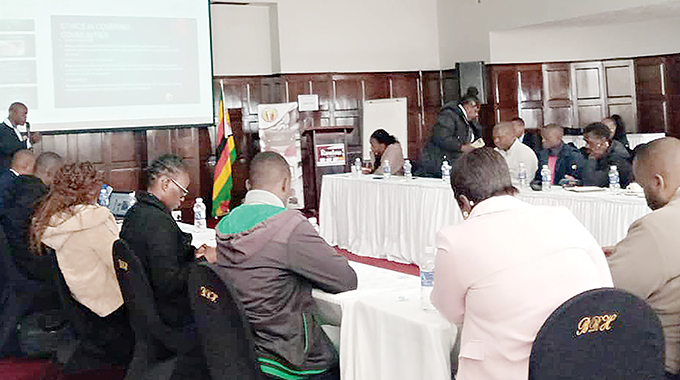
Patience Ndlovu, Zimpapers Writer
THE Zimbabwe Media Commission (ZMC) has urged journalists to broaden their coverage by focusing more on community-centred narratives that highlight people’s stories, rather than prioritising prominent figures.
This call emerged during a two-day media training workshop hosted by the ZMC at a local hotel, where journalists and panellists discussed gaps in community reporting and were equipped with essential skills to enhance professionalism and ethical standards.
The workshop, which began on Monday, brought together reporters from various media houses and underscored the need for a paradigm shift across Zimbabwe’s media landscape, particularly in promoting responsible reporting within local communities.
During the presentations, journalists were tasked with identifying pressing community issues and exploring how these could be reported in ways that influence decision-making.
One of the trainers, veteran journalist Tapfuma Machakaire, presented a detailed case study that emphasised the importance of trust, sensitivity, and accuracy when covering community stories.
He encouraged journalists to serve as bridges between marginalised voices and the broader public discourse.
“Community reporting requires more than just covering events; it demands empathy, responsibility, and a deep understanding of the dynamics on the ground,” said Machakaire.
Participants were also taken through Zimbabwe’s legal and regulatory media framework, with another trainer and journalist, Vincent Kahiya, unpacking key constitutional rights and obligations that govern media operations.
The gathering raised concerns about how community journalism has been sidelined, with much of the media landscape dominated by political stories and hard news driven by business and elite interests, leaving little room for community-focused reporting.
The workshop served as a reminder that journalists can still generate income through the production of community stories, which also have the potential to attract wider audiences.
The event concluded yesterday with discussions on the emerging role of Artificial Intelligence (AI) in media houses.
Participants were encouraged to understand both the opportunities and challenges that AI presents in content creation and presentation.
“The purpose of this workshop is to build a professional, accessible media sector that serves all communities, especially those in rural and peri-urban areas who are often excluded from mainstream coverage,” said Kahiya.
Journalists in attendance praised the training for offering practical tools and ethical frameworks to enhance their day-to-day reporting.
The ZMC workshop marks a continued effort by the commission to empower community media practitioners as agents of development, accountability, and social cohesion within Zimbabwe’s diverse communities.