Chronicle Editor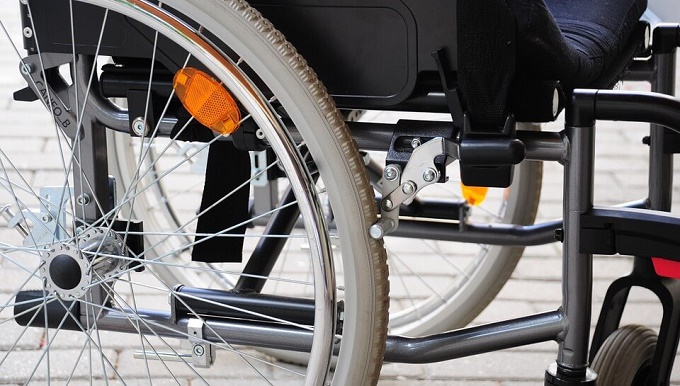
Raymond Jaravaza, Chronicle Correspondent
MS Ntombana Sibanda (45) almost shed tears when she heard a fellow commuter on a Zupco bus tell a friend that he would be disembarking at ‘Ezilimeni bus stop’ – loosely translated to “a place for disabled people.”
Sitting in the bus with her folded wheelchair placed next to her in the passage, the mother of two, who has been living with disability her whole life, could not believe what she had just heard, but decided against confronting the middle-aged man for the derogatory statement he had just uttered.
Ms Sibanda lives in a community of about 40 people living with disabilities in Cowdray Park suburb, in a section commonly known as Empopini.
Some of the beneficiaries of the 30 houses constructed under the Garikai/Hlalani Kuhle Housing Scheme move with the aid of wheelchairs while others are living with different forms of disabilities.
Ms Sibanda says she has always known that some people refer to their small community as Ezilimeni, but hearing someone utter the word in her presence made her seethe with anger.
“Without a care in the world, the man told his friend that he would be dropping off at Ezilimeni bus stop and he didn’t seem to care that the statement might hurt the feelings of people like me who live in that area.
“It’s bad enough that people refer to our homes as Ezilimeni, but hearing someone actually say the words really hurts. There is about 40 disabled people in our section, but that is not an excuse for such offensive names. Couldn’t people find another name to refer to our homes instead of insulting us just because we are disabled?” asks Ms Sibanda.
Lined up in two rows of 15 houses each, the small community is a mixture of completed homes and those that still require substantial construction work to come close to their envisaged properties.
Looking at the houses from a distance, nothing stands out for the area to deserve the derogatory name that local residents of Empopini section have imposed on the small community.
The home owners and everyone that calls the small community home are proud to have roofs over their heads and the name Ezilimeni is just but an offensive tag they have gotten used to.
Ms Sibanda and her 39 colleagues in Cowdray Park are finding the going tough amid the Covid-19 lockdown.
Ms Hazel Tshuma, a 61-year-old grandmother of six, ekes out a living selling coal to residents without electricity in the suburb. She has been surviving on selling coal for the last 12 years, but things have changed since the national lockdown was imposed to slow the spread of coronavirus.
“I used to buy the coal in Luveve suburb and carry it in large bags then sell in smaller quantities to residents here in Cowdray Park, but I’ve stopped since the lockdown started.
“I can’t risk moving around Cowdray Park selling the coal and get arrested for violating lockdown regulations,” said Ms Tshuma.
Almost a fortnight ago, people living with disabilities in the suburb received mealie meal donated by Bulawayo cleric Prophet Emmanuel Mutumwa.
Mr Shadreck Ncube, a 65-year-old retiree who walks with the aid of crutches, appreciates the good gesture by the Johanne Masowe eChishanu church leader, but hopes more well-wishers would chip in to assist.
“I have a family of nine, who include my wife and grandchildren and we need about 20kgs of mealie meal to sustain us for a month, in addition to other basic commodities such as sugar, cooking oil and flour.
“We therefore appeal to other well-wishers to assist us during this difficult period as we cannot go about our normal business trying to earn a living,” he said.
He repairs shoes under a tree in the suburb, but has not earned an income for close to two months now.
Mr Ncube says the $180 per month he gets in social grants from the Ministry of Public Service, Labour and Social Welfare is inadequate for him and his family.
“We need about $1 000 just to buy basic commodities. The $180 we are receiving is just not enough. The price of food has gone up in the last few months and we are hardly coping from the grants we are getting from government,” said Mr Ncube.
His sentiments are echoed by Ms Revai Chivasa who has lived at her Cowdray home for more than 10 years. She is unemployed and makes use of an old rusty sewing machine to sew anything she thinks can sell around the vicinity of her home.
Since the outbreak of the Covid-19 pandemic, Ms Chivasa has been sewing face masks she sells to the local community.
“I don’t have money to buy enough fabric to make a lot of face masks and it’s really a challenge because my potential clients from the community end up buying the masks somewhere else. It’s really difficult living with a disability without much help. We are starving, there is no other way to put it,” said Ms Chivasa.
For the middle-aged woman, moving about in her wheel chair is a struggle.
“If I want to go to into the city centre, I must be accompanied by someone because I have to be lifted into the bus and still pay the bus fare.
“The visually impaired are not required to pay in Zupco buses, but people in wheel chairs like myself must pay. Something must be done about our plight as well. It’s not right for us to be segregated like that,” said Ms Chivasa.
She thinks that living in the Covid-19 pandemic era is the hardest time she has experienced in her adult life.
“We have no food, nothing at all. I haven’t eaten since morning and the only mealie meal we have in the kitchen is enough for tonight only,” she adds.
It was around 3:30pm when Chronicle interviewed Chivasa at her 3-roomed home.
The vice chairman of the National Disability Board (NDB) Mr Edward Mundanga said there is need to prioritise the needs of their members, starting at ward level.
NDB’s mandate is the implementation of programmes specific for people living with disabilities.
“Decisions are made for our members without their input and total disregard for their welfare and we are saying for as long as that continues to happen, then we are going nowhere as a country when it comes to addressing the concerns of people living with disabilities.
“It’s very common, especially at ward level, for the distribution of food parcels meant for people living with disabilities to be done without their input and the food ends up in the hands of undeserving people,” said Mr Mundanga.
He also called on the Government to consider including disabled friendly buses when purchasing the next batch of Zupco buses for public transportation.
Mr Mundanga said grouping together people living with disabilities in a single section, like the Cowdray Park scenario, should have been avoided to protect the beneficiaries of the homes from derogatory names such as the ones bestowed on them by the local residents. – @RaymondJaravaza


 Online Reporter