admin
admin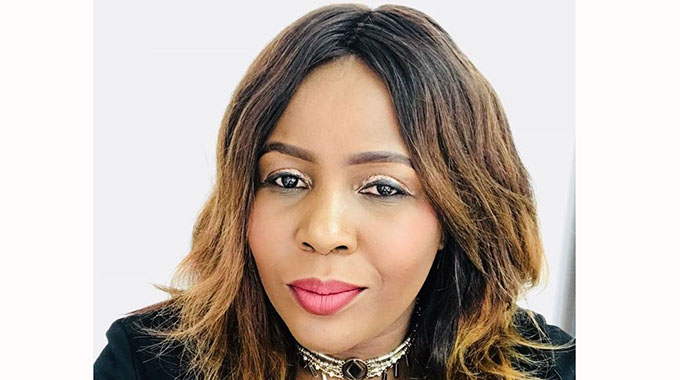
She really defied the odds.
After losing a breast – yes, a breast – she managed to generate the drive to launch her own beauty products, Anaka, as a way of redefining herself after the loss.
Prisca Chireka had her breast removed after she was diagnosed with an aggressive breast cancer in April, 2013, while she was eight months pregnant.
She says the shocking news were a blow then as she had not anticipated it in anyway.
The United Kingdom-based nurse shares her battle with cancer and how that prompted her to launch her first beauty range.
“We were meeting my doctor to hear the results of the tests that had been carried out the previous week. The longer we waited the more anxious we became. Imagine how shattered I felt when my doctor told me that I had breast cancer, and it was aggressive,” she recounts.
“Receiving the news of a cancer diagnoses was not just devastating, it was a life-changing bolt from the blue, but I was determined to see my son being born and to look after him.
“I gave birth to a baby boy and almost immediately started chemotherapy and radiotherapy.”
Prisca’s treatment was followed by surgery to remove the affected breast.
She admits that losing a breast was not easy, adding that it was a life-changing bolt although she would not have it defeat her.
“As women, the connections between our bodies, our beauty and our confidence can be powerful. But I was determined not to let this setback defeat me. I knew I needed to break down the barriers and get through this. I had breast reconstruction and got my womanhood back,” says 39-year-old Prisca.
Three years after undergoing a painful regime of treatment, including bread removal and breast reconstruction, and being given the all-clear, Prisca says she could not just sit back, but decided to let her story inspire women, especially those in developing countries such as Zimbabwe, which are currently grappling with all kinds of cancers.
She says the launch of the beauty products consisting of a lipstick, which is already being sold in Zimbabwe, and a foundation and face cream that will be introduced soon was not only therapeutic to her by giving her the satisfaction of contributing something to the fairer sex, but also motivating women who might have had setbacks in their lives.
Apart from producing beauty products, Prisca is now a foot soldier in the fight against cancer. She now seeks to create awareness on the early detection of cancers, particularly for Zimbabwean women who are vulnerable to a health system that is not yet sufficiently equipped to treat the disease.
“I dedicated myself to redefining my beauty by launching my first beauty collection called Anaka – beauty redefined.
“It is my passion to see every woman feel confident and beautiful regardless of what setbacks life may throw at her.”
She says through the Anaka beauty range, her aim is to challenge the status quo and open up ideas of beauty to embrace even what is perceived as imperfections. She argues that beauty should not be defined by a waist size, breast or other physical features, noting that beauty has no limit.
“As a breast cancer survivor, who lost her breast but still feeling beautiful, I want to break barriers of how beauty is defined. I’m reaching out to all women who want to redefine their beauty not to be limited by the status quo.
“I do not aspire to look like anyone in particular, and I do not want you to do so either. I want us, together, to change our outlook to reflect our inner feeling. Let us just be ourselves, and be happy with that. I would like to be recognised for my work, and for who I am; not because of my lips, hair or skin colour,” argues Prisca.
She says her vision is to expand the definition of what beauty is, helping individuals to recognise their own beauty.
“Anaka’s mission is to redefine beauty, and support people in their exploration of their uniqueness, and their journey to self-love. Gone are the days when beauty was defined in a few words. We are pushing the boundaries of extreme beauty.
“We are taught from a young age right through to adulthood to prioritise external beauty. We have been conditioned to believe that we need to look a certain way, all too often we conform to that,” adds the cancer survivor.
“Imagine that you have a birthmark, a surgical scar, a lump or have lost a limb. Does this mean that you are not beautiful?
“At Anaka, we are challenging this perception. Whether you have dimples, scars or have lost a limb or a breast, you are still uniquely beautiful. Anaka is paving the way for people to see this for themselves, and in each other.”
Could it be that she is now cancer-free after being diagnosed of the disease in 2013 precisely because she is based in a developed country?
Prisca believes early detection, even in developing countries like Zimbabwe, can save lives.
The UK-based nurse bemoans how cancer services in the country have remained unavailable, inaccessible and expensive, arguing that women in the country were dying in agony because cancer treatment services were not there.
“Cancer continues to wear the face of a woman and women are dying in agony from breast cancer and cervical cancer. Because of lack of information and limited services, most women present with cancers that are already at advanced stages and sometimes chemotherapy is not available for these women, so they die.
“It’s a pity that cancer treatment services remain centralised in Harare and Bulawayo, so imagine the distances a woman in Mberengwa or Dotito has to travel to access treatment. Most of these are dying before they even access treatment. It is a pity that women continue to die in agony.”
Cancer has become the leading cause of death around the world.
The World Health Organisation (WHO) estimates that 84 million people will die of cancer by 2015, with the Ministry of Health and Child Care reporting that breast cancer is the second common cancer affecting women in Zimbabwe.
Prisca envisages a Zimbabwe where cancer treatment services will be available, even for the poor and marginalised woman in all the corners of the country, noting that her heart bleeds for the women who die, as she fails to access health care services.
To the woman who has lost her breast to cancer, Prisca says the loss of a breast should not define who she is, adding that she is still beautiful.


 Online Reporter