admin
admin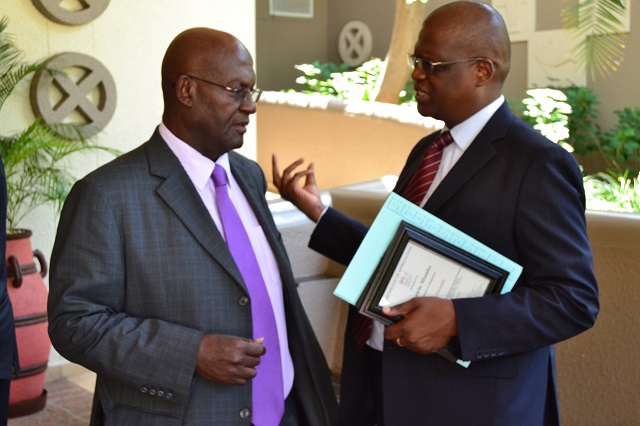

Leonard Ncube in Victoria Falls
THE Reserve Bank of Zimbabwe (RBZ) has underscored the need for greater private public partnerships (PPPs) in financing the building of infrastructure in Sadc.
RBZ Deputy Governor Dr Kupukile Mlambo said this during a Sadc Development Finance Institutions’ Chief Executive Officers’ Forum held here on Thursday.
In his address, he said PPPs were the way to go in light of dwindling financial bases and challenges facing individual states.
“Sadc has prioritised infrastructure development and industrial development as key drivers of the regional integration and sustainable economic growth agenda. Financial requirements to fund investments in these growth-enabling sectors are well beyond what our governments could afford,” said Dr Mlambo.
“It is no surprise that the need to attract private sector finance to support infrastructure development has grown significantly among developing economies especially in view of prevailing huge financing gaps in the sector against a paucity of fiscal resources.
“The World Bank estimates that Africa needs about $95 billion annually to meet its infrastructure requirements and that $45 billion of it can be sourced from the private sector. In Sadc the Regional Infrastructure Development Master Plan (RIDMP) has identified more than $500 billion worth of projects to be implemented over the next 10 years between 2017 and 2027.”
Dr Mlambo said Sadc Ministers of Finance and Investment Committee have estimated that at least $100 billion of this amount must come from private sector financing sources.
He said PPPs were an alternative investment instrument for developing countries and benefits are not confined to financing but also to skills, efficiencies and innovation that accrue through the involvement of private investors in projects.
The two-day workshop was attended by 31 development finance institutions (DFIs) in Africa and 25 chief executive officers and was held under the theme: “How to effectively use PPPs to enhance service delivery and development infrastructure.”
The workshop sought to discuss PPPs in light of slow uptake by countries where only South Africa and Mauritius have active PPPs despite the concept being adopted by the region in 2013.
Local DFIs include Industrial Development Corporation (IDC), the Agricultural Development Bank (Agribank), the Small and Medium Enterprises Development Corporation (SMEDCO) and the Infrastructure Development Bank of Zimbabwe (IDBZ), which are all members of the Sadc DFI Network.
Dr Mlambo said although uptake was slow, governments now recognise the need for DFIs to bridge the gap where markets fall short in the quest to achieve sustainable and inclusive economic development goals, including poverty alleviation and employment creation.
He said the DFIs have been an integral part of development finance structures of economies for a long time.
“DFIs play an indispensable role as conduits for mobilising and investing long term financial resources to underpin strategic economic and social development plans in our economies,” said Dr Mlambo.
“Governments should ensure that there is an enabling and conducive policy, legislative, regulatory and institutional environment that promotes PPPs while attracting and protecting private sector investment.”
He said there was a need for sustainable economic development, which is rooted on efficient mobilisation of financial resources and their investment in key sectors such as infrastructure, agriculture, SMEs as well as social infrastructure such as housing, schools and hospitals.
Dr Mlambo said while significant progress has been made in strengthening the operational and regulatory environment of DFIs, persistent lack of long term capital has been identified as a major impediment to their (DFIs’) capacity to deliver on their development mandates hence the need for PPPs.
He added that Sadc DFI Networks were expected to play a leading role in working with governments to prepare national and cross border projects at an early stage and generally to act in an advisory capacity on matters of investment including PPPs.
— @ncubeleon


 Online Reporter