Online Reporter
Zvamaida Murwira, [email protected]
THE Government has expressed satisfaction with civil service salaries, noting that the lowest paid worker now earns above the Poverty Datum Line (PDL) — a development that has reportedly unsettled the private sector, which is struggling to match public sector remuneration.
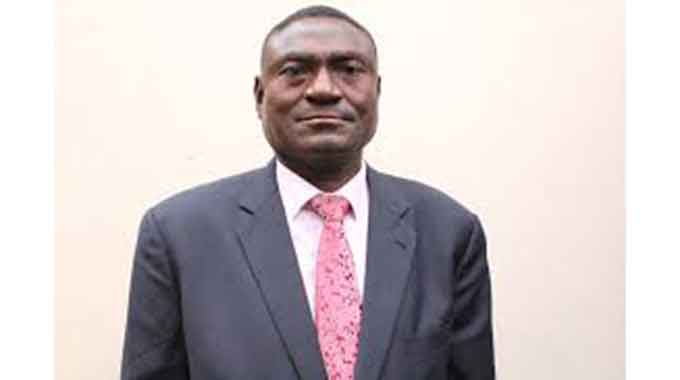
Finance, Economic Development and Investment Promotion Deputy Minister Kudakwashe Mnangagwa said that while salary negotiations would be conducted through the appropriate forums, the Government takes pride in being one of the country’s best employers.
Since assuming office in November 2017, President Mnangagwa has repeatedly emphasised that civil servants are central to national development and must be adequately supported. His public statements have consistently acknowledged the pressures faced by Government workers and affirmed a commitment to progressive improvements.
He said the Government is fully aware of the challenges facing civil servants and remains committed to improving their conditions of service in line with economic performance.
The Second Republic, working with Finance, Economic Development and Investment Promotion Minister Professor Mthuli Ncube, has introduced several interventions aimed at cushioning and empowering public sector workers.
Among the most significant has been the introduction of duty and tax rebates for civil servants importing personal motor vehicles — an initiative that has reduced costs, improved mobility and lifted morale for thousands of eligible workers, especially teachers, nurses and members of the security services.
Since 2018, Government has also implemented periodic salary adjustments and introduced special allowances, including Covid-19 support for frontline workers.
Deputy Minister Mnangagwa’s remarks came in response to a question from Matabeleland North Senator Teresa Kabondo, who asked when salaries would next be reviewed, given the time that had passed since the last adjustment.
“Indeed, it has been quite some time since there was a salary review. These salary reviews usually come as cost-of-living adjustments, but we have experienced some stability over the last year and a half.
“Just to give some context around the architecture of the lowest-paid civil servant, you will find that it is US$320 and a ZiG equivalent of about US$40 or US$60. I will have to check those numbers. This puts all our civil servants from the lowest paid — the cleaner — to the highest paid, above the poverty datum line. This is something we have strived over and over to achieve,” said Deputy Minister Mnangagwa.
The Poverty Datum Line measures the minimum income required to meet essential needs such as food, housing, healthcare and education. According to the Zimbabwe National Statistics Agency (ZimStat), the Total Consumption Poverty Line for one person stood at ZiG 1 260,52 per month as of March 2025.
Deputy Minister Mnangagwa said salary negotiations involve all stakeholders to ensure that adjustments do not disrupt the wider labour market. He noted that the competitiveness of Government salaries had become a point of contention for private employers.
“Discussions around salary review are done in a forum that has the employers, the Government and the employees.
To avoid distortion within the job market, we give all parties a chance to add their voice. I will say that the private sector has actually been at the forefront of complaining that the Government is moving a bit too fast in increasing salaries.
“It might come as a surprise, but the Government does pay better than the private sector at this moment. So, while these discussions are ongoing between the employer and the employees, we will strive to ensure that our civil servants, particularly the lowest paid, are always above the poverty datum line,” he said.
During the 2026 national budget debate in December last year, Prof Ncube indicated that Treasury planned to implement another round of salary adjustments in the first quarter of this year.
Legislators had called for increased funding to programmes such as the Basic Education Assistance Module and social services, suggesting that resources could come from the Unallocated Reserve — contingency funds set aside for unspecified needs.
However, Prof Ncube warned that these reserves were limited and would be quickly consumed by unavoidable obligations, including civil service salary adjustments.
“I would really like to persuade our colleagues. We have a limited purse… we seem to have a large Unallocated Reserve. I can assure you it is not large at all. It will go so fast and so quickly.
“One issue is the budget for salary adjustments for civil servants in the first quarter. It is going to happen, and it is based on the job evaluation exercise. It will eat away quite a lot of that Unallocated Reserve. It will not go far.”