admin
admin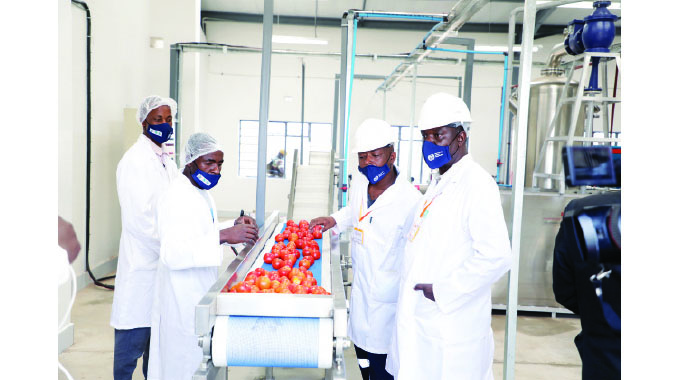
Obert Chifamba Agri-Insight
TABUDIRIRA Vocational Training Centre in Mutoko was the setting last Thursday when President Mnangagwa commissioned a US$1 million fruit and vegetable processing plant that is expected to immeasurably transform the socio-economic terrain for hundreds of fresh produce farmers in Mutoko and beyond.
The plant, which was funded by the African Development Bank (ADB), is essentially the game-changer, which has for decades been the missing link in the lives of the hundreds of farmers that throng Mbare Musika in Harare and other markets scattered around the country daily in search of better marketing environments and prices.
It will save them the trouble of worrying about transport and accommodation costs that had become a part of their lives each time they wanted to sell their ripe produce in Harare.
The farmers are now rest assured that there will be no produce rotting by the roadside like what used to happen in the past when they would at times fail to secure transport in time to ferry it fresh to the markets or even fail to raise the transport fares.
From now going forward, the processing plant will enable the farmers to do crop value addition in line with the country’s Vision 2030 anchored by the National Development Strategy 1.
The establishment of the processing plant in close proximity to the small-scale farming communities means that the farmers can also use home-grown solutions like use of scotch carts and wheel barrows, among others to get their produce to the market just after harvesting it.
They will not need to hire trucks while those that may do so will not part with much in terms of money for the services.
The operationalisation of the plant will eliminate the unscrupulous middlemen who have been fleecing farmers of their well-deserved revenue, while Harare City Council has been giving them a torrid time by making their brief appearance at the market as unbearable as possible.
The city officials would start by failing to avail proper ablution facilities, clean and safe storage facilities and cap it up by giving the farmers very constricted working hours that would see most of them failing to dispose of their produce before the market closes for the day, which would force them to pay for another night of storage and accommodation.
Sometimes produce would reportedly go missing and the custodians of the market (council) would not do anything to assist the victims.
Everything about the system seemed to have been designed to make life hellish for farmers, so the coming in of the processing plant should see their economic fortunes changing for the better.
In essence, the plant will create employment for local people as well, while helping boost the value of produce that used to fetch little in its raw state.
It will also make it possible for excess produce to be accounted for given that the bulk of the produce is of a perishable nature requiring to either be sold fresh or be stored as processed products to enhance their shelf life.
In his key note address to the hundreds of small-scale farmers and members of the general public who attended the commissioning, President Mnangagwa stressed that the time for people to flock to urban areas seeking better fortunes or to try and make a living there was long gone.
The historic event was also attended by Youth, Sport, Arts and Culture Minister Kirsty Coventry, Minister of Provincial Affairs and Devolution for Mashonaland East province, Aplonia Munzverengwi, deputy ministers, legislators, traditional leaders, Zanu PF leadership and senior Government officials.
President Mnangagwa underlined the need to break the rural and urban divide by developing rural communities through empowerment projects, hence the deliberate move to develop a modern education system tailor-made to produce goods and services.
The current education system was designed to produce all-rounders that do not need to go about looking for employment after graduating, but tap into resources at their disposal and start projects that support livelihoods while eliminating the need to migrate to other places in search of greener pastures.
This means people in Mashonaland East province should make the most of the processing plant and expand horticultural production.
The plant should provide the foundation for bigger horticultural projects that may even pave the way for exploring markets outside the country.
The ball is in the farmers’ court now.
It is time they produce to their maximum given that there is a ready market for their produce, with all bottlenecks removed.
The opening of the plant will allow the farmers to produce high-value crops that they used to avoid because of lack of markets or storage facilities.
In fact, the processing plant will make it possible for farmers to diversify their crops and not stick to the common vegetables that do not give them high returns.
Of course, it will also be prudent for the farmers to make sure they produce quality products that can compete at any market and also translate into the best processed goods customers can ever ask for.
On the one hand, the operationalisation of the processing plant will decongest Mbare Musika and push demand for some products since it means some traditional suppliers will no longer be going there.
If the situation is not manipulated by unscrupulous middlemen, those farmers from other areas that will remain using Mbare Musika have a chance to make good money.
It may also give Harare City Council some breathing space to clean the market and make it more habitable, with less numbers of people.
It is refreshing to note that ADB will avail another grant of approximately US$3,5 million for the next phase of the processing plant project, which is due for the bank’s board approval on October 27, as was revealed by the bank’s country manager Ms Moono Mupotola, who also graced the occasion.
What is also exciting is that the project aims to create an enabling environment for women and youth inclusion in the horticulture, fruit, dairy and mineral value chains, while promoting smart and sustainable mineral processing.
Women and youths form a very important part of the demographics of every country. In the words of director for International Labour Organisation (ILO) country office for Zimbabwe and Namibia Ms Hopolang Phororo, worldwide experience has shown that supporting women and young people contributes to sustainable and inclusive economic growth and development.
A project like the processing plant will bolster the socio-economic fortunes of communities if women and youths are part of the matrix.



 Online Reporter