dyton mupawaenda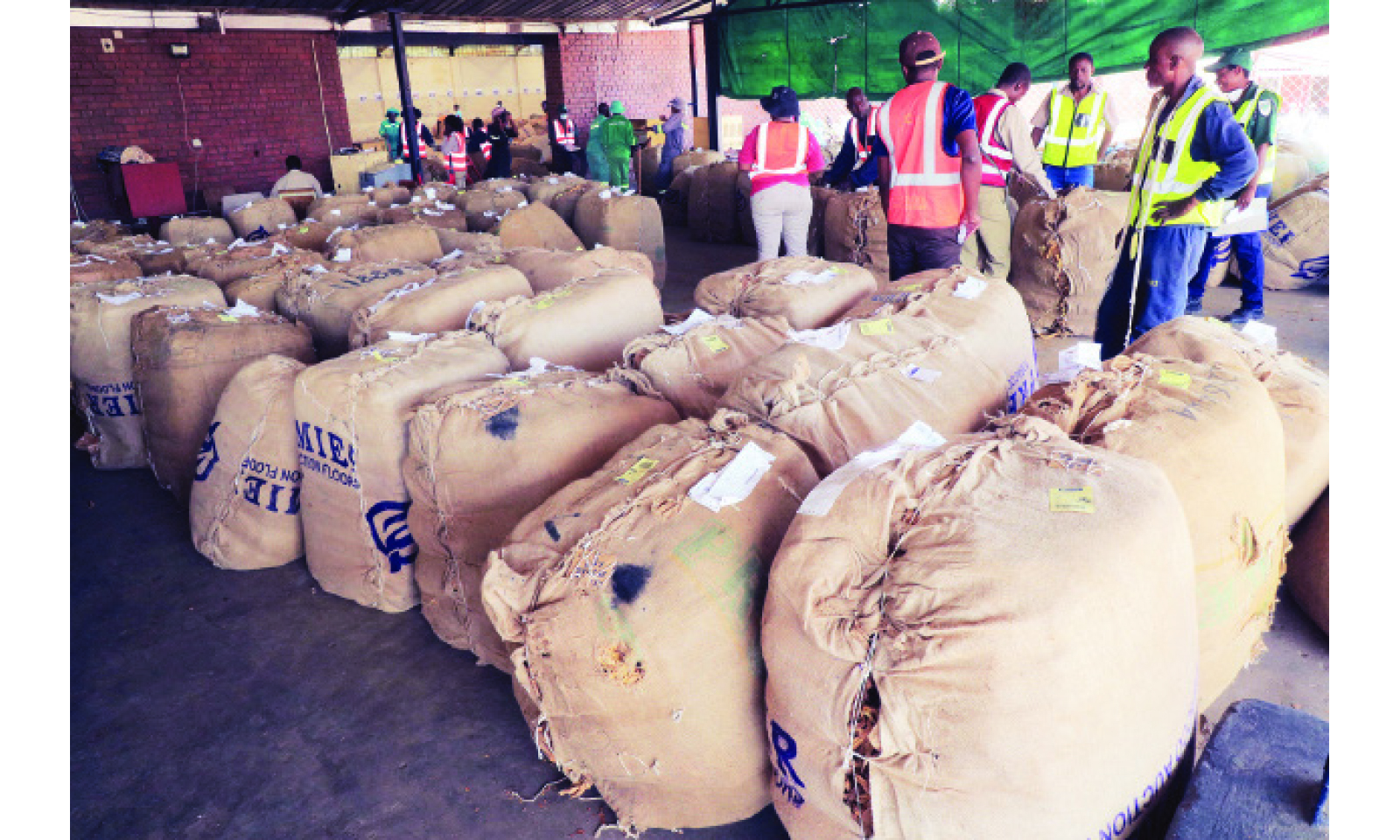
Obert Chifamba-Agri-insight
THE 2025 tobacco marketing season got underway last Wednesday with the first bale sold fetching US$4,65 for a kilogramme, down from US$4,92 in 2024.
This, however, does not seem to be weighing down heavily on farmers’ high expectations for a better marketing season this time around compared to last year.
Most farmers who did business on the opening day are convinced that better times are in the offing. In fact, this season’s high levels of enthusiasm are an extension of the sense of fulfilment many growers developed last season after scoring good prices.
Of course, last season’s exciting performance was heavily influenced by the fact that there was not much tobacco produced both locally and globally due to the El Nino-inspired drought, which created a high demand for the product versus depressed supplies.
This effectively tilted the balance in favour of those growers who managed to produce something, as it enabled prices to firm.
Interestingly, our farmers have this season drawn inspiration from that development with this manifesting in the hectarage that rose from last season’s 136 126 to 143 058 this year, while there were also many debutant growers joining the bandwagon.
Projections for this year’s output have been set in the region of 280 million kilogrammes compared to last term’s 235 million kilogrammes.
However, one notable observation is most stakeholders are upbeat the 300 million-kilogramme target set in the National Development Strategy 1 may be surpassed with the industry making significant strides in improving productivity, thanks to the tobacco value chain transformation strategy that the Government rolled out.
The Government has unequivocally stated its intentions in making sure the country’s tobacco industry is transformed into a more competitive and resilient entity in the face of the many challenges caused by both natural and man-made circumstances.
Just two seasons ago, the country reached 296 million kilogrammes, which was close to the target of 300 million kilogrammes, which means production-wise, we have achieved our intentions, hence the need to identify and address the issues now standing between the country and its target.
From all the effort, the Government and other stakeholders are investing in the production of the crop, there is no reason for everything not to fall into line and get processes moving — the domino-effect style. There is obviously a missing link somewhere that needs to be identified and whipped into line so that the country can start seeing its dream of the tobacco industry becoming a multi-billion-dollar one taking shape.
Delays in disbursing the US$60 million tobacco revolving fund meant to localise the crop’s funding and support growers, have also not made the situation any better, with the Reserve Bank of Zimbabwe (RBZ) said to be working on the modalities of disbursing it.
Local funding should take care of 70 percent of the cost of production. This is also one of the strategies the Government is pushing to effectively implement to ensure the country stops relying on foreign capital for the crop, which will see the funders taking between 80 and 90 percent of the money generated from tobacco out of the country leaving producers with very little.
It is increasingly becoming crucial for the Central Bank to expedite the drawing of the disbursement plan and allow banks to dispense the fund to growers, so that they can start serious business.
Maybe that missing link alluded to earlier should be the one running around doing the coordinating and giving stakeholders soft reminders on the need to fulfil their various roles towards building the country’s multi-billion-dollar tobacco industry.
There is also a serious need to urgently reverse the current trend in which around 95 percent of the country’s tobacco is being exported raw, and therefore, going for a lesser value than it would have fetched if traded in processed form.
It is, however, encouraging to note that there is some progress towards undoing that tendency with value addition of the golden leaf now reported to have risen to seven from two percent. The painful bit of the matter is that countries like the United Arab Emirates, for instance, have become known for their multi-billion-dollar tobacco sectors, yet they do not produce, but import the crop.
Exporting unprocessed tobacco is not only depriving locals of the much-needed foreign currency but job opportunities as well. This is also depriving some players along the various segments of the value chain of the opportunity to operate effectively, which consolidates the reasons to have someone enforcing progress in all segments of the process.
It is also disturbing to note that foreign-sourced sponsorship for the golden leaf has in recent times been suspected to be behind the notorious price ceilings that have seen farmers losing out big time with some ending up breaching contractual agreements.
Some of these contractors have often been accused of giving growers incomplete packages or availing the inputs way into the season, but still expect the farmers to meet their side of the deal to the last letter.
Maybe this is where the ‘missing link’ or moderator should come in and level the playing field for both parties.
As the marketing season progresses, we are sure cases of such irregularities will start emerging and farmers in most cases are the ones that are left licking bruised egos. Such scenarios are evidence of a value chain that is not well-oiled, and therefore moves in huffs and puffs.
It is critical for the tobacco industry to do some self-introspection and see where the wheels are always coming off. Maybe it will take the intervention of the Government or some independent observer to pinpoint where the tobacco juggernaut needs revitalisation to function more fluidly and profitably for all parties involved.
It is a known fact that tobacco is one of the country’s most reliable foreign currency earners, hence the need to make sure its production process is smooth and rewarding in the end. The excitement we are noticing at the moment should double or treble as the season progresses with prices getting firmer and firmer.
The quality of the leaf is also expected to improve given that the excellence of the leaf sold at the start of the marketing season is usually not a complete reflection of the farmer’s highest effort.



 Online Reporter