admin
admin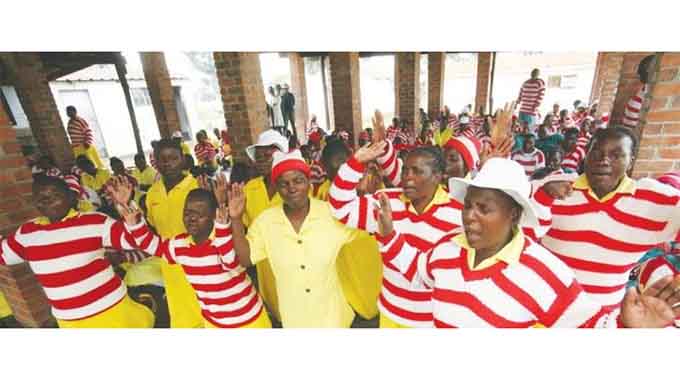
Phyllis Kachere-Deputy News Editor (Convergence
“My name is Racheal Nabukenya and I come from Mitete Village in Ssembabule district in Uganda.
“I left my country via Tanzania, then went to Malawi where I met some men who had been organised by Judy, a businesswoman from my village who lives and owns a hair salon in South Africa to transport me there.
“When I got in the bus in Malawi, the men took away passports from the other passengers and I think they forgot to take away mine. They told us not to reveal our nationalities and travel documents to border officials. They even renamed me Fatima and I have forgotten the surname which I was supposed tell the border officials.
“The men must have sensed danger and abandoned the bus. We were all arrested at Beitbridge Border Post,” said the 22-year-old Racheal who wished to proceed with her journey to South Africa, oblivious of the human trafficking danger that she was in.
Racheal said she did not know Judy’s surname despite vouching that she knew her from their village in Uganda. When presented with information that she was likely going to be a candidate of human trafficking, Racheal, changed track and said she now wanted to go back to Uganda.
Available statistics show that, of the 600 000-800 000 people trafficked across international borders each year, 70 percent are female and 50 percent are children. The majority of these victims are forced into commercial sex trade.
“I was on my way to Zambia en route to Malawi from my country, South Africa with six of my friends when Zimbabwean immigration authorities intercepted us on our way to Chirundu Border Post on January 3, 2018. I did not have a travel document and we were arrested.
“I come from Matsulu in Nelspruit under Chief Tinkotela, Mpumalanga Province. I am a Swazi. Since my incarceration in 2018, South African Embassy officials have visited me numerous times to verify my nationality. I am still waiting for my repatriation back home. All I want is to just go back home and lead a normal life. Prison is not a good place to be,” said Maria Promise Sambo (53), who is one of the longest staying prohibited immigrant housed at Chikurubi Female Prison.
Ahdijah Fuluoberi Corlor (34) claims she is from Mau Mau Village in the Volcanic region in Mogadishu, Somalia and was intercepted at Beitbridge Border Post on her way to South Africa without travel documents in 2020. She said that she cannot speak Arabic nor any other local language from Somalia.
“I was born in Turkey and left that country with my father Fuluoberi Corlor when I was three years old for Mogadishu. My mother remained in Turkey. My father and I stayed in Mogadishu until I was 10 and was sent to live with his wife’s relatives in Majengo, which is on the border between Somalia and Kenya.
“Somali Embassy officials have visited me numerous times. They spoke to me in Arabic, I told them I could not speak the language. They asked me what other local Somali language I spoke. I told them I could not because I lived on the border with Kenya and Somalia. I also cannot speak kiSwahili and they seem to have concluded that I am not a Somali,” she narrated, raising further questions about her nationality.
She said she was arrested at Beitbridge Border Post while on her way to Turkey to get married.
When asked why she had to come to Beitbridge from Majengo on the border between Kenya and Somalia where she claimed to come from, Ahdijah could not provide an answer save to say she just wants to be released and proceed to Turkey to get married.
Another long serving prohibited immigrant who is in custody at Harare Remand Prison is Thumelo Gabale (52) who comes from Lesotho and has stayed there for the past 10 years. He says all he wants is go home in Lesotho.
He bemoaned having to stay in prison for that long and said it would have been ideal if prohibited immigrants awaiting deportation would be held in a different space.
Gabale, who speaks no other language except Sotho spoke through an interpreter and said he was not sure why it was taking long to deport him.
In an interview, the Zimbabwe Prisons and Correctional Service assistant public relations officer Ms Omega Mudzinganyama said Chikurubi Female Prison, which houses female illegal immigrants awaiting deportation sometimes gets overwhelmed as they sometimes receive as many as 100 women per day.
“In most cases, we receive as many as over 100 illegal females per day who are mostly arrested while in transit to South Africa. Most of the prohibited immigrants usually come from Malawi, en route to South Africa.
“In most cases, prohibited immigrants from Malawi get involved in cat and mouse chases where soon after deportation, the same persons return to try to cross into South Africa via Zimbabwe. This causes a big strain on resources and personnel,” said Ms Mudzinganyama.
When The Herald visited on September 19, Chikurubi Female Prison had 50 prohibited immigrants from the following countries awaiting deportation: 44 Malawi, 1 Uganda, 1 South Africa, 1 Kenya, 1 Lesotho, 1 Somalia and 1 Democratic Republic of Congo.
On the same day, Harare Remand Prison had a total of 147 male prohibited immigrants awaiting deportation: 78 Malawi, 1 Eswatini, 9 Burundi, 1 Lesotho, 4 Tanzania, 1 Taiwan, 1 United States of America, 1 Ghana, 11 Democratic Republic of Congo, 1 Libya, 26 Ethiopia, 1 Cameroon and 1 Egypt.
Ms Mudzinganyama said in most cases they experienced language barrier challenges as some of the prohibited immigrants do not speak English or vernacular languages.
In an interview, the chief director of Immigration Ms Respect Gono said as at September 23, there was a total of 368 prohibited immigrants comprising of 341 males and 27 females. Of this total number, 274 were awaiting deportation, while 61 were serving prison sentences and 33 are awaiting trial for various offences.
“Ideally, we should have a detention centre for prohibited immigrants awaiting deportation, but Zimbabwe cannot afford that at the moment. An extra budget vote would have to be set aside for the construction and running of the centre. The Immigration Department does not have the expertise and would require correct personnel to run such a centre,” said Ms Gono.
She explained that from arrest, there is meticulous verification of the immigrant with their embassies and Interpol is also involved in vetting and verification.
“Some of the prohibited immigrants sometimes lie about their nationalities. This can only be exposed when we involve embassy officials of the countries they claim to be citizens of. Sometimes they fail language tests and when that happens, it prolongs their stay in prison as we try to ascertain their nationalities, lest we send them to wrong countries,” said Ms Gono.
She said in some cases, some prohibited immigrants apply for asylum when they are caught and these are referred to the relevant departments.
“In the event that the asylum applications fail, we consult the relevant stakeholders and find a suitable solution. We may end up with an asylum seeker being sent to another country,” she said.


 Online Reporter