Sundaymail Editor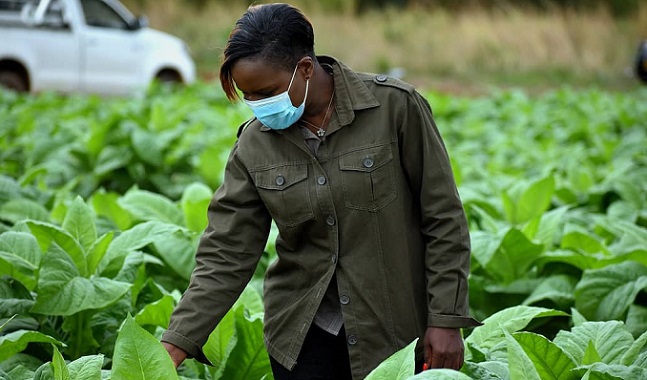
Theseus Shambare
PRELIMINARY findings from the first round of the Crops, Livestock and Fisheries Assessment (CLAFA 1) for the 2024/2025 summer cropping season have forecast promising results.
The exercise, conducted by agriculture business advisers (ABAs) — formerly known as Agritex officers — across 1 600 wards countrywide, provides a snapshot of the current state of the agriculture sector, offering valuable insights for policymakers.
ABAs collect comprehensive data on crop conditions and production; livestock health; and fish production, as well as information on planting areas.
They also track progress of the agricultural season and identify potential challenges.
Their reports provide crucial data to the authorities to make informed decisions regarding agricultural support programmes, resource allocation and food security strategies, helping ensure that resources are directed where they are most needed.
Promising
The final report from CLAFA 1 is expected to be submitted by February 10, offering a detailed evaluation of the current season’s performance.
According to the acting chief director of the Agricultural and Rural Development Advisory Services (ARDAS), Mr Leonard Munamati, preliminary findings are pointing towards a bumper harvest.
“The crop situation appears promising, with 65 percent of the planted crops reported to be in good condition,” he said.
“This season is a significant improvement compared to last season, which was severely impacted by the El Niño-induced drought.”
Key food crops such as maize, sorghum and other traditional grains, he said, have demonstrated resilience despite the early dry spells that threatened the season.
Mr Munamati emphasised the importance of strategic planting practices, urging farmers to implement surface drainage channels to mitigate the impact of heavy rainfall.
Heavy rains that pounded most of the country in January raised fears of potential crop damage and flooding.
Torrential rains can leach nutrients from the soil, making them less available to plants, thereby affecting plant growth.
He also highlighted the significance of the Pfumvudza/Intwasa programme during the current season, stating that it would serve as the foundation for a successful harvest this season.
Despite the positive indicators, he said, challenges remain, as flooding in some regions poses a threat to crop yields.
“Flooding in some areas has threatened crop yields and livestock health, necessitating the implementation of flood mitigation measures,” he said.
“To support farmers and address potential challenges, the Government is ramping up extension services.”
Farmers are presently being equipped with pest control knowledge, particularly in combating the fall armyworm and ensuring access to free pest control chemicals.
Increase in planted area
The latest ARDAS report highlights an upward trend in maize production.
Compared to the previous year, the total maize planting area has significantly increased, reaching 1 786 118 hectares (ha) this season, up from 1 209 747ha a year earlier.
Several provinces have exceeded their maize planting targets.
Manicaland, for instance, expanded the area under maize from 200 217ha in the 2023/2024 cropping season to 273 031ha.
Similarly, Mashonaland East and Mashonaland West have shown impressive growth, planting 242 470ha and 285 353ha, respectively, surpassing their previous year’s figures of 205 534ha and 248 184ha, in that order.
The maize sub-sector remains largely driven by communal farmers, who contribute 57 percent of the total planted area.
A1 farms account for 19 percent, while A2 farms make up just 10 percent.
Large-scale commercial farms, small-scale commercial farms and peri-urban areas contribute smaller portions to the total maize cultivation.
The production of traditional grains has also increased, with the total planted area rising to 407 889ha from 176 933ha the previous season.
While some provinces, such as Mashonaland West, Mashonaland Central and Manicaland, have exceeded their sorghum targets, others, including Mashonaland East and Midlands, have fallen short.
Pearl millet cultivation has similarly shown mixed results across provinces.
Zimbabwe aims to achieve at least 3,3 million tonnes of cereal production to bolster national food reserves.
Nationwide survey
A snap survey conducted by The Sunday Mail suggests Zimbabwe could have a good harvest.
In Mashonaland West, provincial ARDAS director Mrs Medlinah Magwenzi said the crop situation in the province was “excellent”.
“CLAFA 1 in Mashonaland West is progressing smoothly,” she said.
“The crop situation is excellent.
“Despite the late onset of rains, the crops have shown remarkable resilience.
“Sixty percent of the crops are in the late vegetative stage, while 25 percent are in the early vegetative stage.
“The rains have also significantly improved livestock conditions.”
She added: “Our teams have been well-trained and are highly motivated.
“We are confident that the data collected was accurate and reliable.”
Positive reports are also emerging from Mashonaland Central, where provincial ARDAS director Mrs Philipa Rwambiwa highlighted that the recent rains had rejuvenated most crops.
“Our assessment indicates that 60 percent of the crops are in good condition, while 35 percent are fair and 5 percent are poor,” she said.
“However, challenges such as fertiliser shortages and pest infestations continue to impact some areas.”
In Matabeleland North, the authorities are focusing on weed and fall armyworm control, as well as the application of top-dressing fertiliser to counter nutrient leaching.
“With the current wet spell, weed control, through herbicide application, is crucial given the increased weed growth due to abundant rainfall,” said provincial ARDAS director Mr Thulani Ndlovu.
“Additional top-dressing is also crucial as some crops may turn yellow due to nutrient leaching.
“However, the livestock situation has greatly improved as dams have seen water levels rising, as well as more grazing.”
According to Matabeleland South provincial ARDAS director Ms Shupikai Sibanda, the significant rains received in recent weeks have been a godsend.
“Matabeleland South is experiencing a favourable agricultural season, with good rainfall benefitting farmers across the region,” she said.
“All seven districts were receiving significant rainfall, leading to increased dam levels and revitalised rivers. There is great improvement for both crops and livestock.”
Livestock
Mr Munamati said findings from the ongoing assessment also shows significant recovery of the livestock sector.
“Favourable rainfall has led to improved veld conditions, benefitting livestock health and productivity,” he said.
He, however, cautioned against overgrazing. He recommended rotational grazing practices to ensure sustainable livestock production.
Preliminary findings also point to a steady increase in milk and pig production.
“Farmers are encouraged to adopt modern dairy practices to further enhance milk production and contribute to national nutrition security,” added Mr Munamati.
“Pig production is also on the rise, driven by increased demand for pork.”
Fisheries
The Fisheries and Aquaculture Resources Production Department (FARD) has also reported significant successes during the current season.
“The Presidential Community Fisheries Scheme is showing progress, although there is room for improvement,” said FARD director Mr Milton Makumbe.
“While the target of producing 1,5 million fingerlings has not been met, we have seen positive strides in pond construction and stocking across different beneficiary groups.”
Mr Makumbe said 67 dams were stocked countrywide, including one in Rushinga with 10 000 fingerlings and another in Matabeleland South with 20 000 fingerlings.
Tobacco
Despite a slight decline in the irrigated tobacco hectarage, dryland tobacco cultivation has expanded significantly across most provinces.
Overall, the total tobacco area has grown from 114 980ha in the 2023/2024 season to 132 851ha in the 2024/2025 season.
Harvesting of the irrigated crop is underway.



 Online Reporter