admin
admin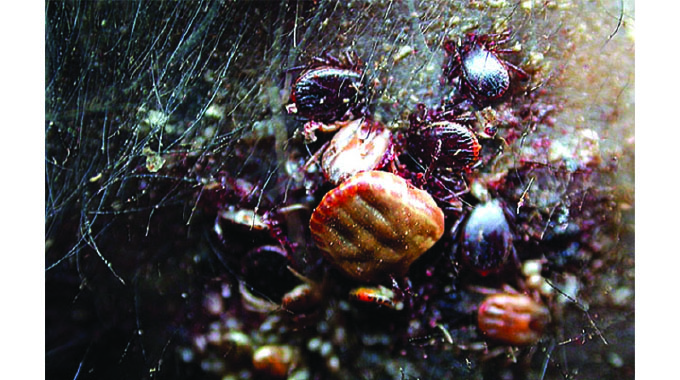
Chenai Museta
GOVERNMENT is shifting gears in the war against ticks with an innovative pilot programme that uses acaricide foot baths in place of conventional dip tanks being rolled out in some tick-borne disease hotspots.
This pioneering initiative is meant to improve the effectiveness of tick control measures but at a lesser cost.
The Department of Research and Specialist Services (DRSS) is championing the programme that is largely touted as a game-changing alternative to traditional dip tanks that is both cost-effective and environmentally sustainable. This technology promises to be the much-needed panacea to tick-borne disease challenges farmers in the country’s dry regions face perennially.
In an interview with The Herald yesterday, director of Livestock Research in the Ministry of Lands, Agriculture, Fisheries, Water and Rural Development, Mr Andrew Chamisa said: “This innovative dipping method is particularly beneficial for cattle and goats. The footbath structure is not only cost-effective but also conserves water and reduces the cost of acaricides, as it uses less compared to traditional dip tanks. While the latter require 15 000 litres of water, the footbath model uses only 300 litres, making it ideal for the drier regions of the country.”
The acaricide footbaths have proven to be highly effective in controlling the spread of the deadly Amblyomma “bont” tick, a carrier of heart water, a prevalent disease affecting sheep and cattle in Zimbabwe.
“We have implemented this technology in Chiredzi and Rupangwana area for the past two years, and the outcome has been very positive. The acaricide footbaths are promising to be a very innovative technology for our livestock farmers. We are looking forward to introducing it to the rest of the country in due time,” said Mr Chamisa.
Mr Chamisa acknowledged that farmers in Chiredzi and Rupangwana districts had fully embraced the technology. He further emphasised the need for collaborative efforts between the livestock department, development partners on the one hand and local stakeholders who have been instrumental in driving this initiative forward on the other. Key partners include the EU-International Livestock Research Institute (ILRI), which is providing funding, and the European Union, which supported the construction of the footbath structures. Farmers also made significant contributions, providing labour and resources, while technical assistance from the Department of Veterinary Services (DVS) ensured the programme’s successful implementation.
Repeated efforts to get a comment on the programme from Chiredzi district veterinary officer Dr John Kudakwashe Makwangudze were unsuccessful.
Livestock plays a vital role in Zimbabwe’s economy, providing income and employment to farmers, agricultural service providers and others involved in the value chain. Tick-borne diseases, however, pose a significant threat to the national herd accounting for 60 percent of livestock deaths.
Ticks have remained a major challenge, exacerbated by the lack of repairs to communal dip tanks and the inconsistent supply of acaricides.



 Online Reporter