admin
admin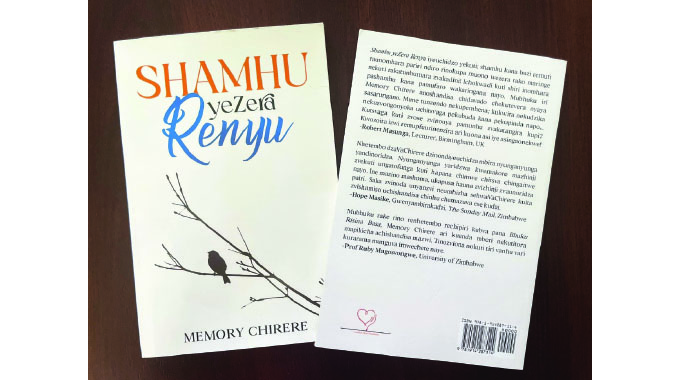

Lovemore Ranga Mataire
One of the pertinent issues that needs urgent address in Zimbabwe is the facilitation of a critical readership capable of sieving through the debris of information that results from the advent of the so-called information highway. Facilitating critical readership has become more essential in this age as young impressionable minds are daily confronted with an avalanche of information via the Internet most of which is not just subjective, but highly toxic if ingested by an untrained raw mind.
I was reminded of the dire need of a critical readership after recently stumbling on a paper presented by Sandra Lee Braude at the 1998 Zimbabwe Writers Workshop at the Zimbabwe International Book Fair.
So relevant was the paper to the present epoch that it cannot be brushed aside as an archaic piece of history.
In her paper titled “Facilitating Critical Readership”, Lee Braude says it is important that we realise that critical reading is, in fact, critical thinking if applied to the reading situation.
Lee Braude challenged educators to promote critical thinking among students so as to produce proactive members of society who are not gullible consumers of any form of literature that comes their way. Critical thinking, therefore, involves exercising careful judgment or observation when reading any text from a book, website or listening to the radio.
In answering the question of how educators can produce critical readers, Lee Braude refers to Lewis Carol’s “Alice in Wonderland” who asks: “What good is a book, without pictures or conversation?’’
So why does one read at all?
Franz Kafka offers the answer: “It seems to me that one should only read books which bite and sting one. If the book we are reading does not wake up with a blow on the head, what’s the point of reading? To make us happy?
“Good God, we would be just as happy without books, and books which make us happy, we can at a pinch write them for ourselves. On the other hand, we have need of books which act upon us like a misfortune from which we would suffer terribly, like the death of someone we are fonder of than ourselves . . . a book must be the axe which smashes the frozen sea within us. That’s what I think.”
It is clear from the above statement that Kafka attempts to bring awareness of the inherent nature within humans that paralyses them from being fully active and therefore need something forceful to smash through that which paralyses them.
In a world where the Internet has replaced hard copy as the source of knowledge, how do we convince the present generations of Facebook and WhatsApp addicts that everything accessed at the click of a button is not necessarily authentic or life-changing information. One needs not labour on the importance of books in light of the fact that some empires have come and gone, but works such as the Egyptian “Book of Dead”, the Greek drams, the epic poems of Homer, the Koran, the writings of Karl Max, still inspire millions.
Indeed, it is true the free-for-all nature of the Internet has created an anarchic and chaotic platform that demands one to have a discerning mind in breakdown the junkyard in order to separate fact from fiction or mere hallucinations.
Although concurring with the notion of a chaotic environment prevalent on the Internet, University of Zimbabwe English Literature lecturer Memory Chirere argues that it is difficult to literally train people to be critical readers or thinkers.
“You don’t train people to be critical by saying; beginning today be critical. You do it by making sure you persuade them to always ask important questions every time they come across any form of text. You read the world, so all text must be subjected against the world,” says Chirere.



 Online Reporter