Online Reporter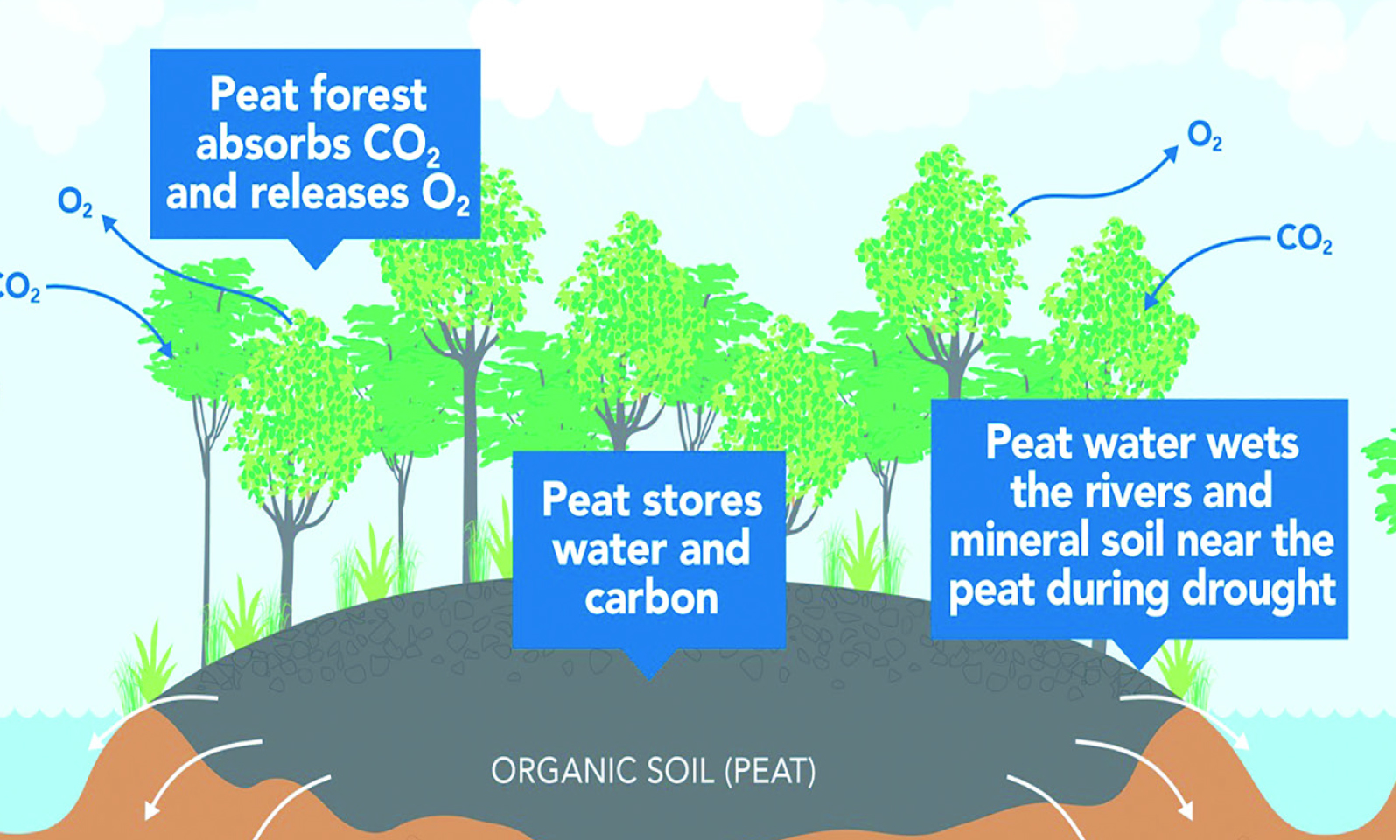
Melody Chironda
The world’s peatlands are “dangerously under-protected”, warns a new study, despite their critical role in storing vast amounts of carbon and the alarming levels of climate-heating carbon dioxide already being released due to their destruction.
Peatlands are wetlands where partially decayed plant matter builds up into layers of peat. They are a vital carbon sink and can be found on every continent.
“They currently emit about 1,5 gigatons of greenhouse gas emissions annually. That’s about 4 percent of global greenhouse gas emissions from all sources – fossil fuel burning, deforestation, everything… It is actually quite large on such a small area of land,” said Wildlife Conservation Society’s Forests and Climate Change Programme director of science, Dr Kemen Austin.
“If we don’t protect them, that number could grow unchecked. Protecting peatlands is a “win-win-win” solution. It helps mitigate climate change, supports biodiversity, and advances sustainable development goals.
“They store more carbon in their soils than all the world’s forest biomass combined,” she said.
“They cover just 3 percent of global land area, but the density of carbon in these ecosystems is enormous. When we say they’re “dangerously under-protected,” we mean that threats like agricultural expansion, oil and gas mining, and infrastructure development could release carbon that has been stored for hundreds of thousands of years.
“We need to do more to ensure that the carbon stored in peatlands – this 3 percent of global land area – is protected and conserved,” said Dr Austin.
“Peatlands are so important for people all around the world. They store vast quantities of carbon, hold 10 percent of the world’s freshwater, and act like natural sponges, absorbing water during heavy rains and releasing it slowly during dry periods,” said Dr Austin.
This unique function makes them critical for mitigating floods and droughts.
Beyond their environmental benefits, peatlands also support fisheries, biodiversity, and the livelihoods of communities worldwide. However, despite their significance, there has been limited understanding of how well they are being conserved and managed.
While peatlands are known to be important, there was a lack of understanding regarding how they are being managed in terms of conservation, which led to the decision to conduct the study.
“Countries should consider peatlands as a key part of their strategies.”
“Why now? The year 2025 is an important year for key international policy frameworks that can influence global peatland conservation trajectory.”
Countries involved in the Paris Agreement are currently submitting new climate targets and strategies, with more expected to do so in the coming months.
The countries are revising their national adaptation plans and, under the global biodiversity framework, working on national biodiversity strategies and action plans.
This is a chance for countries to recognise how valuable those ecosystems are and set targets that increase conservation for peatlands.
Study’s key finding revealed that only about 17 percent of peatlands are currently within protected areas.
This figure was “surprisingly low”, especially when compared to other high-value ecosystems like tropical forests, and salt marshes, where 40-50 percent are typically protected.
She said expanding protection could involve not only formal protected areas but also other effective conservation measures, such as recognising indigenous and traditional territories.
Research shows that indigenous land rights and community-led management lead to important environmental and social outcomes, like reduced deforestation and increased biodiversity.
In addition to global threats like agricultural expansion, oil and gas exploration, and mining, peatlands in Africa face unique challenges from climate change itself.
Rising temperatures and more variable precipitation patterns can destabilise peatland ecosystems, which rely heavily on stable hydrological conditions.
Droughts, for example, can dry out peatlands, making them more susceptible to fires and further degradation.
These climate-driven threats are particularly concerning in Africa, where peatlands play a critical role in water regulation and carbon storage.
Research has shown that they are frequently perceived as unproductive, remote, or inhospitable due to their waterlogged nature, which makes them difficult to access and use for traditional activities like agriculture.
This perception has led to their underappreciating and lack of conservation attention. However, she remains optimistic.
“But I’m optimistic that as we grow our appreciation for their incredible ecological value – like storing carbon, regulating water, and supporting biodiversity – we will start to prioritise their conservation more effectively.”
She said ecosystems have been historically overlooked, which has led to gaps in research and conservation efforts.
“Maybe because these areas have been underappreciated, they have not received as much conservation attention as they deserve. They also have not received as much research attention as they need to better understand where peatlands are, communities that rely on them, and for what purposes, how valuable they are to local communities and global society,” said Dr Austin.
Peatlands are also critical to achieving global climate goals, such as limiting warming to 1,5 degrees Celsius.
“We are close to 1,5 degrees Celsius of warming, and every fraction of a degree matters,” she said.
“They are a significant source of global greenhouse gas emissions, so addressing these emissions is critical. We need effective, equitable, and durable conservation solutions – whether that is through protected areas, empowering indigenous communities, or implementing legislation to conserve peatlands.” – AllAfrica.com