


 Tinaye Agere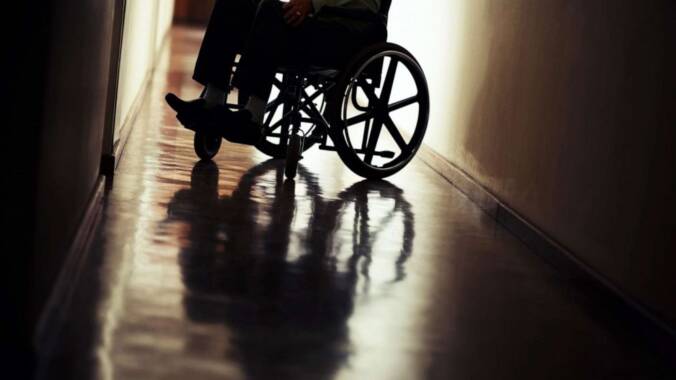
Dr Christine Peta
Disability Issues
CHILDREN of parents with disabilities experience a number of challenges.
Complex intersections of disability, gender, poverty, culture, religion, age and other attributes of social life result in the vulnerability of children of parents with disabilities to various forms of abuse.
This is often in contexts of unsafe and coercive practices that are done to the detriment of the well-being of the minors. Some of the children are often forced by family members to assume full-time caregiving roles for their parents as aides, sign language interpreters, homemakers and labourers, particularly in cases where both the mother and the father have disabilities.
Security is also a concern, as such children are more vulnerable to sexual and emotional abuse, which, in some instances, is perpetrated by close family and community members.
Research has indicated that more than 90 percent of deaf adults have children who are not deaf. However, such offspring experience challenges because of the unique differences between the deaf world of their parents and the children’s hearing world.
The sign language interpreter role that is assumed by some children of deaf adults from as early as the age of three, may be very tiring.
The children may also experience trauma or embarrassment in instances where they have to interpret the experiences of their parents that may not be appropriate for their age, such as issues surrounding sexual and reproductive health. Some children have parents who are both deaf and blind (deafblind).
Such children assert that they are the ears and eyes of their parents, hence they find it hard to sleep during the night because they will be worrying about what will happen if thieves come to rob them. They fear their parents will not be able to hear the noises that the thieves may make or to see the robbers.
The minors of deafblind parents also have to look out for them (parents) to ensure they do not hurt themselves, which creates scenarios of role-reversal”. In this case, the children become “parents”, and the parents become “children”.
The irony of the matter is that when it comes to the subject of children’s rights, most scholars assume all children are non-disabled.
In cases where attention is paid to disability, the focus is generally on the rights of children with disabilities or of parents with children with disabilities, and not on the rights of children of parents with disabilities.
The United Nations Convention on the Rights of Persons with Disabilities, which is the major treaty that guides disability practice in the world, dedicates an article to the rights of children with disabilities, but it is silent on the rights of children of parents with disabilities.
Nonetheless, it is pleasing to note that the National Disability Policy of Zimbabwe (2021) has a section that is dedicated to both children with disabilities and children of parents with disabilities.
This shows that the Government takes cognisance of the vulnerabilities of not just children with disabilities, but also those of children of parents with disabilities.
Dr Christine Peta is a disability, public health, policy, international development and research expert. She is the national director of disability affairs in Zimbabwe. She can be contacted on: developafrica2020 @gmail.com
The Ministry of Public Service, Labour and Social Welfare, which oversees both the national disability and child protection agenda, makes efforts to ensure that the needs and concerns of children of parents with disabilities, which are unique on the basis that they are born of parents with disabilities, are addressed, along with those of all other children. Nonetheless, the subject of the rights of children of parents with disabilities, has generally remained a grossly under-researched area.
There is, therefore, need for scholars to generate research evidence of the experiences of children of parents with disabilities, which informs law, policy and practice.
Dr Christine Peta is a disability, public health, policy, international development and research expert. She is the national director of disability affairs in Zimbabwe. She can be contacted on: developafrica2020 @gmail.com


 Bongani Ndlovu
 Online Reporter