Tapiwanashe Mangwiro
Senior Business Reporter
HARARE and Bulawayo continue to dominate as leading provincial economies, according to the latest data from the Zimbabwe National Statistics Agency (ZimStat), which shows that they accounted for 22.7 percent and 12.9 percent of the country’s 2023 aggregated gross domestic product (GDP) of Z$68.7 billion, respectively.
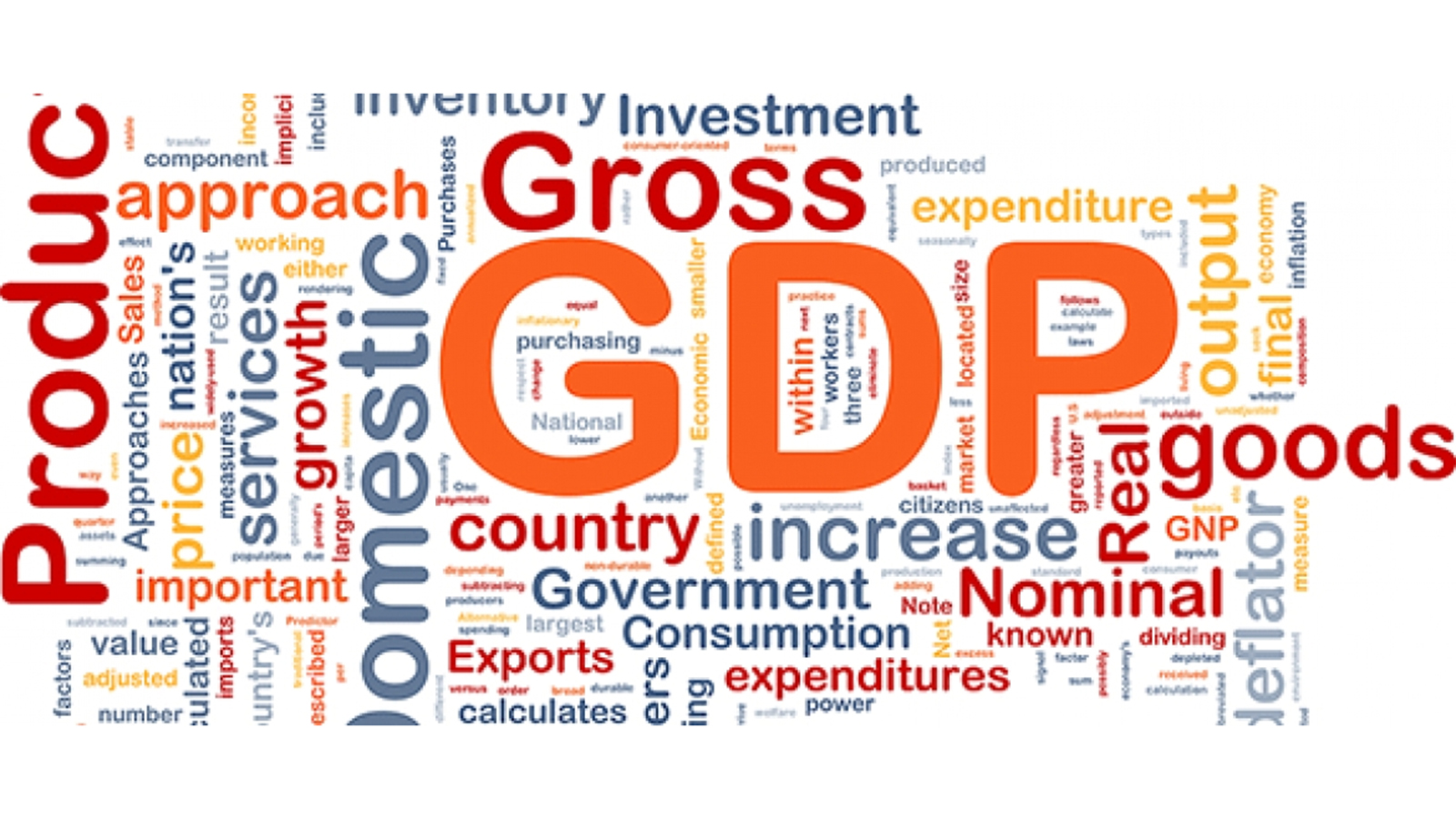
GDP is the standard measure of a country’s economic size and activity, representing the total value of all final goods and services produced within a specific time period, usually a quarter or a year.
A ZimStat breakdown of Zimbabwe’s provincial GDP numbers indicates that the size of the country’s economy expanded in 2024, despite the negative impact of the devastating El Niño-induced drought on agriculture, a key economic sector for the country, along with manufacturing, mining and tourism.
ZimStat data from the 2024 Economic Census, presented in Harare on Monday, highlighted the diversification of economic activity across the country.
Harare topped the latest provincial GDP rankings at ZiG15,59 billion, while Bulawayo was in second place at ZiG8,89; all figures at constant prices.
Calculating GDP at constant prices means that the value of goods and services produced in an economy is measured using the prices from a specific, unchanging base year.
This is also known as Real GDP.
The prices used to value all goods and services remain fixed at the level they were in a chosen reference year (the base year).
By holding prices constant, this calculation removes the effect of changes in the general price level (inflation or deflation). The only factor that can cause GDP at constant prices to increase or decrease is a change in the quantity (or volume) of goods and services produced.
According to ZimStat’s 2023 prices, the Midlands Province was a close third with ZiG8,07 billion, representing 11,7 percent of the country’s total GDP.
Mashonaland West was classified as the fourth-wealthiest province, at ZiG7,40 billion, representing 10,8 percent of the country’s total GDP value.
At ZiG6,87 billion, Manicaland took fifth position, followed by Masvingo’s ZiG4,95 billion, Mashonaland East ZiG4,80 billion, Mashonaland Central ZiG4,49 billion, Matabeleland North ZiG4,48 billion, and Matabeleland South ZiG3,20 billion.
“Taken together, these numbers showed a more balanced national economy,” said Namatai Maeresera, an economic analyst. “Harare was still leading, but provinces such as Midlands, Matabeleland North and Mashonaland West proved that Zimbabwe’s growth was spreading outwards.”
Harare’s GDP grew by 2,8 percent from ZiG15,17 billion in 2023 to ZiG15,59 billion in 2024.
Its economy is anchored by manufacturing, which contributed 22,2 percent, wholesale and retail trade at 16,3 percent and financial and insurance activities, which accounted for 15,9 percent.
Public administration added 4,8 percent to the capital’s economy.
“Harare’s industrial recovery was a highlight in 2024,” said Dr Nxaba Ndiweni, an industrialist.
“Despite inflationary pressures and supply chain constraints, manufacturing not only held steady but expanded, reinforcing its role in supporting exports and local supply chains.”
With nearly a quarter of the nation’s GDP, Harare underlined its status as the country’s financial, industrial and administrative hub.
At ZiG8,89 billion in 2024, Bulawayo’s GDP grew by 1,5 percent from ZiG8,76 billion in 2023.
Bulawayo’s economy was supported by wholesale and retail trade accounting for 18 percent, manufacturing 17,4 percent and financial services 15,3 percent.
The Midlands Province, at ZiG8,07 billion GDP, grew by 4,7 percent in 2024, making it one of the strongest performers.
Mining and quarrying dominated its wealth, with a 35,4 percent contribution, while manufacturing accounted for 14,5 percent and agriculture 8,6 percent.
“The Midlands figures proved how mining was anchoring regional growth,” said Mr Maeresera. “But what really stood out was the rise in manufacturing, which suggested beneficiation and industrialisation were starting to take root.”
Matabeleland North recorded the highest provincial GDP growth rate in 2024 at 9,7 percent.
The province’s ZiG4,48 billion GDP was powered by the energy economy; electricity and gas, which contributed 25,2 percent, followed by mining and quarrying at 17,9 percent and manufacturing at 10,4 percent.
“This kind of growth was impressive because it was tied to energy production,” said Gladys Shumbambiri-Mutsopotsi, an economist.
“Energy is not just a sector; it underpins the whole economy. Matabeleland North’s expansion in 2024 meant Zimbabwe had a more reliable growth driver for the future.”
In Mashonaland Central, agriculture, forestry and fishing made up the largest chunk, 24,5 percent, of the province’s ZiG4,49 billion GDP, which contracted only marginally, while mining and quarrying contributed 10,1 percent.
Wholesale and retail trade added 9,7 percent to the province’s cumulative wealth.
Mashonaland East, at ZiG4,80 billion, was dominated by agriculture with a 21 percent contribution, manufacturing 15,1 percent and mining 12,7 percent.
Mashonaland West’s ZiG7,40 billion GDP was driven heavily by mining, which accounted for 31,9 percent of the economy, followed by agriculture at 14,8 percent and manufacturing at 8,4 percent.
Manicaland’s GDP was ZiG6,87 billion, anchored by mining and quarrying which contributed 20,3 percent, agriculture 15,7 percent and manufacturing 13,7 percent.
Masvingo produced ZiG4,95 billion, with agriculture accounting for 14,1 percent, manufacturing 13,4 percent and retail trade 12,8 percent as the main contributors.
Matabeleland South’s ZiG3,20 billion GDP came mainly from mining, which contributed 23,8 percent, manufacturing 13,7 percent and wholesale and retail trade 13,5 percent.
“Mining in 2024 was not just about foreign currency inflows,” argued Dr Ndiweni. “It supported transport, logistics and processing, creating a multiplier effect that strengthened provincial economies.”
Growth rates varied sharply across provinces, after Matabeleland North grew by 9,7 percent and Midlands 4,7 percent, Harare followed with 2,8 percent, Matabeleland South with 2,4 percent, Masvingo with 1,7 percent, and Bulawayo with 1,5 percent.
Mashonaland Central’s GDP shrank by 1,6 percent, Matabeleland North retreated by 1,5 percent and Manicaland fell by 0,1 percent. Mashonaland East gained a marginal 0,5 percent.
“These growth rates tell us that the economy was not evenly spread in 2024,” said Ms Shumbambiri-Mutsopotsi. “But the strong numbers in energy, mining and agriculture-rich provinces balanced out weaker regions, and overall, the national story remained positive.”
Harare and Bulawayo together still made up 35,6 percent of national GDP, as Midlands and Mashonaland West, combined, contributed 22,5 percent, reflecting the growing influence of industrial and mining centres outside the two main cities.
For Mr Maeresera, the implications were clear.
“Banks needed to adjust to these realities. Midlands, Mashonaland West and Matabeleland North became crucial growth corridors in 2024. Extending more credit to those areas is no longer optional; it is essential.”
Though Zimbabwe faced headwinds in 2024, largely due to uneven rainfall, the GDP report showed that provincial economies continued to strengthen.
“With energy capacity expanding, commodity exports holding steady and consumer demand resilient, analysts believe the 2024 momentum laid a solid foundation for 2025.
“The big message from 2024 was that growth was decentralising,” Dr Ndiweni concluded. “Harare stayed strong, but provinces stepped forward. That was the strongest sign yet that Vision 2030 was achievable.”