Moffat Mungazi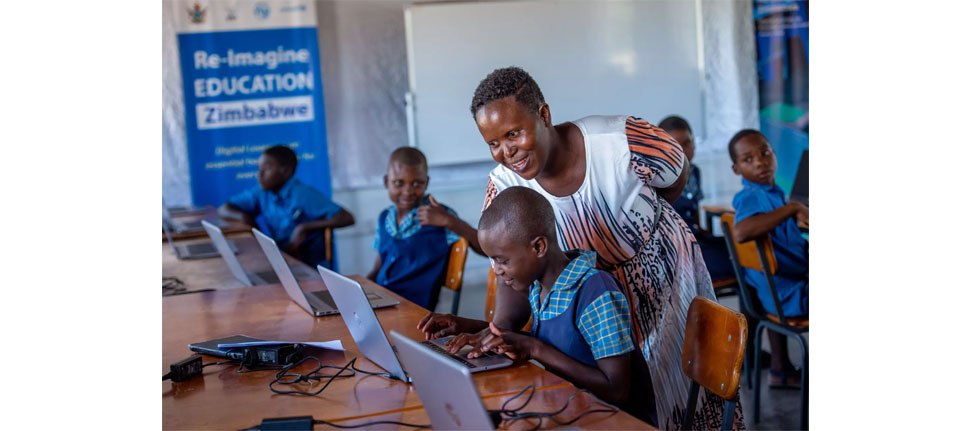
Lovemore Kadzura
Post Reporter
TEACHING and lesson delivery in schools are being enhanced and modernised, thanks to Government, and its partners in the education sector for providing essential resources, including electricity and internet connectivity.
The Ministry of Primary and Secondary Education’s 2024 report reveals significant progress in Manicaland, with 81 percent of primary schools, and 80 percent of secondary schools now having access to electricity.
According to the report, 1 022 primary schools have electricity, while 227 (18 percent) remain unconnected.
Similarly, 384 secondary schools have power, whereas 92 (19 percent) do not.
The ministry has acknowledged the importance of electricity in schools, highlighting its role in facilitating smooth learning, teaching Science, practical subjects, and Information Communication Technology (ICT).
Crucially, the availability of electricity makes a school more attractive to potential teachers.
“Electricity provides multiple services to the classroom. Lightning makes it possible for classes to be taught early in the morning or late at night. Access to electricity facilitates the introduction of ICTs into the classroom. Furthermore, electrified schools are more attractive to qualified teachers.
“Primary schools in Zimbabwe rely heavily on the national grid for electricity, with 53,98 percent of primary schools connected to the national grid. Solar power is second most common source used by 17,18 percent of the schools. A small fraction, 0,82 percent, relies on other sources. Notably, 25,72 percent of primary schools lack access to electricity.
“A similar pattern emerges in secondary schools, 61,07percent are connected to the national grid, and 14,24 percent utilise solar power. Meanwhile, 21,03 percent of secondary schools remain without electricity,” reads the report in part.
In terms of internet connectivity, the data also showed that 441 primary schools are connected, while 818 are not.
About 245 secondary schools have internet access, while 231 do not. By virtue of having the highest number of schools in the country, Manicaland has the biggest number of schools (818) without internet.
Anglican Diocese of Manicaland education secretary, Reverend Edmond Samutereko said they are making concerted efforts to improve electricity and internet access in their schools, particularly in rural areas.
“As the Anglican Diocese of Manicaland, we oversee 54 primary and secondary schools. Electricity remains a significant concern, especially in our rural schools. We have managed to solarise some schools, although not comprehensively. Our goal is to solarise all our schools to prevent power cuts and ensure uninterrupted learning,” he said.
Regarding Information and Communication Technology (ICT), Reverend Samutereko acknowledged that progress has been limited, especially in rural schools.
“We still need to make significant strides in this area, which is closely tied to power availability. However, our boarding schools have achieved 100 percent internet coverage. We are collaborating with development partners to provide internet and electricity in our schools,” he said.
President of the Zimbabwe Rural Teachers’ Union, Mr Martin Chaburumunda said all schools must be electrified and have internet access to bridge the rural-urban divide.
He noted that teaching and staying at a school without electricity poses significant challenges for teachers.
“Every school and classroom must be electrified. Rural learners are missing out on opportunities to study crucial subjects like ICT and sciences due to lack of electricity. Unfortunately, these subjects are in high demand globally, making it challenging for those left behind to catch up. The mantra of ‘leaving no one and no place behind’ must be put into practice by school owners.
“It is unacceptable that some schools only have electricity and computers in administration blocks, leaving classrooms and teachers’ houses without.
Schools without electricity provision experience high staff turnover, as they are not ideal places to stay. Electricity makes life easier for teachers in remote areas. Rural schools, in particular, have ample land to set up solar plants, which can power the institutions and even generate surplus energy for the grid,” said Mr Chaburumunda.



 Online Reporter