dyton mupawaenda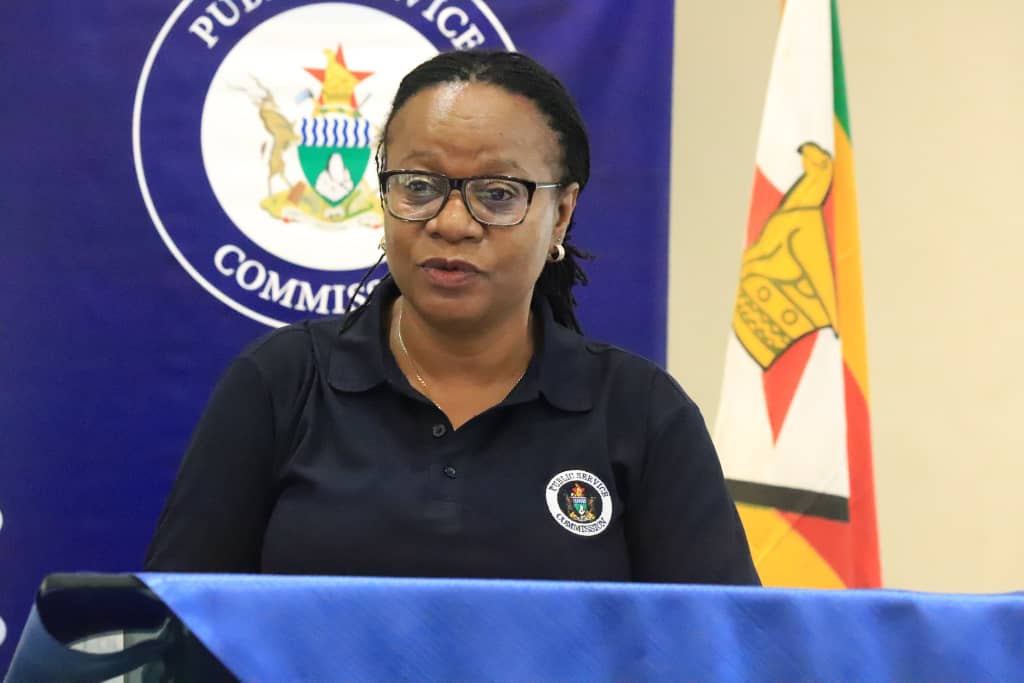
Zvamaida Murwira-Senior Reporter
THE Public Service Commission is tackling rampant abuse of the vehicle import rebate scheme and government housing occupied by non-civil servants to ensure that only civil servants benefit.
The commission also wants to update training and technology, and as part of cost cutting will cease printing payslips, giving civil servants digital payslips instead, as is now the norm across much of the private sector.
It will also study the job evaluation report it commissioned to be done on all Ministries over two years aimed at reviewing competencies and skills job descriptions in sync with the National Development Strategy.
PSC Secretary Dr Tsitsi Choruma said this yesterday while updating legislators and stakeholders during a pre-budget seminar aimed at formulating the 2024 national budget to be presented by Finance, Economic Development and Investment Promotion Minister Professor Mthuli Ncube.
She said there was a need to upgrade the Salary Service Bureau system which was installed more than 30 years ago and was no longer in sync with modern technology.
“One of the issues that we hope to finalise is the automation of our system; for instance, our SSB system is 30-years-old.
“We also need to reduce the cost of employment by reducing the cost of printing payslips. Payslips alone are costing us millions of dollars. The other thing we are doing is to provide training: our training infrastructure is dilapidated,” said Dr Choruma.
She said the vehicle rebate system was being abused by third parties who would have vehicles imported for them in the name of a given civil servant.
Government housing was also being abused with many people who were not civil servants staying in Government owned houses.
“On non-monetary benefits, we will continue with the vehicle rebate system but there is a lot of corruption. We want everyone to benefit but currently it is other people who are benefiting at the expense of the Government and not our workers.
“On housing over the years Government has invested in housing for workers but they are occupied by other people and not our workers,” Dr Choruma said.
She said Government was now studying the job evaluation report.
The report would help review job clusters and job content and also assist in arriving at pay equity by establishing equivalences and relationships between jobs performed by members of the Public Service of Zimbabwe.
Turning to PSMAS, Dr Choruma said PSC had paid its outstanding debt owed to the society but was surprised that PSMAS was still claiming that the commission was owing about $7 billion.
“On PSMAS, we cleared. Last year alone we paid $40 billion and this $7 billion we do not know where it is coming from. We also know there has been a forensic audit which was supposed to guide us in terms of operations. Up to now the PSC does not have that audit report,” she said.
Responding to inquiries from Ministries about lack of vehicles for mobility, Prof Ncube said they were working on a model of a leasing arrangement where Government Ministries would lease vehicles and make periodic payments.
He said this was done in Rwanda and South Africa.
Women Affairs, Community, Small and Medium Enterprises Development Minister Monica Mutsvangwa called on Treasury to better fund her Ministry given its importance.
“At least 52 percent of Zimbabwe’s population are women and 70 percent of them reside in rural areas. Many of these women rely on aid and as such they now suffer from a dependency syndrome. The Ministry submitted a bid of $172.8 billion towards women empowerment and this includes the Women Development Fund, Zimbabwe Women Microfinance Bank, and the safe markets and value addition centre. He who empowers a woman, empowers a generation,” she said.
Her Ministry was providing workspaces for rural areas whose effect was to decongest urban areas hence the need to fund her Ministry.
Chairperson of the Portfolio Committee on Industry and Commerce Cde Ngonidzashe Mudekunye called for support of the Ministry given its link with industry and ease of doing business.
Taxes from industry and commerce were funding other ministries, he said.
“All Ministries are saying they want to be funded and they are not talking about how the Ministry of Finance can be capacitated to be able to fund them. It is only through funding the Ministry of Industry and Commerce that will capacitate Treasury,” said Cde Mudekunye who is also Buhera South MP.
He said there was a need to allow Zesa to charge economic tariffs as part of measures to contain loadshedding.
Buhera West MP, Cde Tafadzwa Mugwadi, said there was a need to prioritise youths in the allocation of land because most of them were too young to have been allocated land during the land reform programme.


 Online Reporter