Online Reporter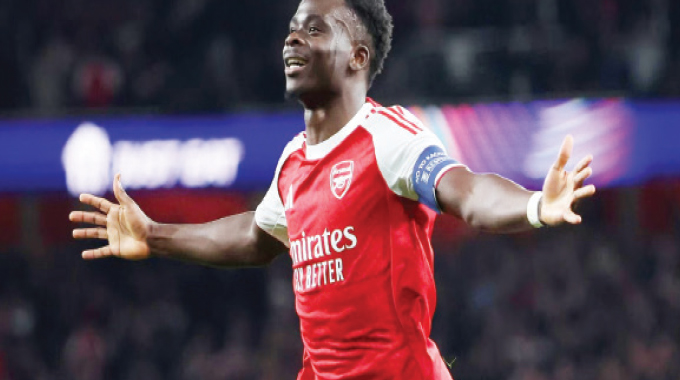
John Brewin
THE teams for the final in Budapest are now set, and attention turns to how they reached this stage and what could ultimately decide who lifts the trophy.
Destination Budapest now awaits, with Paris Saint-Germain chasing history as they aim to become the first club outside Real Madrid to win back-to-back European Cups since AC Milan achieved the feat in 1990. Vincent Kompany had promised “more” from Bayern Munich after an explosive nine-goal first leg, but that promise never truly materialised when it mattered most. In the second leg, PSG presented a completely different challenge. Their performance was built not on flair alone, but on control and discipline, especially in defence. Their attacking players worked tirelessly to close down Bayern, ensuring that despite the high volume of shots — 33 in Munich compared to 22 in Paris — the tie never slipped from their grasp. Luis Enrique’s team dictated the rhythm and calmly kept control throughout the contest.
Khvicha Kvaratskhelia remains a fascinating blend of styles, part old-school winger and part modern pressing forward. He created Ousmane Dembélé’s goal with clever play, but just as important was his relentless work without the ball. Bayern struggled to find space for long periods, with only a late Harry Kane goal offering them some consolation. This PSG side is not drastically different from last season’s version, but it has matured. There is still youthful energy in abundance, yet now it is supported by experience and understanding. It has been a long and expensive journey since the Qatari takeover in 2011, but at last, the project appears to be delivering the success that was always expected.
Arsenal’s progress in the Champions League has been steady and deliberate. Over the last three seasons, they have moved from the quarter-finals to the semi-finals, and now into the final itself. Should they overcome PSG and follow it with three victories in the Premier League, they could be on the brink of one of the most remarkable finishes in their history. It has not been an easy campaign. There have been moments of doubt, but Mikel Arteta has stayed firm in his approach. His belief in his ideas — sometimes seen as stubbornness — is now being rewarded.
“You have to give this man a lot of credit because he came under a lot of criticism,” said Thierry Henry, Arsenal’s captain when the Gunners reached the 2006 final. “I was in that too, I will be honest, for a very long time.”
History shows that the strongest European teams are often built around a core of home-grown talent. From Barcelona’s famous La Masia graduates to Manchester United’s Class of ’92, and from Ajax’s golden generations to Milan’s dominance in the late 1980s, identity has often been key. In today’s global game, opportunities for young players can be harder to find, but they remain central to any lasting connection with supporters. Bukayo Saka’s decisive goal against Atlético Madrid captured that perfectly — a local player stepping up on the biggest stage.
Alongside him, Myles Lewis-Skelly has taken a different path. Having broken through last season at left-back, his development has included time in central midfield, shaping a more complete player. That adaptability may yet work in his favour, even if it complicates his immediate international prospects. Arteta has sometimes been labelled overly cautious, but decisions like trusting a 19-year-old in a Champions League semi-final suggest otherwise. Lewis-Skelly repaid that faith, combining effectively with Declan Rice to control the midfield and limit Atlético’s influence. The Arsenal manager has shown he is willing to place trust in youth when required, even including 16-year-old Max Dowman in the squad. Notably, Lewis-Skelly was preferred over Martin Zubimendi, a major summer signing whose form has dipped. Now, he could feature in the club’s biggest match in two decades, with Saka also returning refreshed after an injury-disrupted season.
Marquinhos has been one of PSG’s most consistent figures since joining the club as a teenager in 2013. Once playing in the shadow of Thiago Silva, he has grown into a leader in his own right. In Munich, he produced a commanding display, leading the defensive effort and limiting threats from Kane, Michael Olise and Luis Díaz through organisation and composure. He was well supported by Willian Pacho, while young Warren Zaïre-Emery adapted to an unfamiliar role at right-back.
“Tonight we showed that we also know how to defend, how to battle like crazy,” Marquinhos said after the match.
Bayern, meanwhile, were left with grievances over key moments across both legs.
“We have to look at some of the phases that were decided by the officials across the two games which … It’s never an excuse for everything but it matters. If we look at both legs probably too much went against us” — Kompany and his side pointed to contentious decisions, including handball calls and disciplinary moments, which they believe shaped the outcome.
Elsewhere, reactions have not been without their lighter or more controversial side.
“If I was running down the side, I’d make sure I actually topped him. I’d tackle the ball and tackle him at the same time” — former Arsenal player Stewart Robson did not hold back when discussing Arteta’s behaviour on the touchline, after ESPN host Dan Thomas asked: “At what stage, as the opposition coach, do you want to punch Arteta in the face? How much does that annoy you?”
As the final approaches, PSG’s ability to combine defensive organisation with attacking threat may challenge perceptions that the contest will be a simple clash of styles. Both sides prioritise control, even if they approach it differently. For Arsenal supporters, there are echoes of the 2006 final against Barcelona — a game that still lingers in memory, marked by Jens Lehmann’s early red card and decisive moments provided by Barcelona’s substitutes.
Budapest now prepares to host what will be only the fourth European Cup final between clubs from capital cities, following meetings in 1962, 1966 and 1971. For Arsenal, the occasion carries added weight. It is a chance to correct past disappointments and silence long-standing frustrations, particularly after watching rivals like Chelsea lift the trophy twice. It is also an opportunity for revenge, after PSG eliminated them at the semi-final stage last season.
Everything now comes down to one final night. –Guardian Football