admin
admin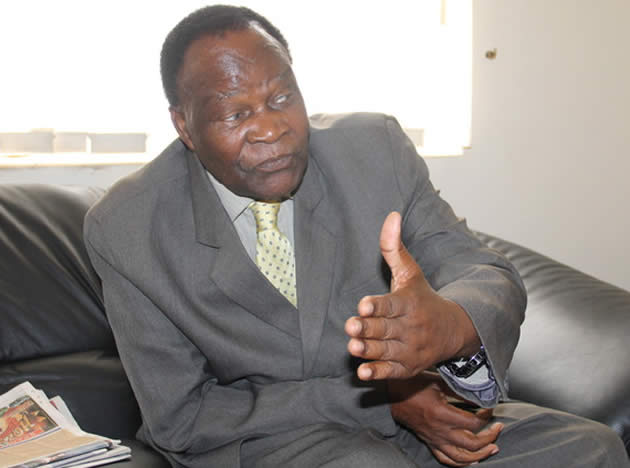
THE setting up of the Department of State for Liaising in Psychomotor Activities in Education sent tongues wagging as they tried to navigate the tongue twister of a name. Nine months down the line, Cde Josiah Hungwe (JH), the Minister of State for Liaising on Psychomotor Activities in Education, tells Zimpapers’ Star FM Radio (SFM), of the centrality of psychomotor activities to the implementation of Zim-Asset.
SFM: Minister, the phrase “psychomotor activities in education” still needs to be understood by many Zimbabweans -what does it mean and how do psychomotor activities relate to education?
JH: The word psychomotor is derived from psychologist Benjamin Bloom’s 1956 taxonomy which says learning is made up of three domains: cognitive (knowing), affective (feeling and attitude) and psychomotor domain (physical and practical skills).
The pursuit of the psychomotor domain is key due to the fact that it naturally involves the other two domains, thus learning has four levels which are observation, imitation, practice and adaptation. This follows the natural order of learning like a baby learning to walk.
Education in Zimbabwe has been stagnant by staying academic and cognitive only and thus our learners have ended up without real life skills ending up as unemployable graduates, unemployed and without survival skills. The introduction of psychomotor skills thus aims to address this anomaly.
SFM: Besides being a politician – you are also a prominent educationist in both pre-and-post independent Zimbabwe. With the benefit of hindsight, do you think it was a mistake by the Government to abolish F2 Schools soon after independence?
JH: I believe F2 schools were well replaced by the Education with Production concept.
SFM: For the benefit of the born-frees can you explain the concept behind the F2 schools, and also how these differ or are similar to the new concept of Psychomotor Activities in Education?
JH: The F2 schools system was segregatory by nature in that they were meant for black pupils and those perceived to be under-achievers academically. In fact, some of the top schools we now have such as Pamushana and St John’s Chikwaka were originally F2. As a result on the onset of Independence, the Government had to get rid of the system. This system differs with psychomotor activities in that psychomotor is about the balanced curriculum with vocational/technical and entrepreneurial activities availed to all learners from Grade 0 upwards.
SFM: Your ministry was established soon after the July 31 elections, and you are having to put everything together from scratch, what progress have you made so far and what challenges are you facing?
JH: You are right, I started from scratch. One member of staff came aboard in February, the second in March and the third in April, with my principal executive only arriving pretty recently but this did not deter us. My department started by visiting institutions of learning that were involved in some psychomotor activities at school and tertiary level.
Two visits were made to Bulawayo – the first one by the minister alone and the second one with two officials. A lot was learnt from these visits and weaknesses were also noted. This will help the department to come up with specific strategies that will help institutions improve service delivery.
Consultations have already been done with the key education ministries which are in the process of identifying gaps in their curriculum and all stakeholders involving many other ministries shall be called in due course. Non-governmental partners such as the ILO, UNDP and others have been engaged and countries that have had similar programmes of psychomotor activities are being courted.
New as we are, we managed to exhibit at the ZITF and we got very positive responses.
SFM: Looking at education at both primary and secondary school levels, do you think most headmasters understand what you and the President are trying to achieve and have you started engaging them yet?
JH: My department deals with ministries of education and other relevant ministries and stakeholders and will only deal with individual school heads on specific projects. It is hoped that the relevant ministry will disseminate information from us to the school heads.
SFM: How are they responding to this new concept in education?
JH: From our interaction with school heads at ZITF they appeared to be thrilled with this new concept in education.
SFM: Does the country still have enough skilled manpower to introduce subjects such as carpentry, building, car mechanics and even computer education in our schools?
JH: Firstly psychomotor is not about traditional subjects but it is about meeting the needs of the nation as identified by the Zim-Asset. An inventory of qualified personnel will have to be done and training of educators will be taken into account. It should be noted that due to the deficiency of the current system qualified practical subject teachers from institutions like belvedere are being made to teach academic subjects in schools. In addition, the President’s computerisation programme has capacitated some schools to participate in the 21st century e-learning programmes.
SFM: Sport is also a critical component of Psychomotor in Education – why and how much importance is your Ministry placing on this activity?
JH: I spent an afternoon at the recent Dairibord Schools Rugby tournament hosted by Prince Edward. We realise that apart from being the most prominent type of psychomotor based education where everything starts from practicals, sport is also an employment creator. For this reason we intend to support the Ministry of Education and Ministry of Sports, Art and Culture in all their sporting programmes.
SFM: How does the Psychomotor in Education concept relate to Zim-Asset?
JH: Psychomotor activities in education are the drivers of the Zim-Asset. Without training in relevant vocational, technical and entrepreneurial skills our youths will not be effective citizens. Psychomotor activities are meant to empower and enhance employability among the youth which is in line with the new Government thrust in Zim-Asset.



 Online Reporter