

 Online Reporter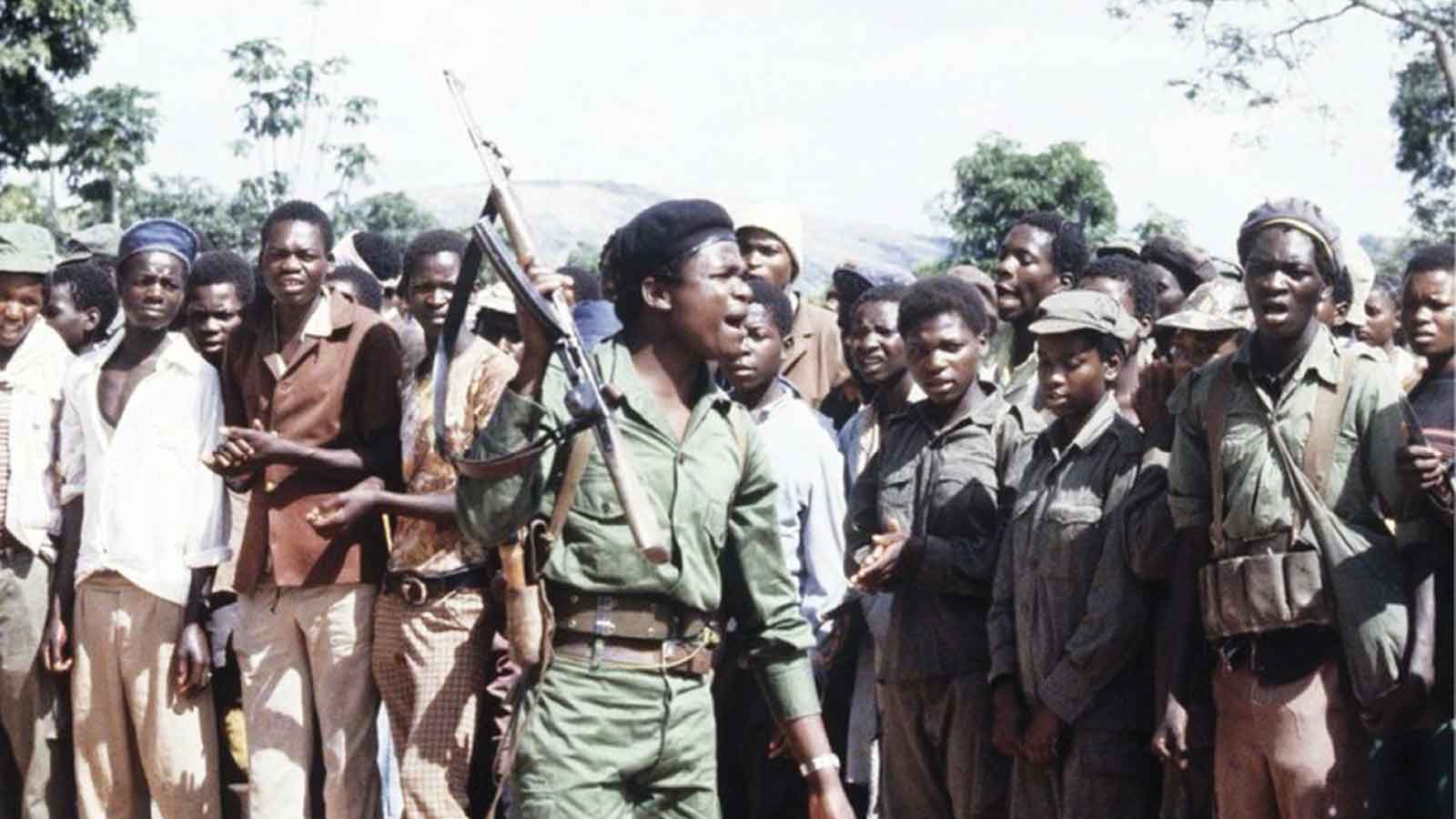
Alexander Rusero
Ranga Mataire
THERE was a time when night time was not for sleep, but for awakening.
During the liberation struggle, guerrillas, (as freedom fighters were aptly known), morphed night vigils — the pungwe — into a convenient and viable platform for the fighters and the masses to interact, educate each other of the objectives of the liberation struggle and share the same vision.
Pungwe was a strategy devised by ZANLA, the military wing of ZANU, during the liberation war. The rationale behind the concept was to create a socialisation platform that cut across African cultures and African times.
Pungwes provided multi-faced spaces that allowed the ZANU/ZANLA protagonists in the war of liberation to create a fighting community that included the masses.
Under the cover of darkness, communities gathered for this purpose. The pungwe was a living institution. It was a classroom, a parliament, a cultural arena and a political school all at once.
It was the cockpit of the struggle.
There, the masses and the fighters dissolved their differences and became one collective machine pursuing liberation. It was governance in its most organic form — participatory, inclusive and deeply rooted in shared struggle.
The pungwe erased artificial hierarchies. The peasant, the teacher, the spirit medium, the guerrilla, all shared one vision, political and moral ideology.
In that space, knowledge was not monopolised by one strata of the fighting society, it was shared. It was co-created, debated, sung, danced and internalised.
That is why the pungwe was effective. It was governance enacted with the people.
The coming of independence and the attendant urgent matters of governance, including providing a social nest to the previously marginalised majority, kind of slackened the reinvention of the pungwe as a rendezvous of collective decision making, especially at community development.
The coming of the Second Republic has however changed the earlier hiatus. The Government is actively reviving and empowering traditional leaders — chiefs, headmen and village heads — as the central pillars of community-based development, aiming to accelerate rural transformation under the National Development Strategy 2 and the Vision 2030 agenda.
This approach emphasises heritage-based development, leveraging local knowledge and leadership to ensure that rural development is culturally anchored, inclusive and addresses grassroots needs.
Just like the pungwe that presented a continuous process of political education and empowered the masses to understand the essence of the liberation struggle, the Government has implemented various initiatives tailor-made for individual communities.
Key interventions include reinforcing traditional leadership structures, including the revival of previously abolished headmanships to enhance local governance and administrative capacity.
Another intervention is the “Zunde Ramambo” revival meant to strengthen food security, improve nutrition and protect vulnerable households within rural communities.
Traditional leaders are now central to coordinating local development projects, including the construction of clinics, schools and water infrastructure under the Second Republic.
Re-igniting the pungwe philosophy is about reclaiming a proven model of people-centred governance and adapting it to contemporary realities. It is about recognising that governance is not a static structure but a dynamic relationship between the state and its citizens. And that relationship must be nurtured through constant engagement, dialogue, and co-creation.
Citizens would engage with policymakers, interrogate decisions, and contribute ideas. Cultural expression, song, poetry and storytelling, would be integrated into these spaces, making them accessible and relatable.
Reigniting the pungwe concept will assist in mobilising communities through ideological, cultural and development-oriented engagement, moving from war-time mobilisation to local-level development and fostering collective responsibility.
Critically, the philosophy also fosters unity. During the liberation struggle, unity was not a slogan; it was a necessity. The pungwe created a shared sense of purpose that transcended ethnic, class and regional differences.
It was at the pungwes that the masses educated each other about social issues, economics, colonialism, oppression and the war strategy. They created a rendezvous for educational programmes about geo-politics, political science and international power structures that they communicated to rural peasants through drams.
Apart from the entertainment element, song and dance was primarily a means of disseminating messages of war, thanksgiving, supplication, spiritual intervention and boosting morale. The song encompassed and encapsulated the liberation war objectives.
Songs like “Mukoma Nhongo Bereka Sabhu Tiende”, “Nyika Yedu YeZimbabwe”, “Ruzhinji Rwatsidza”, “Sendekera Mukoma Chakanyuka” and “Emoyeni Kuyatshisa” were inspirational springboards for both the fighters and the masses.
Pungwe was a night of coming together, to reach out, discuss and teach each other how to build the community, encompass cultural pride and identity and instil a sense of brotherliness.
Rooted in the culture of the people, Chimurenga pungwes were a unifying social force and an embodiment of strength in local communities. No wonder they were successful in mobilising millions of the masses so much so that by late 1976, liberation movements controlled over 50 percent of the country (liberated zones), where the pungwes evolved into community meetings to govern the newly won areas.
There is also a generational dimension to consider. A significant portion of the population today was born after independence. For them, the liberation struggle appears like a historical mirage.
The pungwe would offer a way to bridge this generational gap. By creating interactive, community-based platforms for historical and political education, it can make the story of liberation relevant to contemporary challenges.
This will help young people see themselves not just as beneficiaries of independence, but as active participants in its ongoing project.
Of course, reviving the pungwe philosophy will not be without challenges. Modern societies are more complex, urbanised and technologically mediated than they were during the liberation struggle.
The question, therefore, is not whether to replicate pungwe in its original form, but how to adapt its principles to suit current contexts.
Digital platforms, for instance, could complement physical gatherings, extending participation to those who cannot be physically present. Educational institutions could incorporate pungwe-style dialogues into their curricula, fostering critical thinking and civic engagement from an early age.



