admin
admin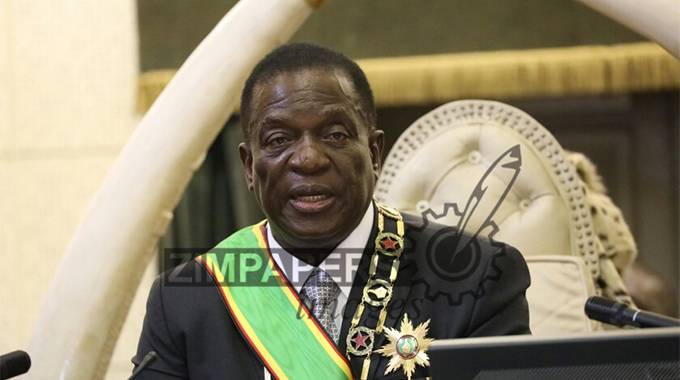
Pastor Tomson Dube
In the last article, we looked at the application of servant-leadership and discussed two attributes, mainly listening and empathy. Today we focus on four of the other attributes of servant-leadership and how they help leaders to be accountable to their followers.
These include but are not limited to: Healing, Awareness, Persuasion and Conceptualisation.
Healing — One of the great strengths of servant leadership is the potential for healing one’s self and one’s relationship with others. Many people have broken spirits and have suffered from a variety of emotional hurts.
Although this is a part of being human, servant-leaders recognise that they have an opportunity to help make whole those with whom they come in contact. In his essay, The Servant as Leader, Robert K Greenleaf writes, “There is something subtle communicated to one who is being served and led if, implicit in the compact between servant-leader and led, is the understanding that the search for wholeness is something they share”.
Greenleaf defined healing as “to make whole”. The servant leader recognises the shared human desire to find wholeness in one’s self, and supports it in others. The healing of relationships is a powerful force for transformation and integration.
The enactment and appointment of the National Healing Peace and Reconciliation commission in Zimbabwe is a typical servant-leader mentality. It is common knowledge that some people in the Midlands and Matabeleland provinces in Zimbabwe were affected during Gukurahundi.
When a servant leader is aware of the hurts of others he takes action to redress the act. In every act of disturbance, there is need for a period of closure. We have a servant-leader that has thought of a healing process for the nation. That action on its own needs everyone’s support in order to make whole of the situation. It is my strongest belief that the findings from the commission will be actioned upon and help bring a closure to this dark page in the history of independent Zimbabwe. In the process, those that were and are hurt will be healed and the perpetrators will be healed too.
Awareness – General awareness, and especially self-awareness, strengthens the servant-leader.
Awareness helps one in understanding issues involving ethics, power, and values. It lends itself to being able to view most situations from a more integrated, holistic position.
As Greenleaf observed: “Awareness is not a giver of solace-it is just the opposite. It is a disturber and an awakener. Able leaders are usually sharply awake and reasonably disturbed.
They are not seekers after solace. They have their own inner serenity”. True as well, without awareness, “we miss leadership opportunities”. A servant-leader knows where they came from. President Mnangagwa has enunciated his road from humble beginnings from Zvishavane, to Zambia and the rest of his political career, up to being a border jumper and subsequently the President of the Second Republic.
The road servant-leaders have walked and the ability to intentionally desire to make right the wrongs of the past in order to create a harmonious work environment for everyone becomes their trade mark. A servant-leader would be aware of the power dynamics in self, the opposition and even in his own camp hence the desire to seek an integrated approach to national issues.
Persuasion – The effective servant-leader builds group consensus through “gentle but clear and persistent persuasion, and does not exert group compliance through position power. Greenleaf notes that “A fresh look is being taken at the issues of power and authority, and people are beginning to learn, however haltingly, to relate to one another in less coercive and more creatively supporting ways.”
A person may be “in control” because he has been appointed to a position. In that position he may have authority; it is more than having the technical training and following the proper procedures. Real leadership is being the person others will gladly and confidently follow.
A real leader knows the difference between being the boss and being a leader. Servant-leadership utilises personal, rather than position power, to influence followers and achieve organisational objectives. This particular element offers one of the clearest distinctions between the traditional authoritarian model and that of servant leadership.
This is more pronounced in our case as Zimbabwe, the New Dispensation, has a new way of doing politics. The peace that prevailed before and during is a new way of doing politics in Zimbabwe. The servant leader is effective at building consensus within groups. This emphasis on persuasion over coercion finds its roots in the beliefs of the Religious Society of Friends (Quakers) — the denominational body to which Robert Greenleaf belonged.
In the current dispensation, the leadership must be aware that Zimbabwe’s ranking in African countries by literacy rate, is placed number one with a 90.70 percent (Africaland Post, 2013). The New Dispensation should therefore be aware that whatever they do, (in less coercive and more creatively supporting ways) people can read and write and the leaders would be held accountable by the now and the generations to come. In their persuasive processes and consensus building, there is need to place the people first.
Conceptualisation — Servant leaders seek to nurture their abilities to dream great dreams. The ability to look at a problem or an organisation from a conceptualising perspective means that one must think beyond day-to-day realities. The pronouncement of vision 2030 for Zimbabwe as a middle income economy by President Mnangagwa comes to mind.
For many leaders, this is a characteristic that requires discipline and practice. The traditional leader is consumed by the need to achieve short-term operational goals. The leader who wishes to also be a servant-leader must stretch his or her thinking to encompass broader-based conceptual thinking.
Within organisations, or a government of the people, conceptualisation is, by its very nature, a key role of boards of trustees or directors. We have witnessed the appointment of a cabinet that the whole nation applauded as democratic technocrats which now has a mandate to deliver.
Those permanent secretaries, the directors and the various boards should follow their mandates.
Unfortunately, boards can sometimes become involved in the day-to-day operations — something that should be discouraged — and, thus, fail to provide the visionary concept for an institution. Trustees need to be mostly conceptual in their orientation, staff (civil servants) needs to be mostly operational in their perspective, and the most effective executive leaders probably need to develop both perspectives within themselves.
Servant-leaders are called to seek a delicate balance between conceptual thinking and a day-to-day operational approach. What we need in President Mnangagwa as a servant-leader is the ability to conceive solutions to problems that do not currently exist.
At this stage of his life and leadership, President Mnangagwa needs to leave a legacy different from the old guard. There is no other comparison that is truly African leadership for Zimbabweans other than the 37-year rule ushered by Mr Robert Mugabe, the former president.
We have noticed that listening is key for a servant leader. In one of his life changing experiences, BS Nagesh a non-executive Vice Chairman of Shoppers’ Stop Ltd posed a question to Narana Murthy the founder of Infosys, a start up to a billion dollar corporation — What did you do to yourself?
Narana proffered two possible answers which could help us understand how leadership success comes through in corporations or in a country as we look forward to vision 2030.
First, the biggest instrument for improvement for leaders is feedback. Narana Murthy said that most leaders who failed in the world failed because they cut off feedback channels. “They allowed only positive signals to come to them, whether it was Indira Ghandi, whether it was Richard Nixon, whether it was Robert Mugabe. Every one of these people cut off the feedback channel,” he said.
Therefore, a servant leader has to create an environment where people give honest feedback. And if that feedback is used, when the leader sits alone, s/he knows, alone they reflect on it. I think there is an opportunity for everyone to improve. Let us as a nation give President Mnangagwa the space and opportunity to improve.
The problem is in that everyone claims to know everything, how things should be done and good critics without proffering solutions. It’s like the picture of a football fan, they are always the best player from the terraces and the professionally trained and highly paid player on the pitch does not know how to.
Give the player a chance to show what stuff they are made of without too much negation and interference.
Secondly, Narana finds that setting aside ego helps a lot, especially when learning. In his conversation, Narana gives this example, “when we started the leadership training programme at Infosys, we were the first company to start a leadership institute in India, my colleague Phaneesh handled a course on selling.
We all sat down, even when he was a junior, we all sat down, we all wrote down notes, we learnt and we were the beneficiaries. Similarly when Mahon Pai did his course on finance, we all sat down and we all learnt. We are much better today because of our attending those courses. So once we understand that learning from others, even when they are junior to you, is for own betterment. I think by and a large you can become better.”
We have always associated the practice of servant-leadership with religious organisations and corporates as seen in Robert Greenleaf’s writings. One of the arenas where I have seen the least voicing of servant-leadership in some ways has been in the political, government sphere. Over the years, I have not found a lot of people in elected office, for instance, who have talked about servant-leadership.
Over the years, the energy around servant-leadership has sort of focused around businesses, health care, higher education, schools, and faith-based institutions. But if there’s an area where I would like to begin to see more people talking about servant-leadership it would be in the realm of public service.
As such, President Mnangagwa has scored a first of its kind. The next article will look at the remaining three out of the 10 characteristics of servant-leadership that have been discussed so far and those remaining are foresight, commitment to the growth of people, and building community.
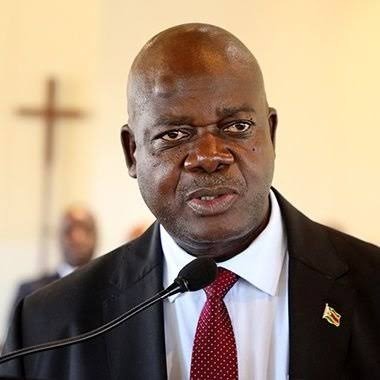
Pastor Tomson Dube is a lead pastor at a local city church in Bulawayo and the University Chaplain at the National University of Science and Technology. He writes this article in his own personal capacity as a leader and a voice to the nations. You can get hold of him via e-mail [email protected].



 Online Reporter