admin
admin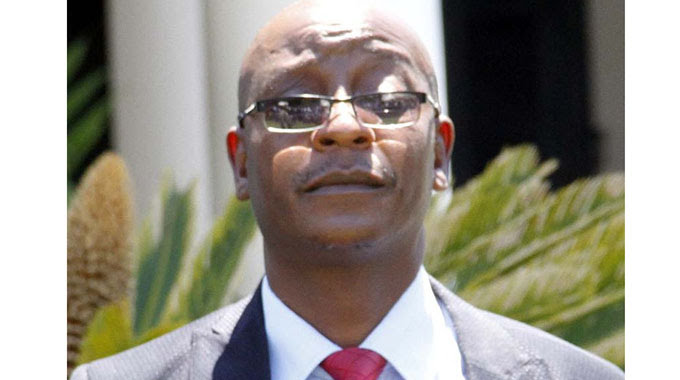
Zvamaida Murwira, Senior Reporter
The Private Voluntary Organisation (PVO) Amendment Bill, passed by the National Assembly last week, is revolutionary and will allow the civic society to be governed in a manner that defines the nation’s identity, Justice, Legal and Parliamentary Affairs Minister Ziyambi Ziyambi has said.
Apart from the PVO Amendment Bill, the National Assembly also passed the Administration of Estates Amendment Bill.
The PVO Amendment Bill now awaits transmission to the Senate while the Administration of Estates Amendment Bill will now be sent to the President for his assent after it was recommitted to the National Assembly to consider amendments made in the Senate, as is the procedure when the second House examines a Bill and makes changes and then sends these back to the first House.
RELATED STORIES
Speaking in the National Assembly after the PVO Amendment Bill had been read for the third time, signifying its passage, Minister Ziyambi, who was steering it, commended legislators for the robust debate.
“Before I move to the next item, I just want to thank honourable members for this historic moment where the Private Voluntary Organisations Bill has been passed by the National Assembly,” he said.
“The Bill is largely revolutionary and it will allow the sector to be governed in a manner that will speak to who we are as a country.
“I want to thank all the honourable members for the robust debate that was there and the improvements to the Bill that were brought by honourable members,” said Minister Ziyambi.
The Bill seeks to demand better financial accountability of private voluntary organisations through tightening of financial accounting and insistence on a PVO remaining solely within its listed functions, and deal with criminals carrying out undesirable and harmful illegal activities under the name of charity.
It seeks to comply with the Financial Action Task Force, which is the world’s police against money laundering by ensuring that charitable trusts are not misused as means for channelling funds to sponsor terrorism and other criminal activities or to launder the proceeds of criminal activities by buying properties in Zimbabwe and other countries.
The Bill was sent back to Parliament after President Mnangagwa expressed reservations on some clauses he wanted cleaned up.
However, the Bill subsequently lapsed owing to the prorogation of the Parliamentary session and then the dissolution of Parliament to pave way for general elections in August last year. That kills all legislation in the process of passing through Parliament.
Meanwhile, the Administration of Estates Amendment Bill will now be sent to President Mnangagwa for his assent after the National Assembly passed it, after it was recommitted by the Senate.
Minister Ziyambi said one of the amendments made by Senators was to remove creditors from appointing executors, but to leave that to relatives of deceased estates.
“The Senate felt it was not appropriate that those that are owed money participate in the appointment of an executor. I agreed with them.
“Hence, we deleted after the words ‘next of kin’ the words ‘failing him or them, a creditor or creditors failing him or them, a legatee or legatees’. We felt that an executor should be appointed by the relatives and then he will listen to their concerns, the monies or whatever they are owed and decide appropriately,” said Minister Ziyambi.
Commenting on the passage of the Bill, Minister Ziyambi told legislators that the proposed law would make it easier to administer deceased estates.
“I want to thank Members of the National Assembly for another landmark law that has been passed by this august House that will make it easier to administer deceased estates.
“A lot has been happening and we believe that the passing of this law will allow the administration of estates to be done in a manner that will provide justice to those beneficiaries that should receive what is due to them.
“So, I want to thank honourable members for the robust debate on the amendment that made this law what it is now,” said Minister Ziyambi.
“Secondly, I also want to thank the Honourable Senators. Many a times when we send a Bill to Senators, they just pass it but this time around, they were very critical, looking at issues and they picked critical issues and brought the Bill back to the National Assembly. It shows the robustness in our legislative Houses so to speak, by way of improving Bills that come from the Executive, that come even from the National Assembly. I want to applaud Honourable Members for a job well done.”
The Bill seeks to rationalise the powers of the Master of High Court to ensure that the office does not willy-nilly dispose or sell the property of a deceased estate without the permission of a judge of the High Court.
The Master should also not unilaterally appoint or remove an executor of an estate although he can confirm an executor set down in a will; other appointments arise when there is no will.
All this is meant to enhance protection of widows, widowers and orphans during disputes over deceased estates.



 Online Reporter