Online Reporter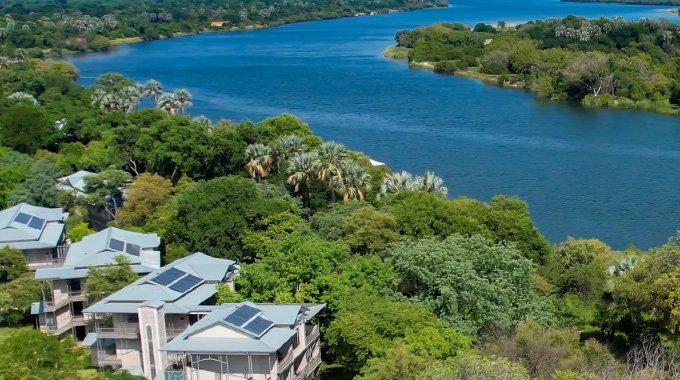
Rutendo Nyeve, [email protected]
THE City of Victoria Falls is rapidly transforming into a continental exemplar of sustainable infrastructure development, seamlessly blending ambitious construction with unwavering environmental stewardship, unfolding a quiet revolution in urban planning.
This pioneering approach, characterised by strategic densification, widespread adoption of renewable energy, and a non-negotiable tree conservation policy, has now drawn the keen interest of fellow urban centres, with Bulawayo leading the charge to learn from its success.
Over the past few years, the tourism capital has witnessed a significant investment boom, particularly in the accommodation sector.
However, unlike the unchecked urban sprawl that has plagued many cities, this growth has been meticulously guided.
The rise of state-of-the-art lodges, hotels, and innovative cluster houses has been spearheaded by a sustainability-first philosophy embedded directly into their construction.
These projects are celebrated not just for their luxury, but for their commitment to densification, building vertically and efficiently on limited land and their integration of solar energy, while famously constructing around existing trees rather than removing them.
The tangible success of this model prompted a formal Look and Learn visit from Bulawayo’s Town, Lands and Planning Committee last week.
The city fathers toured several sites to witness first-hand how policy translates into practice on the ground.
Mr Leonard Ncube, the Public Relations Officer for the City of Victoria Falls, who led the tour, explained the city’s deliberate ethos.
“What fascinated the team from Bulawayo is how development control is done in Victoria Falls, where the environment is incorporated in the developments,” he said.
“The city has a deliberate policy to say, whenever a property is being constructed, trees should not be cut. Once you cut a tree, make sure you plant three to replace the ones that are cut.”
Mr Ncube elaborated on the holistic approach, highlighting the use of non-intrusive, natural colour palettes on buildings and a fundamental shift in energy reliance.
“We have cluster houses, they use solar energy, renewable energy for lighting and everything, then gas energy for cooking and solar geysers. Electricity is there as a backup. This is sustainable development in Victoria Falls,” he said.
This philosophy is critical as the city confronts the challenge of a growing population and a fixed land base, much of which is protected under Unesco regulations that limit building heights to preserve the natural skyline.
“The current council no longer has land for expansion. On the existing land, let us go higher, but restricted to 11 meters above the ground. We are saying, let us densify, let us have more structures on one land,” he said.
This has given rise to the cluster houses and carefully managed low-rise flats now dotting the city, aiming to address a waiting list of approximately 18 000 people seeking housing.
The visiting delegation from Bulawayo left visibly impressed, drawing direct parallels to their own urban aspirations.
Bulawayo Deputy Mayor, Councillor Edwin Ndlovu, said the experience was an eye-opener.
“From the briefing and what we have seen, it resonates well with our new vision as the City of Kings to be a smart and sustainable city by 2030,” he said.
The Deputy Mayor highlighted specific practices his city seeks to emulate.
“We visited some of the hotels which are sustaining the environment, which speaks directly to our vision.
They do not destabilise the environment, they do not uproot trees and any ecosystem which is there, they maintain it, but you go on to build,” he said.
He also noted the innovative housing models designed to ease accommodation shortages, a pressing issue in Bulawayo as well.
The exchange marks a significant moment in Zimbabwean urban development.
As Victoria Falls solidifies its status as a green city of the future, its practical, enforceable policies offer a replicable blueprint.
For Bulawayo, a historic city grappling with modern challenges of housing, service delivery, and ecological preservation, the lessons from Victoria Falls provide not just inspiration but a viable pathway.