Online Reporter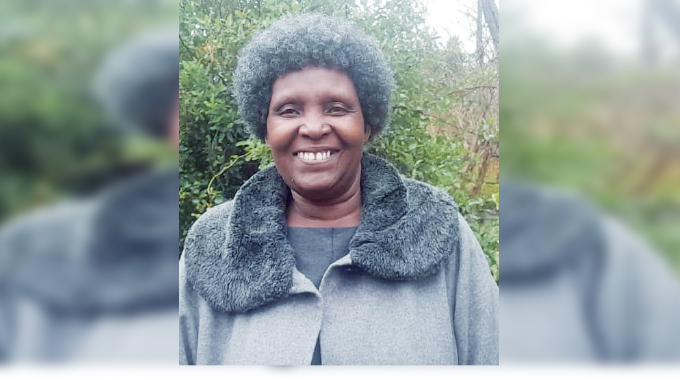
WATCHING her mother suffer racial discrimination during the colonial era was enough for the then-18-year-old Cde Thokozile Nyoni (née Ndlovu) to pack a few belongings and take to the road, to join the armed struggle in 1976. Cde Nyoni, who also used the nom de guerre Cde Silabo Bonke, says she received her political grounding from secret meetings held at her family home at X Square in the Mzilikazi suburb of Bulawayo, disguised as church services because her father was a pastor. As a result of those regular meetings at the family home, Cde Nyoni developed an interest in politics and became active in Zapu youth structures.
After crossing the border to Zambia via Botswana, she received military training in guerrilla warfare at Mkushi, a camp for female combatants. She later survived the bombing that claimed about 300 young female combatants when Mkushi came under heavy ground and aerial assault from Rhodesian forces on 19 October 1978. Below, she tells our Assistant Editor Mkhululi Sibanda (MS) how she became involved in nationalist activities before deciding to cross the border and join the armed struggle.
MS: Cde Nyoni, please begin by giving us a brief background.
Cde Nyoni: I was born Thokozile Ndlovu on 23 August 1958 in Matobo District, eKezi, in Matabeleland South Province. I began my schooling at Mzilikazi Primary School in Bulawayo. Our family home was at X Square in the Mzilikazi suburb. After completing primary school I enrolled at the nearby Mzilikazi High School, eMgandane. By then I had already been exposed to political activity.
MS: How did that come about?
Cde Nyoni: My father, Elijah Ndlovu, was a pastor at a Pentecostal church, the Apostolic Church of Great Britain. He was involved in both religious and political affairs, while my mother, Molly Nkomo, came from a politically active family. She and the late Vice-President Dr Joshua Mqabuko Nkomo were related. As a result, our home became a gathering point for Zapu activities, meetings were held there under the guise of church functions.
I was also affected by the protests and running battles between young people and the Rhodesian security forces. We grew up hearing about the 1960 Zhii strike, viewed as the first major act of confrontation by Africans: shops and beer halls were attacked in the townships as protest against the banning of the National Democratic Party (NDP) and against the inhuman living conditions imposed on Africans.
My uncles, Nkomos, were harassed by the colonial authorities, which made me politically conscious at an early age. There was widespread segregation against black people at that time. Growing up in Mzilikazi, close to sites of political activity, radicalised many of us. I became familiar with historical locations associated with the birth of African trade unionism and nationalism, such as Stanley Hall and Square in Makokoba. In my neighbourhood, McDonald Hall stood as a focal point for African nationalist activity.
MS: With political gatherings taking place at your home, what was your role?
Cde Nyoni: As youngsters we were asked to act as sentries. If we noticed anyone suspicious or saw the Rhodesian police, we would alert the elders. They would then quickly stop the political discussions and start preaching the Word of God, bursting into church songs. Those who arrived in cars would often park some distance from the house. All of this grounded me in nationalist politics.
MS: When did you join the armed struggle?
Cde Nyoni: I left the country for Zambia via Botswana in late 1976. My decision was triggered by a painful incident involving my mother. She worked in Bulawayo’s Central Business District, making items such as belts. One day, she invited me to her workplace to treat me to chips and a drink, a rare pleasure in those days.
While I waited outside on the veranda I heard a commotion. When I looked inside, my mother was being ridiculed and shouted at by a white female customer, who complained about the size of a belt even though it fitted. The shop owner tried to defend my mother but the customer would not relent. I felt powerless and furious. The racism was at our doorstep. That day, I felt the need to leave the country and join the armed struggle.
MS: Please continue.
Cde Nyoni: I spoke to my cousin Thomas Ndlovu about my intentions and discovered he was thinking the same. He and his friend Nivea were planning to join the struggle as well. It was almost a week after the incident with my mother. We believed we would go to Zambia, receive military training and return home to fight the Rhodesians. We did not appreciate then that there would be deployments and that one would not necessarily choose one’s theatre of operations. We thought we would be issued with a gun and could pick where to fight.
MS: Take us through your journey to join the war.
Cde Nyoni: We left mid-week, on a Wednesday. We boarded a bus bound for Brunapeg that travelled via Kezi. At Kezi, there was a roadblock manned by police and soldiers. Everyone was told to disembark. When officers came to us I said I was visiting my father, who had been admitted to Brunapeg Hospital, and that I was with my brothers, referring to Thomas and Nivea. They accepted our story after asking other passengers if they knew us. We had previously spoken to an elderly man who vouched for us, and others confirmed we were neighbours. That is how we managed to slip through the Rhodesian security net.
To be continued next week with Cde Nyoni talking about her arrival in Botswana and later on in Zambia. She will relate about the training she received at Mkushi.


 Bongani Ndlovu