admin
admin
John Masuku Correspondent
Yesterday Zimbabwe joined the rest of the world in celebrating 2024 World Radio Day.
We trace and hail the participation of women in radio broadcasting in Zimbabwe for many decades.
This year’s theme is, “Radio: A century of informing, entertaining and educating”, which UNESCO describes as shining a broad floodlight on radio’s remarkable past, relevant present and promise of a dynamic future.
Women’s voices have increased tremendously on radio in the last few decades thanks to equality and gender awareness programmes that accompanied yearning for political freedom, independence and democracy.
Women were notably heard alongside male comrades in the guerrilla radio stations during the liberation war.
A number of them have risen to supervisory and senior leadership positions.
Universities, polytechnics and colleges have also increased their intake of women training as journalists and radio broadcasters in particular.
With the opening of the airwaves during this millennium, many stations, including community radios have sprung up, at times being spearheaded by women.
Permanent women radio broadcasters were fewer in number compared to men when radio developed in the then Southern Rhodesia between the 1940s and 1970s.

The late Shiyeka Khumalo
On the former African Service (now Radio Zimbabwe) women did not feature prominently in errands like news reading, rural reporting and sports commentaries.
On the General or European Service (now Classic 263) voices of personalities like Jill Baker, Caroline Thornycroft and Sally Donaldson were very familiar in the 1970s newscasts.
In the past, popular programmes produced and presented by women included all- embracing magazines like ‘Woman’s Hour’ on the General Service and Radio Homecraft Club on the African Service.
They were also very active in health, lifestyle, culinary arts and social debates.
The founder and chairperson of the Federation of African Media Women (FAMWZ) now Gender & Media Connect (GMC) in 1985 Mavis Moyo started broadcasting during the Federation of Rhodesia and Nyasaland in 1953 while she was still a school teacher.
She later left the classroom for a full-time broadcasting career at the African Service in the early 1960s and retired in the 1990s.
She worked very closely with different community and women’s club leaders in Harare together with Ranche House College to share different skills on her radio programmes to a wider listenership.
This was a precursor to what she was to spearhead decades later as the Development Through Radio Project which became the pillar of FAMWZ now GMC.
Moyo studied radio production at Radio Netherlands Training Centre and her radio play ‘Changes’ about women emancipation, scripted by Ghanaian author Ama Ata Aidoo won the much acclaimed international Prix Futura Award in Germany.
Jill Baker
Mavis Gumede later well known as Justice Mavis Gibson was one of the early women pioneers of radio broadcasting before she left the country for further studies overseas.
Upon her return home at Independence in 1980, she was appointed a High Court judge in Zimbabwe and Namibia along another fellow 1950s broadcaster Justice John Manyarara.
Marjory Chapman was a white broadcaster who spoke fluent Shona and produced and presented many programmes on the African Service.
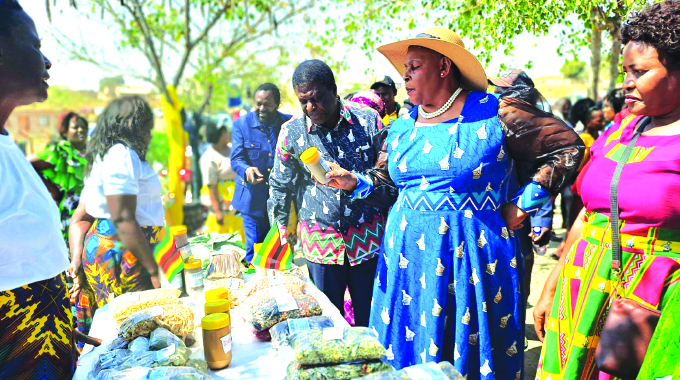
On the General Service Jill Baker Lambert Elford was a renowned radio and television newsreader, commercial radio broadcaster and author now based in Australia. After spearheading the formation of Radio Three now Power FM alongside Gordon Mackenzie Kerr in the early 1980s, she established Jill Baker Associates advertising and production house. She also had some stints on then Salisbury’s local channel, Radio Jacaranda.
Abbie Dube kaTebele was always based in Bulawayo as a lonely permanent woman broadcaster on the Ndebele section of Radio Zimbabwe.
She hosted many popular talk shows and carried out lots of interesting interviews with people around Bulawayo and from Matabeleland provinces also broadcast on Radio Mthwakazi the Ndebele FM station established in 1975 at Montrose Studios, Bulawayo. Her ‘Inhlupho Zanamhla’ talk show was popular for many years as it tackled hot social issues.
Shiyeka Khumalo co-produced and anchored Radio Homecraft Club from Salisbury. In the 1960s she was known for her commercial programme ‘Hamba kahle ngeBata’ co-presented with Ephraim Chamba.
Children’s programmes have over the years been handled by very likeable grandmothers of radio. Names like Gogo Silamba, Gogo Makhalisa, Mbuya Miriam Mlambo (Mbuya Chirambakusakara) and Mbuya Bakasa come to mind.
For many years, they became household names through programmes such as ‘Abancane Qha!’, ‘Nguva yevana vadiki’ and ‘Mitambo yevana vadiki’.
Professional women from teaching, community development and nursing backgrounds formed pools of freelancers who would come in as presenters and guests in various programmes. Isabel Mguni, Ruth Mpisaunga, Gladys Maseko,Tsitsi Munyati, Barbara Makhalisa, Jean Zulu, Musa Ramushu and Harriett Mangate are just but a few.
Jane Esau, a trained school teacher, began her broadcasting career at the Ministry of Primary and Secondary Education’s Audio Visual Services (AVS) in Mount Pleasant under BBC veteran John Parry, who was succeeded later by Robert Gardner.
When she left AVS, other school teachers Rebecca Chisamba (nee Tsikirayi) and Mabel Sikhosana joined under the supervision of Arnold Kashambwa.
Esau also did part time radio advertising and became well-known through her programme “In the Kitchen with Jane”. At Independence she joined the staff of ZBC Radio One (Classic 263).
On Radio Mthwakazi opened at Montrose Studio in 1975, Thandiwe Khumalo joined and was popular for her sweet, mellow voice.
Musi Khumalo (nee Mlambo) Nonceba Mnkandla (nee Siwela) were to follow with Musi transferring to Radio Three in Harare which she later headed before becoming controller of Radio Services and leaving ZBC as director programmes news and current affairs.
With the current crop of enthusiastic and determined young women on air nowadays, the future of radio is in safe hands in the coming century!
*John Masuku is a veteran broadcaster who this year is celebrating 50 years of unbroken service in Broadcast Journalism. Masuku was UNESCO’s 2023 World Radio Day International Campaign Coordinator.
Feedback: [email protected] and X: @john_masuku


 Online Reporter